🧭 Introduction – Why Credit Utilization Matters More Than You Think
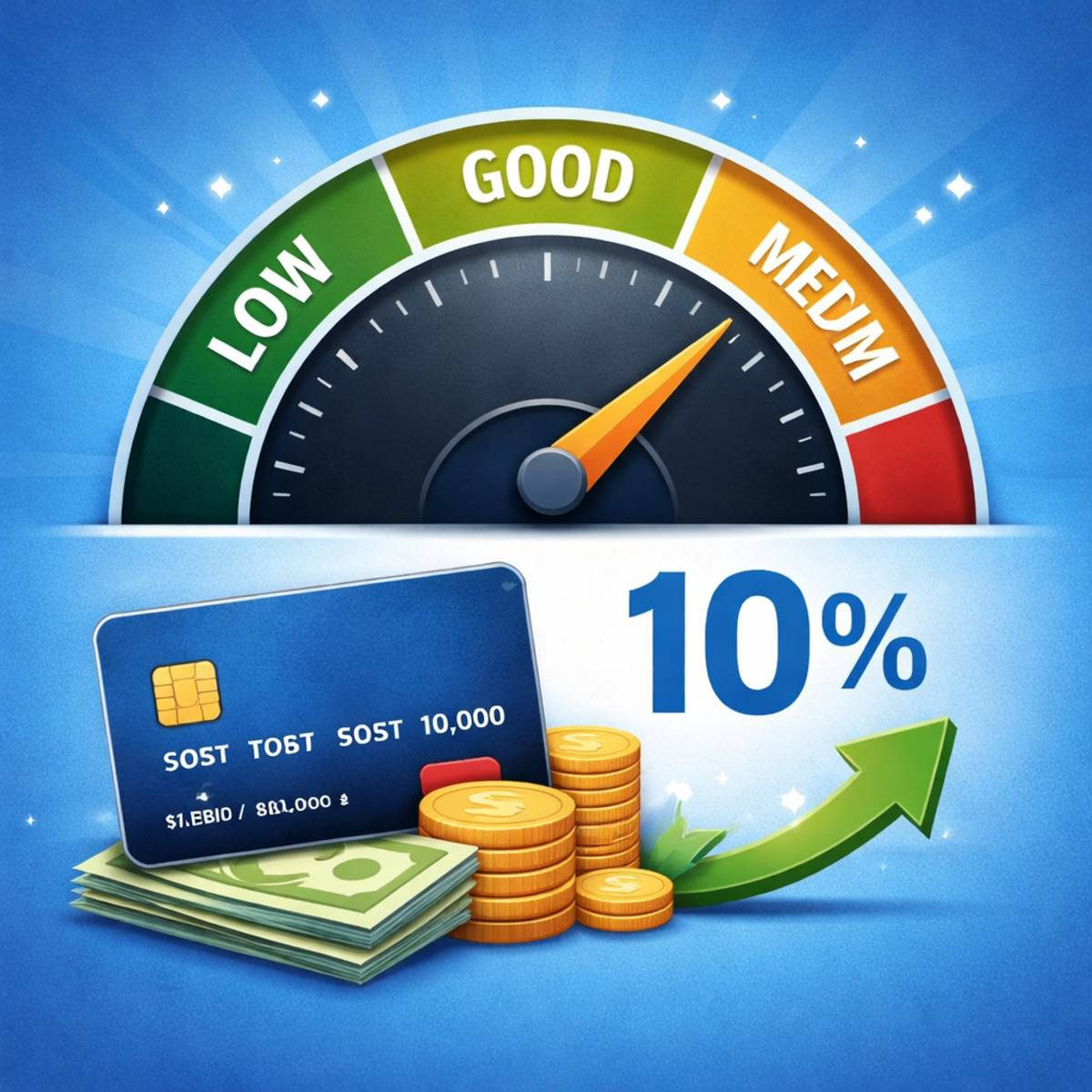
Credit utilization is one of the most powerful—yet often overlooked—factors influencing your credit score. At its core, it represents how much of your available revolving credit you are currently using. While it may seem like a simple percentage, it plays a critical role in how lenders evaluate your financial health.
Among all credit scoring factors, utilization stands out because it is one of the fastest variables you can control and improve. In widely used scoring models, including the FICO Score, credit utilization makes up approximately 30% of your total score—second only to payment history. That means even small adjustments can have a meaningful impact on your credit standing.
As a general benchmark, keeping your utilization below 30% is considered good. However, individuals with the strongest credit profiles often maintain utilization below 10%, signaling consistent and responsible credit management.
In this guide, you’ll learn how credit utilization works, how to calculate it accurately, and how to improve it using practical, proven strategies. We’ll also explore advanced techniques, common mistakes to avoid, and how your utilization fits into your broader financial plan.
🔑 Key Takeaways
- Credit utilization is one of the most influential factors in your credit score, accounting for roughly 30% of your FICO Score.
- Keeping your utilization below 30% can help maintain a healthy credit profile and avoid unnecessary score drops.
- For those aiming to maximize their credit potential, targeting utilization under 10% is often where the strongest scores are achieved.
- Small, strategic actions—such as timing your payments or reducing balances before statement dates—can produce noticeable improvements quickly.
- High utilization on even a single credit card can negatively impact your overall credit profile, regardless of your total available credit.
📌 What Is a Good Credit Utilization Ratio? (Quick Answer)
- Excellent: 1%–9%
- Good: 10%–29%
- Risky: 30%–49%
- High Risk: 50%+
👉 Most borrowers should aim to keep their credit utilization below 30%, but those seeking top-tier credit scores typically benefit from maintaining utilization under 10%.
📊 Credit Utilization Benchmarks
| Utilization | Rating | What It Signals |
|---|---|---|
| 0% | Neutral | No active usage |
| 1–9% | Excellent | Optimal credit behavior |
| 10–29% | Good | Healthy usage |
| 30–49% | Elevated Risk | Potential concern |
| 50%+ | High Risk | Strong negative signal |
🧠 Understanding Credit Utilization
What Is Credit Utilization?
Credit utilization is the percentage of your available revolving credit that you are currently using. It is a key metric used by lenders and credit scoring models to evaluate how responsibly you manage borrowed money.
In simple terms, it answers the question:
How much of your available credit are you using right now?
For example, if you have a total credit limit of $10,000 and carry a balance of $2,500, your credit utilization is 25%.
Revolving Credit vs. Installment Loans
It’s important to understand that credit utilization applies only to revolving credit accounts, such as:
- Credit cards
- Lines of credit (HELOCs or personal lines of credit)
It does not apply to installment loans, such as:
- Mortgages
- Auto loans
- Student loans
Revolving credit is flexible—you can borrow, repay, and borrow again—so lenders closely monitor how much of that available credit you’re using at any given time.
How to Calculate Your Credit Utilization
Understanding how to calculate your utilization is essential if you want to actively manage and improve your credit score.
Credit Utilization Formula
The formula is straightforward:
Credit Utilization = Total Balance ÷ Total Credit Limit
This can be calculated:
- Across all your credit accounts (total utilization), or
- On a per-card basis (individual utilization)
Both matter—more on that shortly.
Example Calculation
Let’s break it down with a simple example:
- Total credit limit: $10,000
- Total balances: $2,500
$2,500 ÷ $10,000 = 25% utilization
This means you are using 25% of your available credit—generally considered within a healthy range, but still with room for improvement if your goal is to optimize your score.
📈 Why Credit Utilization Matters for Your Credit Score
How It Impacts Your FICO Score
Credit utilization is one of the most influential components of your credit score, accounting for approximately 30% of your total score in widely used models like the FICO Score.
From a lender’s perspective, your utilization ratio provides insight into your financial behavior:
- Low utilization suggests you are managing credit responsibly and not overly reliant on borrowing
- High utilization may signal financial stress or increased risk of default
Even if you make all your payments on time, consistently high utilization can still lower your score because it indicates elevated credit risk.
Total vs. Individual Card Utilization
Many people focus only on their total utilization—but credit scoring models evaluate both:
Total Utilization
- The percentage of all balances across all cards compared to total limits
Individual Card Utilization
- The percentage used on each specific card
Why One Maxed-Out Card Can Hurt You
Even if your total utilization looks reasonable, having one card with a very high balance (or maxed out) can negatively impact your score.
For example:
- Card A: $0 balance on $5,000 limit
- Card B: $4,000 balance on $5,000 limit
Your total utilization is 40%, but Card B is at 80% utilization, which signals higher risk to lenders.
The Importance of Distribution
Maintaining a healthy credit profile isn’t just about the total—it’s also about how your balances are distributed.
Best practices include:
- Keeping balances low across all cards
- Avoiding high utilization on any single account
- Spreading usage evenly when possible
This balanced approach helps demonstrate consistent and responsible credit management, which can support stronger credit score outcomes over time.
🎯 What’s the Ideal Credit Utilization Ratio?
Understanding the “ideal” credit utilization ratio isn’t just about staying below a single number—it’s about positioning yourself within ranges that signal strong, responsible credit behavior to lenders and scoring models.
While many people focus on the commonly cited 30% threshold, the reality is more nuanced. Different utilization levels can have varying impacts on your credit profile depending on your overall financial picture and goals.
Recommended Utilization Ranges
Below is a practical breakdown of how different utilization levels are generally viewed:
- 0% Utilization
No active usage. This can appear inactive to scoring models and may not fully demonstrate responsible credit management. - 1%–9% Utilization (Excellent)
Considered the optimal range. This shows active use of credit while maintaining very low risk. - 10%–29% Utilization (Good)
A healthy range that supports solid credit scores and demonstrates responsible borrowing behavior. - 30%–49% Utilization (Elevated Risk)
Begins to signal higher reliance on credit. Scores may start to decline in this range. - 50%+ Utilization (High Risk)
Indicates significant credit usage and can negatively impact your credit score more substantially.
👉 While staying below 30% is a strong baseline, individuals aiming for top-tier credit profiles often maintain utilization in the 1%–9% range.
Does 0% Utilization Help or Hurt?
It might seem logical that using 0% of your available credit would be ideal—but that’s not always the case.
Credit scoring models, including the FICO Score, are designed to evaluate how you manage credit, not just whether you avoid it entirely.
Why 0% Isn’t Always Optimal
- It may signal inactive credit behavior
- Lenders don’t see evidence of ongoing credit management
- It can result in slightly lower scores compared to low, active usage
The “Active but Low Usage” Concept
The most effective strategy is to demonstrate consistent, controlled use of credit.
This means:
- Using your credit cards periodically
- Keeping balances low
- Paying them down before or shortly after statements close
This approach shows lenders that you can use credit responsibly without becoming dependent on it, which is exactly what scoring models are designed to reward.
🧠 Total vs Individual Utilization Table
| Scenario | Total Utilization | Individual Card Impact | Risk Level |
|---|---|---|---|
| Evenly distributed balances | 25% | Low per card | Low |
| One card maxed out | 25% | High on one card | Medium–High |
| Multiple high balances | 50%+ | High across accounts | High |
🧭 The Credit Utilization Optimization Framework™
Managing credit utilization effectively isn’t about one-time fixes—it’s about progressing through stages that build long-term financial strength.
This framework provides a structured approach to improving and maintaining your credit utilization over time.
Stage 1: Awareness
The first step is understanding where you stand today.
- Calculate your total utilization
- Review individual card balances
- Identify high-utilization accounts
👉 You can’t improve what you don’t measure. Awareness creates the foundation for all future progress.
Stage 2: Stabilization (Below 30%)
Once you understand your current position, the next goal is to move out of the higher-risk zone.
- Focus on reducing balances
- Prioritize paying down high-utilization accounts
- Avoid adding new debt during this phase
👉 Getting below 30% helps shift your profile from riskier to stable in the eyes of lenders.
Stage 3: Optimization (Below 10%)
After stabilizing your utilization, the next step is refining your credit profile.
- Continue lowering balances
- Maintain consistent payment habits
- Begin optimizing timing (when balances are reported)
👉 This is where many high-credit-score individuals operate—demonstrating strong control and minimal reliance on credit.
Stage 4: Strategic Usage
At this stage, the focus shifts from reduction to intentional use.
- Use credit cards regularly but selectively
- Keep balances low relative to limits
- Leverage credit for convenience, rewards, or cash flow management
👉 The goal is to show active, disciplined usage without increasing risk.
Stage 5: Long-Term Positioning
The final stage is about maintaining your credit strength over time.
- Monitor your credit regularly
- Adjust utilization as your financial situation evolves
- Maintain long-standing accounts and healthy limits
👉 Long-term consistency is what ultimately supports strong credit scores and broader financial opportunities.
🧭 Credit Utilization Framework Summary Table
| Stage | Target Range | Focus | Outcome |
|---|---|---|---|
| Awareness | Any | Understand usage | Clarity |
| Stabilization | <30% | Reduce risk | Score recovery |
| Optimization | <10% | Fine-tune usage | Score improvement |
| Strategic Usage | 1–9% | Controlled use | Strong profile |
| Long-Term Positioning | Consistent | Maintain habits | Stability |
📊 Credit Utilization Impact by Score Range
Understanding how different utilization levels affect your credit profile can help you make more informed decisions about managing your balances. While exact impacts vary by individual profile, the ranges below reflect how credit scoring models and lenders typically interpret utilization levels.
| Utilization | Typical Impact on Your Credit Profile |
|---|---|
| 0% | Neutral or slight drop due to lack of recent activity |
| 1%–9% | Optimal range; signals strong, responsible credit use |
| 10%–29% | Good; supports a healthy credit score |
| 30%–49% | Negative impact begins; indicates higher reliance on credit |
| 50%+ | Significant damage; signals elevated financial risk |
👉 In most scoring models, including the FICO Score, moving from higher utilization ranges into the under 30% or under 10% zones can lead to noticeable improvements in your credit score over time.
⚡ How to Lower Credit Utilization Fast (30-Day Strategies)
If your goal is to improve your credit profile quickly, credit utilization is one of the fastest variables you can influence. The following strategies are designed to produce measurable results within a relatively short timeframe.
Pay Before Your Statement Closing Date
Most credit cards report your balance to credit bureaus at the end of your billing cycle—not after your payment due date.
Why this works:
- Reduces the balance that gets reported
- Lowers your utilization before it impacts your score
- Helps you appear less reliant on credit
👉 Even if you pay your card in full each month, a high balance reported at the statement date can still hurt your score.
Make Multiple Payments Per Month
Instead of making one payment, consider paying down your balance multiple times throughout the month.
Why this works:
- Keeps your reported balance consistently low
- Prevents utilization spikes
- Improves both total and individual card utilization
👉 This approach is especially helpful if you use your credit cards frequently for everyday expenses.
Request a Credit Limit Increase
Increasing your credit limit can lower your utilization ratio without requiring you to pay down existing balances immediately.
Why this works:
- Expands your available credit
- Reduces your utilization percentage instantly
- Improves your overall credit profile
👉 For example, increasing a $5,000 limit to $10,000 cuts your utilization in half—assuming your balance stays the same.
Shift Balances Across Cards
If you have multiple credit cards, redistributing balances can help lower high utilization on any single account.
Why this works:
- Reduces individual card utilization (which scoring models track closely)
- Improves balance distribution across accounts
- Prevents one card from appearing maxed out
👉 Even if your total utilization remains unchanged, lowering utilization on a heavily used card can still benefit your score.
⚠️ Important Consideration
While these strategies can deliver faster results, sustainable improvement comes from consistent habits over time. Short-term fixes should always be paired with long-term financial discipline.
💡 Fast Improvement Impact
| Action | Timeframe | Potential Impact |
|---|---|---|
| Pay before statement date | Immediate (next report) | High |
| Make multiple payments | Same month | Moderate–High |
| Request credit limit increase | 1–30 days | Moderate–High |
| Shift balances across cards | Immediate | Moderate |
🛠 Proven Strategies to Improve Credit Utilization
Improving your credit utilization isn’t about a single tactic—it’s about combining consistent habits with smart financial decisions. The following strategies can help you lower your utilization ratio and strengthen your overall credit profile over time.
Increase Your Credit Limits
Requesting a credit limit increase can be one of the fastest ways to improve your utilization ratio—without immediately paying down balances.
- Contact your credit card issuer or request an increase online
- Ensure your income and financial profile support the request
- Avoid increasing spending after receiving a higher limit
Why this works:
A higher credit limit increases your total available credit, which lowers your utilization percentage as long as your balances remain the same.
Pay Down Balances Strategically
Not all debt reduction strategies are equal when it comes to credit utilization.
- Focus first on cards with the highest utilization percentages
- Prioritize revolving balances over installment loans
- Consider making payments before your statement closes
Why this works:
Lowering balances directly reduces your utilization ratio, especially on accounts that are heavily used.
Spread Balances Across Multiple Cards
If you carry balances on multiple cards, how those balances are distributed matters.
- Avoid concentrating large balances on a single card
- Keep individual card utilization as low as possible
- Aim for a more even distribution across accounts
Why this works:
Credit scoring models evaluate both total utilization and individual account utilization, so spreading balances can improve your profile even if total debt remains unchanged.
Use Credit Responsibly
Responsible usage doesn’t mean avoiding credit—it means using it strategically.
- Keep balances low relative to limits
- Avoid maxing out cards, even temporarily
- Use credit for planned expenses rather than impulse spending
Why this works:
Consistent, low-level usage demonstrates control and reliability, which supports stronger credit outcomes over time.
Set Up Automatic Payments
Payment consistency is essential—not just for payment history, but also for managing balances.
- Automate at least the minimum payment to avoid missed payments
- Consider automating additional payments to reduce balances
- Pair automation with regular account monitoring
Why this works:
Automation helps maintain low balances and prevents late payments, both of which support a healthier credit profile.
Monitor Your Credit Reports
Regular monitoring allows you to stay ahead of changes that could affect your utilization.
- Review balances and limits across all accounts
- Check for reporting errors or unexpected changes
- Track how your utilization trends over time
Why this works:
Awareness enables faster action—whether correcting errors or adjusting spending habits before utilization increases.
Open New Credit (Strategically)
Opening a new credit account can increase your total available credit—but it should be done carefully.
- Only apply when it aligns with your broader financial goals
- Avoid multiple applications in a short period
- Consider cards that complement your existing credit profile
Why this works:
Adding new credit increases your total limit, which can lower your overall utilization ratio—provided you manage the new account responsibly.
🧠 Advanced Credit Utilization Strategies
For those looking to go beyond the basics, advanced strategies can help fine-tune your credit profile and potentially maximize your score. These techniques are often used by individuals actively optimizing their credit for major financial goals.
The AZEO Method (All Zero Except One)
The AZEO method involves reporting a balance on only one credit card while keeping all others at zero.
- Pay off all cards except one before the statement closing date
- Allow a small balance (typically under 10%) to report on a single card
- Pay that remaining balance in full after the statement posts
Why this works:
This approach demonstrates active credit use while keeping overall utilization extremely low—an ideal combination for scoring models like the FICO Score.
Timing Payments for Reporting
When you make payments can be just as important as how much you pay.
- Identify your statement closing dates
- Make payments before balances are reported
- Avoid letting high balances appear on statements
Why this works:
Credit bureaus typically receive balance information at the statement closing date. Lower reported balances translate directly into lower utilization ratios.
Managing Utilization Across Accounts
Advanced credit management requires a broader view of your entire credit profile.
- Track both total and individual card utilization
- Adjust usage patterns across accounts as needed
- Maintain flexibility by keeping available credit across multiple cards
Why this works:
A well-balanced credit profile signals stability and control, reducing perceived risk from a lender’s perspective.
👉 Strategic Insight:
While basic strategies help you stay within acceptable ranges, these advanced techniques are what often separate good credit from excellent credit.
📘 Example Scenarios: Credit Utilization in Action
Understanding the concept is one thing—seeing how it plays out in real life is what makes it actionable. The following simplified scenarios illustrate how credit utilization can impact your credit profile and how strategic adjustments can lead to meaningful improvement.
Scenario 1: Improving High Utilization
Situation:
Alex has two credit cards:
- Card A: $5,000 limit, $4,000 balance (80% utilization)
- Card B: $5,000 limit, $0 balance (0% utilization)
Total utilization:
$4,000 ÷ $10,000 = 40%
Despite having available credit, Alex’s profile shows high risk due to the elevated utilization—especially on Card A.
Action Taken:
Alex focuses on reducing the balance on Card A and redistributing usage:
- Pays down $2,000 on Card A
- Keeps spending minimal while balances are reduced
Updated utilization:
- Card A: $2,000 ÷ $5,000 = 40%
- Total: $2,000 ÷ $10,000 = 20%
Result:
By lowering total utilization below 30% and reducing reliance on a single card, Alex moves from a higher-risk profile into a more stable range.
👉 Key Lesson:
Even partial balance reductions—especially on highly utilized accounts—can significantly improve your credit profile.
Scenario 2: Recovering After a Financial Setback
Situation:
Jordan experiences unexpected expenses and relies on credit cards:
- Total credit limit: $12,000
- Total balance: $9,000
- Utilization: 75%
This level of utilization signals elevated financial stress and can negatively impact credit scores—even if payments are made on time.
Action Taken:
Jordan implements a structured recovery plan:
- Begins making multiple payments each month
- Prioritizes paying down the highest-interest and highest-utilization balances
- Requests a credit limit increase on one account
Updated profile (after progress):
- Total balance reduced to $4,500
- New total credit limit: $14,000
- New utilization: $4,500 ÷ $14,000 ≈ 32%
Result:
While still above the ideal range, Jordan has made meaningful progress by cutting utilization nearly in half and moving closer to the <30% threshold.
👉 Key Lesson:
Recovery doesn’t happen overnight—but combining balance reduction with increased limits can accelerate improvement.
⚡ Before vs After Optimization Table
| Situation | Before | After | Result |
|---|---|---|---|
| High utilization | 75% | 32% | Improved score potential |
| Single maxed card | 80% on one card | 30% spread across cards | Lower perceived risk |
| No strategy | Random payments | Timed payments | Lower reported utilization |
❌ Common Credit Utilization Mistakes (and How to Fix Them)
Even well-intentioned actions can unintentionally harm your credit profile. Understanding these common mistakes—and how to correct them—can help you avoid setbacks.
Closing Old Credit Cards
The Mistake:
Closing a credit card—especially one with a high limit or long history—reduces your total available credit.
Why It Hurts:
- Increases your overall utilization ratio
- Can shorten your credit history
How to Fix It:
- Keep older accounts open, even if used occasionally
- Use them periodically to keep them active
- Focus on managing balances rather than reducing available credit
Maxing Out a Single Card
The Mistake:
Using a large portion (or all) of one card’s limit—even if total utilization remains moderate.
Why It Hurts:
- Signals higher risk at the individual account level
- Can negatively impact your score even if overall utilization is acceptable
How to Fix It:
- Spread balances across multiple cards
- Keep individual card utilization below 30% (ideally much lower)
- Monitor each account, not just your total utilization
Ignoring Statement Timing
The Mistake:
Assuming your payment due date is what matters most for credit reporting.
Why It Hurts:
- High balances may be reported before your payment is applied
- Your utilization may appear higher than it actually is
How to Fix It:
- Learn your statement closing dates
- Make payments before balances are reported
- Use multiple payments if needed to keep balances low
Making Only Minimum Payments
The Mistake:
Paying only the minimum required amount each month while carrying high balances.
Why It Hurts:
- Keeps utilization elevated
- Slows progress toward reducing balances
- Increases interest costs over time
How to Fix It:
- Pay more than the minimum whenever possible
- Prioritize reducing high-utilization accounts first
- Combine payments with a structured payoff plan
👉 Strategic Insight:
Avoiding these mistakes is just as important as applying optimization strategies. Many credit score setbacks come not from lack of effort—but from misunderstanding how utilization is calculated and reported.
🧰 Tools and Resources to Manage Credit Utilization
Managing credit utilization effectively isn’t just about knowledge—it’s about having the right tools in place to monitor, adjust, and optimize your credit behavior over time. Today’s financial tools can provide real-time insights, alerts, and guidance to help you stay in control.
Credit Monitoring Tools
Credit monitoring tools allow you to track your credit profile and utilization levels as they change.
Popular options include:
- Credit Karma
- Experian
- CreditWise
- myFICO
These tools typically offer:
- Credit score updates (daily, weekly, or monthly)
- Alerts for balance changes or new activity
- Breakdown of key factors like utilization
👉 Many apps also provide simulators that show how actions—like paying down a balance—can affect your score.
Why this matters:
Regular monitoring helps you catch utilization spikes early and make adjustments before they impact your credit score.
Budgeting Systems and Apps
Budgeting tools help you control spending, which directly influences your credit utilization.
Effective budgeting systems allow you to:
- Track monthly expenses
- Plan credit card usage in advance
- Avoid carrying high balances unintentionally
Examples include:
- Zero-based budgeting systems
- Envelope-style budgeting
- Digital budgeting apps tied to your accounts
Why this matters:
Credit utilization problems often stem from cash flow issues—not just credit behavior. A strong budgeting system helps prevent overreliance on credit in the first place.
Alerts and Automation
Automation and alerts can act as guardrails for your credit habits.
Consider setting up:
- Balance alerts when you reach a certain threshold
- Payment reminders before statement closing dates
- Automatic payments to reduce balances consistently
Many credit tools and apps provide real-time alerts for changes to your credit profile, helping you stay proactive.
Why this matters:
Automation reduces the risk of human error and ensures your utilization stays within target ranges without constant manual effort.
🔗 How Credit Utilization Impacts Bigger Financial Goals
Credit utilization doesn’t exist in isolation—it directly influences your broader financial opportunities. Managing it effectively can open doors to better financing options, lower costs, and greater flexibility.
Loan Approvals and Lending Decisions
Lenders evaluate your credit utilization to assess risk when you apply for:
- Credit cards
- Personal loans
- Auto loans
High utilization may signal that you are overextended, even if your payment history is strong.
Impact:
- Lower approval odds
- More scrutiny during underwriting
Interest Rates and Borrowing Costs
Your credit profile—including utilization—helps determine the interest rates you’re offered.
- Lower utilization → lower perceived risk → better rates
- Higher utilization → higher risk → increased borrowing costs
Impact:
Even a small improvement in your credit score can translate into meaningful savings over the life of a loan.
Mortgage and Homebuying Readiness
Credit utilization plays a key role when preparing for a mortgage.
Lenders often look for:
- Stable, low utilization levels
- Consistent credit management over time
- Minimal reliance on revolving debt
Impact:
- Better chances of approval
- More favorable loan terms
- Potentially lower monthly payments
👉 Strategic Insight:
Improving your credit utilization isn’t just about boosting a number—it’s about positioning yourself for better financial opportunities across every major life milestone, from borrowing to investing to long-term wealth building.
💼 Credit Utilization for Small Business Owners
For small business owners, managing credit utilization becomes more complex—but also more important. Business expenses, irregular income, and cash flow variability can all influence how credit is used and perceived.
Understanding how to balance these factors can help protect both your personal credit profile and your broader financial stability.
Personal vs. Business Credit
One of the most important distinctions for entrepreneurs is whether credit activity is reported on personal or business credit profiles.
- Personal credit cards often report directly to consumer credit bureaus
- Business credit cards may or may not report to personal credit, depending on the issuer and account structure
👉 Many small business owners rely on personal credit—especially in the early stages—which means business spending can directly impact personal credit utilization.
Key Consideration:
If your business expenses are flowing through personal credit cards, your utilization ratio may increase quickly, even if your business is financially healthy.
High Utilization Risks for Entrepreneurs
Entrepreneurs often experience:
- Irregular or seasonal income
- Higher upfront expenses
- Periods of heavy reliance on credit
This can lead to elevated utilization levels, which may:
- Lower your credit score
- Impact your ability to secure financing
- Increase borrowing costs
👉 Even temporary spikes in utilization—such as during inventory purchases or business investments—can affect how lenders view your risk profile.
Cash Flow vs. Credit Usage Balance
For business owners, credit is often used as a cash flow management tool rather than long-term debt.
The key is maintaining balance:
- Use credit strategically to manage timing gaps
- Avoid carrying high balances for extended periods
- Pay down balances as revenue comes in
Best Practices:
- Keep utilization low relative to your limits
- Separate business and personal expenses when possible
- Monitor utilization closely during high-expense periods
👉 The goal is to use credit as a tool—not a dependency—while maintaining a strong and stable credit profile.
✅ Credit Utilization Management Checklist
Managing your credit utilization effectively comes down to consistency and awareness. Use this checklist as a practical framework to stay on track and maintain a strong credit profile over time.
Monthly Monitoring Habits
- Review balances across all credit cards
- Calculate both total and individual card utilization
- Check for unusual activity or reporting errors
- Track how your utilization changes month to month
👉 Staying proactive helps you catch potential issues early—before they impact your credit score.
Optimization Strategies
- Keep total utilization below 30% (aim for under 10% for best results)
- Pay balances before your statement closing date
- Make multiple payments throughout the month if needed
- Request credit limit increases when appropriate
👉 These strategies help you actively shape how your credit profile is reported and evaluated.
Mistakes to Avoid
- Closing old credit accounts unnecessarily
- Allowing one card to carry a high balance
- Ignoring statement timing and reporting cycles
- Making only minimum payments while carrying high balances
👉 Avoiding these pitfalls is just as important as applying optimization strategies.
Annual Review
- Review your full credit profile, including limits and account mix
- Check your credit reports for accuracy and outdated information
- Evaluate whether your current credit structure supports your goals
- Adjust your strategy based on changes in income, expenses, or financial priorities
👉 A yearly review ensures your credit management strategy evolves alongside your financial life.
❓ Frequently Asked Questions
Does Paying Early Improve Your Score?
Yes—paying early can improve your credit utilization by reducing the balance that gets reported to credit bureaus. Since most lenders report balances at the statement closing date, paying before that date can lower your utilization and potentially boost your score.
Is 30% Utilization Bad?
Not necessarily—but it’s not ideal either.
Staying below 30% is generally considered good and helps maintain a healthy credit score. However, individuals with the strongest credit profiles often maintain utilization below 10%.
👉 Think of 30% as a baseline, not a target.
How Often Is Utilization Reported?
Most credit card issuers report your balance to credit bureaus once per billing cycle—typically at your statement closing date.
However, reporting practices can vary slightly by lender, so it’s important to understand the timing for each of your accounts.
Can Utilization Change Quickly?
Yes—credit utilization can change very quickly, sometimes within a single billing cycle.
- Paying down balances can lower your utilization almost immediately
- New charges can increase it just as quickly
Because of this, credit utilization is one of the most responsive factors in your credit score—and one of the easiest to improve with the right strategy.
👉 Final Insight:
Credit utilization isn’t a fixed metric—it’s dynamic. With consistent monitoring and smart financial habits, you can actively manage and improve it over time.
🧾 Conclusion: Take Control of Your Credit Utilization
Credit utilization is one of the most powerful—and controllable—factors influencing your credit profile. While many aspects of your credit history take time to build, utilization is dynamic. With the right strategies, you can begin improving it almost immediately.
Throughout this guide, you’ve seen that managing credit utilization isn’t about eliminating credit use—it’s about using it intentionally and strategically.
By focusing on key principles such as:
- Keeping utilization below 30% (and ideally under 10%)
- Paying balances before statement closing dates
- Distributing balances across accounts
- Monitoring your credit consistently
…you position yourself to build a stronger, more resilient credit profile over time.
For many individuals, improving credit utilization is one of the fastest ways to:
- Increase their credit score
- Qualify for better loan terms
- Reduce borrowing costs
- Strengthen overall financial flexibility
👉 The most important takeaway is this:
Credit utilization is not just a number—it’s a reflection of how you manage financial leverage.
When used wisely, it becomes a tool that supports your long-term financial goals rather than limiting them.
🔗 Continue Your Credit & Debt Management Journey
Building strong credit is an ongoing process. If you’re ready to take the next step, explore these related resources:
- 👉 Managing Credit Card Debt Effectively
Learn practical strategies to reduce balances, manage interest, and regain control of your debt. - 👉 Credit and Debt Management
Explore a broader framework for improving your credit health, reducing debt, and building long-term financial stability.
👉 For a complete overview of personal finance topics, visit our main financial hub and continue building your financial knowledge step by step.