
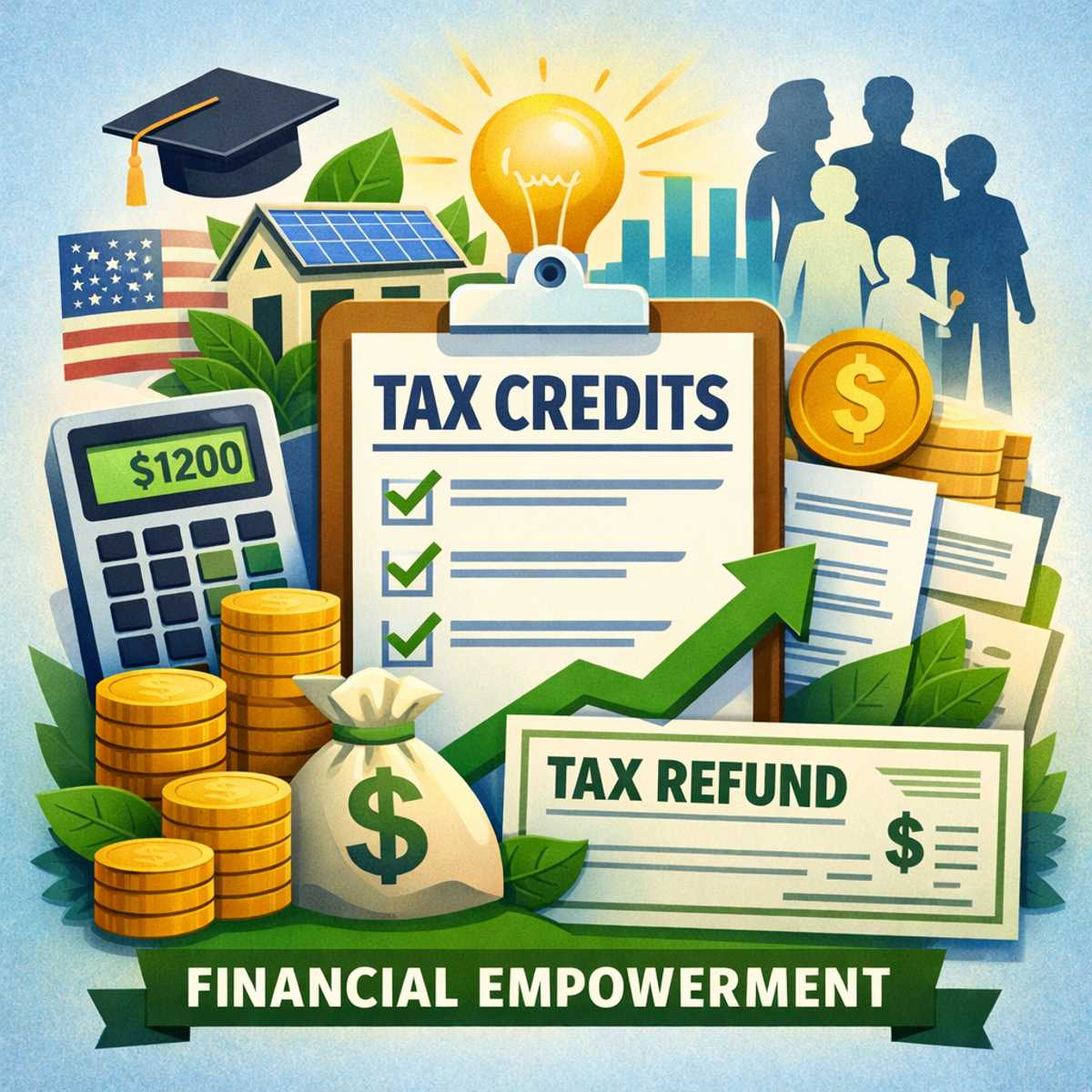
What are tax credits?
Tax credits are amounts that directly reduce your tax bill dollar-for-dollar, making them more valuable than deductions. Some credits are refundable, meaning they can increase your tax refund even if you owe no taxes.
🏦 1. Introduction: Unlock One of the Most Overlooked Wealth-Building Tools
Every year, billions of dollars in tax credits go unclaimed—not because people don’t qualify, but because they don’t fully understand what’s available to them.
That’s a costly mistake.
Tax credits are one of the few financial tools that directly increase your bottom line. Unlike deductions, which reduce taxable income, tax credits reduce your actual tax bill—dollar for dollar.
That means:
- A $1,000 deduction might save you $200–$300 depending on your tax bracket
- A $1,000 tax credit saves you the full $1,000
This distinction alone can dramatically change your financial outcome.
But the real power of tax credits goes beyond tax savings. They can:
- Improve your annual cash flow
- Increase your tax refund
- Support major life goals (education, home upgrades, raising a family)
- Create opportunities to redirect money into saving and investing
👉 In a complete financial plan, tax credits act as a leverage point—turning compliance into opportunity.
🧠 Key Takeaways
- Tax credits reduce your tax bill dollar-for-dollar, making them one of the most powerful tools in financial planning.
- Refundable credits can generate a refund, even if you owe no taxes—providing direct financial support.
- Major credits like the Earned Income Tax Credit (EITC), Child Tax Credit (CTC), and education credits can significantly impact your financial stability.
- Eligibility depends on income, filing status, and life events, making proactive planning essential.
- Strategic use of tax credits can improve cash flow, increase savings, and accelerate wealth building.
👉 Bottom line: Tax credits aren’t just tax tools—they’re financial planning opportunities.
🧭 2. Tax Credit Planning Roadmap
This is critical for your site structure and aligns perfectly with your roadmap strategy.
| Phase | Focus | Key Outcome |
|---|---|---|
| 1. Awareness | Identify available tax credits | Clarity |
| 2. Eligibility | Determine qualification requirements | Confidence |
| 3. Documentation | Gather required records | Readiness |
| 4. Strategy | Align credits with life and financial goals | Optimization |
| 5. Filing | Accurately claim credits | Execution |
| 6. Review | Adjust for next tax year | Continuous improvement |
👉 This transforms tax filing from a reactive task into a proactive financial strategy.
📊 3. Why Tax Credits Matter More Than Most People Realize
Tax credits aren’t just theoretical benefits—they are backed by real data, policy design, and measurable financial impact across millions of households.
Understanding the broader context helps you move from basic awareness to informed financial decision-making.
📉 Billions in Tax Credits Go Unclaimed Each Year
According to data from the Internal Revenue Service, a significant portion of eligible taxpayers fail to claim credits they qualify for—particularly refundable credits like the Earned Income Tax Credit (EITC).
- Millions of eligible households miss out annually
- Billions of dollars in potential refunds remain unclaimed
- The most commonly missed credits include:
- Earned Income Tax Credit (EITC)
- Education credits
- Child-related credits
👉 What this means for you:
If you’re not actively planning for tax credits, there’s a real risk you’re leaving money on the table.
🏛️ Tax Credits Are Designed as Financial Incentives
Tax credits are not random—they are intentional tools built into the tax code to encourage specific behaviors.
Governments use tax credits to promote:
- Workforce participation (EITC)
- Family support (Child Tax Credit)
- Higher education (AOTC, Lifetime Learning Credit)
- Energy efficiency and sustainability (clean energy credits)
These programs are often shaped by legislation such as the Inflation Reduction Act, which expanded and enhanced energy-related tax incentives for households.
👉 Key Insight:
Tax credits reflect policy priorities—when you align your financial decisions with these incentives, you can benefit directly.
⚖️ 4. Policy Intent: Supporting Financial Stability and Economic Growth
At a deeper level, tax credits serve two major policy goals:
1. Supporting Household Financial Stability
Refundable credits, in particular, are designed to:
- Increase disposable income
- Reduce financial strain for working households
- Provide targeted support during key life stages
2. Driving Long-Term Economic Behavior
Credits also encourage investment in areas that benefit the broader economy, such as:
- Education and workforce development
- Energy efficiency and infrastructure
- Family and childcare support systems
👉 In practice, this means tax credits function as both:
- Short-term financial relief tools
- Long-term economic incentives
📈 Why This Matters for Your Financial Plan
When viewed through a financial planning lens, tax credits are more than tax-time benefits—they are strategic levers that can:
- Improve annual cash flow
- Increase your effective income
- Free up money for saving, investing, or debt reduction
- Enhance overall financial efficiency
👉 Final Insight
Tax credits sit at the intersection of personal finance and public policy.
Those who understand how they work—and plan for them proactively—are better positioned to:
- Capture available financial benefits
- Avoid leaving money unclaimed
- Build a more efficient, resilient financial strategy
5. The Basics of Tax Credits: Unlocking Your Financial Benefits
What Are Tax Credits?
At their core, tax credits are amounts subtracted directly from the tax you owe to the government, not from your taxable income like deductions. This distinction is crucial; while deductions lower your taxable income and thus reduce the amount of tax you owe indirectly, tax credits reduce your tax bill on a one-to-one basis. For example, a $1,000 tax credit means you pay $1,000 less in taxes. There are two primary types: nonrefundable, which can reduce your tax bill to zero but not beyond, and refundable, which can result in a tax refund if the credit exceeds the amount of taxes you owe.
Why Tax Credits Matter
Tax credits matter significantly in personal finance for their direct impact on reducing tax liabilities and potentially increasing tax refunds. They serve as key instruments for government policy to incentivize certain behaviors among taxpayers, such as investing in renewable energy, pursuing higher education, or supporting families with children. The strategic use of tax credits can lead to considerable financial benefits, enhancing one’s ability to save, invest, and manage financial challenges effectively. Understanding and leveraging the appropriate tax credits can be a game-changer in one’s financial planning and wealth-building endeavors, making them an essential element of informed personal finance management.
6. Types of Tax Credits: A Roadmap to Your Tax Savings
Tax credits come in various forms, each with its unique features and benefits. Understanding the differences between nonrefundable, refundable, and partially refundable tax credits is crucial in maximizing your potential tax savings. Here’s a simplified comparison to guide you:
| Type of Tax Credit | Description | Impact on Tax Bill |
|---|---|---|
| Nonrefundable | These credits can only reduce your tax liability to zero. Any remaining amount of the credit is not paid out as a refund. | Reduces tax bill but cannot lead to a refund. |
| Refundable | If the amount of these credits exceeds your tax liability, the excess amount is refunded to you. | Can reduce tax bill to below zero, resulting in a refund. |
| Partially Refundable | A hybrid approach where a portion of the credit is refundable. This means even if the credit amount is more than what you owe in taxes, you can receive a part of the remaining balance as a refund. | Reduces tax bill and can lead to a partial refund. |
Highlight Key Tax Credits
To navigate the landscape of tax credits effectively, it’s important to be familiar with some of the key credits available:
- Earned Income Tax Credit (EITC)
- Aimed at low-to-moderate-income individuals and families.
- Refundable, meaning it can lead to a refund if the credit exceeds your tax liability.
- The amount varies based on income, filing status, and number of children.
- Child Tax Credit (CTC)
- Designed to assist families by offsetting the cost of raising children.
- Partially refundable with the refundable portion known as the Additional Child Tax Credit (ACTC).
- The credit amount is subject to income thresholds and phases out at higher income levels.
- American Opportunity Tax Credit (AOTC)
- Targets students pursuing higher education, covering expenses like tuition, course materials, and fees.
- Partially refundable, allowing eligible taxpayers to get back a portion even if they have no tax liability.
- Available for the first four years of post-secondary education.
Understanding these tax credits and how they apply to your situation can significantly impact your annual tax planning and overall financial strategy. Utilizing them effectively can lead to substantial savings, reducing your tax liability and in some cases, increasing your tax refund.
7. Deep Dive: Spotlight on Major Tax Credits
Earned Income Tax Credit (EITC):
The Earned Income Tax Credit stands as a significant boon for low-to-moderate-income workers, designed to reduce tax burden and promote employment.
- Eligibility Criteria: To qualify, taxpayers must meet certain income thresholds, which vary based on filing status and the number of children. Employment income is a must, and investment income must be within set limits.
- Benefits and How to Claim: The EITC can significantly lower owed taxes, and because it’s refundable, it may yield a refund if it exceeds the tax liability. Claiming it requires filing a tax return with the IRS, even if no taxes are owed, and attaching Schedule EIC if claiming qualifying children.
Child Tax Credit (CTC):
The CTC provides financial support to families with children, aiming to ease the associated costs and support child well-being.
- Changes in Legislation: Recent years have seen changes to the CTC, including increases in credit amounts and adjustments to eligibility criteria, often in response to economic conditions.
- Impact on Families: The CTC directly reduces tax liability and can be partially refundable, providing essential support to families, especially those facing financial challenges.
Education Credits (American Opportunity Tax Credit & Lifetime Learning Credit):
Education credits offer financial relief for students and families facing educational expenses, covering a range of costs from tuition to course materials.
- Qualifying Expenses: The AOTC covers expenses for the first four years of post-secondary education, while the LLC can apply to undergraduate, graduate, and professional degree courses, including non-degree courses aimed at acquiring or improving job skills.
- Strategic Claiming for Maximum Benefit: Maximizing these credits requires understanding the eligible expenses, timing of payments, and the student’s enrollment status. It’s also important to coordinate these credits with other educational benefits like 529 plans.
Energy Credits:
Energy credits incentivize the adoption of renewable energy and energy-efficient improvements, supporting environmental sustainability and potential cost savings.
- Incentives for Sustainable Living: These credits can apply to a range of investments, from solar energy systems to energy-efficient windows and doors.
- Long-term Savings: Beyond immediate tax savings, investing in energy-efficient improvements can reduce utility bills over time, contributing to significant long-term savings.
In the next response, I will continue with the remaining sections.
Continuing from the previous response:
Each of these tax credits plays a crucial role in not only providing immediate financial relief but also in fostering long-term financial health and stability. They reflect the government’s efforts to support various societal goals, from improving workforce participation to encouraging educational pursuits and sustainable living practices.
To leverage these credits effectively, it’s essential to stay informed about the specific requirements and changes in legislation that may affect eligibility and benefits. Consulting with a tax professional or utilizing reputable tax software can help ensure that you’re maximizing your entitlements and making informed decisions that align with your broader financial strategy.
By understanding and strategically applying for these major tax credits, taxpayers can significantly enhance their financial well-being, contributing to a more secure and prosperous future. Remember, the landscape of tax credits is always evolving, so continuous learning and adaptability are key to making the most of these opportunities.
8. Navigating Eligibility: Ensuring You Qualify
Understanding and meeting the eligibility criteria for tax credits is paramount to unlocking their financial benefits. Here’s a guide to navigating common requirements and maintaining the necessary documentation.
Common Eligibility Requirements:
- Income Levels: Most tax credits have income thresholds that determine eligibility and the amount of the credit. These thresholds often vary by filing status and are adjusted annually for inflation. It’s crucial to be aware of these limits, as exceeding them could disqualify you from claiming the credit or reduce its value.
- Filing Status: Your tax filing status (e.g., single, married filing jointly, head of household) can significantly impact your eligibility for tax credits. Some credits may have different income thresholds or benefits based on filing status, reflecting the varying financial responsibilities associated with each.
- Dependents: For credits like the Child Tax Credit or the Earned Income Tax Credit, the number and status of dependents in your household play a critical role. Qualifying children or dependents must meet specific requirements related to age, relationship, and residency.
Documentation and Proof:
To claim tax credits effectively and avoid issues with the IRS, meticulous record-keeping and documentation are essential.
- Keep Organized Records: Maintain organized files of all relevant financial documents throughout the year. This includes income statements, receipts for eligible expenses (like education costs or energy-efficient home improvements), and records of investments.
- Proof of Eligibility: For each credit, ensure you have the necessary documentation to prove eligibility. This could be anything from birth certificates and school records for dependents to invoices and certifications for energy-efficient products or educational expenses.
- File Accurately: When filing your tax return, accurately report all required information related to tax credits. This includes filling out the correct forms or schedules and attaching any required documentation, such as Form 8863 for education credits or Schedule EIC for the Earned Income Tax Credit.
Tips for Record-Keeping:
- Digital Storage: Consider digitizing your records to ensure they’re easily accessible and secure. Many apps and software tools can help you scan and organize your financial documents.
- Annual Checklist: Create an annual tax preparation checklist that includes all the credits you plan to claim and the documents you’ll need for each. This can simplify the process and help ensure you don’t overlook any potential credits or necessary paperwork.
- Professional Advice: If you’re unsure about your eligibility or the documentation required for a specific tax credit, consulting with a tax professional can provide clarity and peace of mind. They can offer personalized advice based on your unique financial situation.
By staying informed about eligibility requirements and maintaining diligent records, you can navigate the tax season with confidence, maximizing your potential savings and ensuring compliance with tax laws.
9. Strategy Corner: Maximizing Your Tax Credits
Navigating the realm of tax credits requires not just knowledge but strategy. By proactively planning and being mindful of life’s significant events, you can ensure you’re positioned to maximize the tax credits available to you. Here are some essential strategies and tips to help you optimize your tax benefits.
Proactive Planning Tips:
- Adjust Withholdings: If you anticipate qualifying for substantial tax credits, consider adjusting your tax withholdings. This can increase your take-home pay throughout the year instead of waiting for a larger refund.
- Track Qualifying Expenses: Keep meticulous records of expenses that might qualify for tax credits, such as educational expenses, energy-efficient home improvements, or medical expenses. Organized record-keeping simplifies the process of claiming these credits and serves as proof if the IRS requires documentation.
Life Events to Consider:
- Marriage or Divorce: Your marital status can significantly affect your tax situation. For instance, getting married might qualify you for different tax brackets and credits, while divorce could necessitate changes in how you claim credits related to dependents.
- Childbirth or Adoption: The arrival of a child can open up eligibility for several tax credits, including the Child Tax Credit (CTC) and the Earned Income Tax Credit (EITC), potentially offering substantial financial benefits.
- Retirement: Transitioning to retirement can also impact your tax situation, possibly making you eligible for credits targeted at seniors or affecting how you claim deductions and credits related to investment income.
Common Pitfalls to Avoid:
- Overlooking Eligible Credits: One of the most common mistakes is simply not being aware of all the credits for which you’re eligible. Regularly review the tax credits available, especially as new legislation can introduce changes.
- Improper Documentation: Failing to keep adequate records of eligible expenses and necessary documentation can lead to missed opportunities when claiming credits. Ensure you have detailed records and receipts for all qualifying expenses.
- Incorrectly Calculating Credits: Be diligent in calculating your credits to avoid claiming more than you’re entitled to, which could result in audits or penalties. Use reputable tax software or consult a professional if you’re unsure.
By adopting these strategies and remaining vigilant about your eligibility and the proper claiming process, you can enhance your financial situation through effective use of tax credits. Remember, tax laws are complex and ever-changing, so consider engaging a tax professional to provide personalized advice tailored to your unique circumstances.
10. Example Scenario Applications
Diving into example applications and scenarios can significantly illuminate the tangible benefits of effectively utilizing tax credits. Through hypothetical scenarios, we can explore the diverse ways individuals and families have leveraged tax credits to enhance their financial well-being.
Scenarios:
- The Johnson Family’s Child Tax Credit Journey
- Situation: With three children under the age of 17, the Johnsons were looking for ways to manage their increasing expenses.
- Action: They learned about and applied for the Child Tax Credit, ensuring all eligibility criteria were met, including income thresholds.
- Outcome: The Johnsons received a substantial credit, easing the financial burden of childcare and education expenses, allowing them to allocate more funds toward savings.
- Alex’s Educational Leap Forward
- Situation: Alex, a first-year college student, faced significant tuition and related expenses.
- Action: Alex and their parents took advantage of the American Opportunity Tax Credit by keeping detailed records of qualifying expenses and applying for the credit on their tax return.
- Outcome: They received a credit that covered a significant portion of Alex’s educational expenses, reducing the family’s overall tax liability and supporting Alex’s continuing education.
- Green Renovations with the Smiths
- Situation: The Smiths decided to install solar panels to reduce their energy bills and contribute to environmental sustainability.
- Action: They researched and applied for Energy Credits available for solar installations, ensuring all work was done by a certified contractor and met the eligibility criteria.
- Outcome: The tax credit they received not only helped offset the initial installation costs but also led to long-term savings on energy bills.
Potential Tax Credit Benefits Table
To help you estimate the potential benefits you might receive from various tax credits, consider the following table as a starting point. Keep in mind that these figures are hypothetical and subject to change based on current tax laws and your individual circumstances.
| Tax Credit | Potential Benefit | Key Factors to Consider |
|---|---|---|
| Earned Income Tax Credit (EITC) | Up to $6,728 | Income, filing status, number of qualifying children |
| Child Tax Credit (CTC) | Up to $2,000 per qualifying child | Child’s age, family income |
| American Opportunity Tax Credit (AOTC) | Up to $2,500 per eligible student | Qualified education expenses, first four years of post-secondary education |
| Lifetime Learning Credit (LLC) | Up to $2,000 per tax return | Tuition and fees for eligible students, no limit on years |
| Energy Credits | Variable, based on the cost of qualified improvements | Installation of energy-efficient systems or renewable energy sources |
11. Staying Informed: Navigating Changes in Tax Laws
In the ever-evolving landscape of taxation, staying abreast of changes in tax laws is not just beneficial—it’s essential for maximizing your financial health. Changes can introduce new credits, adjust existing ones, or phase out benefits, each of which could have a significant impact on your tax strategy and overall financial planning.
Keeping Up-to-Date:
The importance of staying informed cannot be overstated. Tax laws are influenced by a variety of factors, including economic policies, legislative reforms, and social initiatives. Being proactive in understanding these changes ensures that you can adapt your financial planning to take advantage of new opportunities or mitigate potential drawbacks. Regularly updating your knowledge helps in:
- Identifying new tax credits or deductions that may be available to you.
- Adjusting your financial strategies to remain aligned with current tax legislation.
- Avoiding common pitfalls due to outdated information.
Resources for Continuous Learning:
To effectively navigate the complexities of tax laws and stay informed, leveraging authoritative and reliable resources is key. Here’s a curated list of essential resources for tax law updates and financial planning insights:
- Internal Revenue Service (IRS) Website: The IRS website (irs.gov) is the definitive source for federal tax information, including detailed guides on tax credits, deductions, and legislative updates.
- Tax Foundation: Provides research, analysis, and educational materials on tax policies and changes at both federal and state levels (taxfoundation.org).
- Certified Financial Planner Board of Standards: Offers resources and guidance on financial planning, including how tax laws intersect with personal finance (cfp.net).
- National Association of Tax Professionals (NATP): A resource for tax professionals that also offers valuable insights for individuals looking to stay informed on tax issues (natptax.com).
- Tax Policy Center: Provides in-depth analysis of current and historical tax policies, helping you understand the broader implications of tax law changes (taxpolicycenter.org).
- Financial Planning Association (FPA): Offers resources and education for financial planning professionals and individuals interested in financial planning and tax strategies (plannersearch.org).
- Government Accountability Office (GAO) Tax Policy and Administration Reports: Offers reports and analyses on various tax issues, providing insights into the effectiveness and implications of tax policies (gao.gov).
By regularly engaging with these resources, you can ensure that your financial planning and tax strategies are informed, current, and optimized for the latest legislative landscape. Remember, in the dynamic world of tax law, knowledge is not just power—it’s profit.
Annual Tax Planning and Preparation Timeline
| Month | Task | Notes |
|---|---|---|
| January | Gather tax documents | W-2s, 1099s, investment income statements, etc. |
| February | Review tax credit eligibility | Check for any changes in tax laws affecting eligibility. |
| March | Consult with a tax professional | Ideal time for tax planning discussions and advice. |
| April | File tax return or request an extension | Tax Day typically falls on April 15th. |
| May | Review tax return for insights | Identify areas for future tax savings. |
| June | Mid-year financial check-up | Assess finances and tax situations; adjust withholdings if necessary. |
| July | Plan for any tax-related investments | Consider energy-efficient home improvements, educational expenses, etc. |
| August | Update financial and tax planning records | Organize receipts and documents for potential credits. |
| September | Begin tax-saving strategies | Make contributions to retirement accounts, college savings plans, etc. |
| October | Re-evaluate tax credit eligibility | Consider any life changes affecting eligibility (marriage, childbirth, etc.). |
| November | Maximize deductible expenses | Schedule health-related appointments, charitable donations, etc. |
| December | Finalize year-end tax moves | Last chance for adjustments to impact this year’s taxes. |
⚠️ 12. Common Tax Credit Mistakes to Avoid
Even small oversights can lead to missed savings, reduced refunds, or compliance issues. Understanding these common mistakes helps ensure you capture the full financial benefit of available tax credits.
1. Missing Eligibility Due to Outdated Income Assumptions
Many tax credits phase in or out based on income thresholds. A common mistake is assuming you don’t qualify based on prior years.
- Income changes year-to-year—especially for freelancers, creators, or those with bonuses
- Filing status changes (marriage, divorce) can impact eligibility
- Some credits have gradual phaseouts, not hard cutoffs
👉 Action Step: Re-evaluate eligibility every year—even if you didn’t qualify before.
2. Failing to Track Qualifying Expenses
Many credits require specific, documented expenses—and without proper tracking, you may lose the ability to claim them.
Examples include:
- Education expenses (tuition, required materials)
- Childcare costs
- Energy-efficient home upgrades
👉 Action Step:
Create a simple system:
- Save receipts (digital or physical)
- Categorize expenses monthly
- Use a spreadsheet or financial tracking tool
Consistency here directly translates into real tax savings.
3. Overlooking Partially Refundable Credits
Not all credits are fully refundable—but that doesn’t mean they lack value.
Partially refundable credits:
- Can still reduce your tax bill significantly
- May provide a partial refund beyond zero tax liability
This is often misunderstood, leading taxpayers to skip credits they actually qualify for.
👉 Action Step:
Understand the structure of each credit:
- Refundable
- Nonrefundable
- Partially refundable
Then evaluate how each applies to your situation.
4. Not Adjusting Strategy After Life Events
Major life changes often unlock new tax credit opportunities—but only if you adjust your strategy.
Common life events that impact eligibility:
- Having a child → Child Tax Credit, childcare credits
- Going back to school → Education credits
- Starting a business → Expanded deductions and planning opportunities
- Buying or upgrading a home → Energy efficiency credits
👉 Action Step:
After any major life change, revisit:
- Your tax strategy
- Your eligibility for credits
- Your documentation process
5. Treating Tax Credits as an Afterthought
Many people only think about tax credits during filing season—when it’s often too late to optimize.
👉 Better Approach:
- Plan for credits throughout the year
- Align spending decisions with eligibility requirements
- Incorporate tax credits into your broader financial plan
👉 Key Insight:
Avoiding these mistakes isn’t just about compliance—it’s about maximizing your financial efficiency and keeping more of your money working for you.
👥 13. Who Should Pay Attention to Tax Credits?
Tax credits are not limited to one group—they apply across a wide range of financial situations. Understanding where you fit helps you prioritize the credits most relevant to your life.
👨👩👧 Families With Children
Families often benefit from some of the most impactful tax credits available.
Potential benefits include:
- Child Tax Credit (CTC)
- Child and Dependent Care Credit
- Education-related credits as children grow
👉 These credits can significantly reduce tax liability and improve household cash flow.
🎓 Students and Lifelong Learners
Education is one of the most incentivized areas in the tax code.
Available opportunities may include:
- American Opportunity Tax Credit (AOTC)
- Lifetime Learning Credit (LLC)
👉 These credits can help offset the cost of tuition and training, making education more financially accessible.
💻 Content Creators and Self-Employed Individuals
If you earn income independently, your tax situation becomes more complex—but also more strategic.
You may benefit from:
- Education credits (for skill development)
- Energy credits (home office improvements)
- Broader tax planning opportunities tied to business income
👉 With proper planning, tax credits can help offset irregular income and improve financial stability.
🏡 Homeowners Making Energy Upgrades
Tax policy increasingly rewards energy efficiency and sustainability.
Examples include:
- Solar panel installation credits
- Energy-efficient windows, insulation, or HVAC systems
👉 These credits can reduce upfront costs while delivering long-term savings on utilities.
💼 Lower- to Middle-Income Earners
Many of the most powerful tax credits are specifically designed to support moderate-income households.
Key opportunities:
- Earned Income Tax Credit (EITC)
- Refundable portions of other credits
👉 These credits can:
- Increase tax refunds
- Improve financial resilience
- Support essential expenses
🔄 Bonus: Life Transitions (Often Overlooked)
If you’ve experienced a major change recently, you may qualify for new credits.
This includes:
- Marriage or divorce
- Job changes or income shifts
- Returning to school
- Starting a family
👉 These transitions are often where new tax opportunities emerge.
👉 Final Thought
Tax credits are not just for a specific group—they are built into the financial system to reward certain behaviors and support key life stages.
The more closely your financial decisions align with these incentives, the more effectively you can:
- Reduce your tax burden
- Increase your available cash flow
- Strengthen your overall financial plan
14. Tax Credit Eligibility and Planning Template Example
Personal Information
- Name:
- Filing Status: (e.g., Single, Married Filing Jointly, Head of Household)
- Number of Dependents:
- Adjusted Gross Income (Estimate for current year):
Tax Credit Checklist
- Earned Income Tax Credit (EITC)
- Child Tax Credit (CTC)
- American Opportunity Tax Credit (AOTC)
- Lifetime Learning Credit (LLC)
- Energy Credits (e.g., Solar Energy Credit)
Tax Credit Eligibility Criteria
- EITC:
- Income Threshold:
- Qualifying Children: Yes / No
- Investment Income Limit:
- CTC:
- Child Age Limit:
- Income Phase-out Start:
- AOTC:
- Student Status (Full-time / Part-time):
- Degree Program (1st four years): Yes / No
- LLC:
- Number of Students:
- Type of Education Expenses:
- Energy Credits:
- Type of Energy Improvement:
- Date of Installation:
Documentation and Record-Keeping
- Keep receipts for all eligible expenses (e.g., educational materials, energy-efficient improvements).
- Maintain records of tuition payments and student loan interest.
- Store invoices and certifications for energy-efficient products and installations.
Planning for Optimal Benefit
- Withholding Adjustments:
- Review and adjust tax withholdings to account for anticipated credits.
- Expense Tracking:
- Create a system for tracking expenses eligible for credits throughout the year.
- Consultation with Tax Professional:
- Schedule a consultation to review eligibility and planning strategies.
- Tax Professional Contact Information:
Notes and Additional Considerations
- Include any special circumstances that may affect your eligibility (e.g., disability, retirement, significant changes in income).
- List state-specific tax credits or benefits for which you may be eligible.
Tax Credit Maximization Checklist Example
Before Tax Season:
- Review Changes in Tax Laws: Stay updated on any changes to tax laws that might affect your eligibility for certain credits.
- Gather Financial Documents: Collect all necessary financial documents, including income statements, receipts for deductible expenses, and records of eligible tax credit expenses.
- Assess Life Changes: Note any significant life events from the past year (e.g., marriage, childbirth, adoption, education expenses) that could impact your tax situation.
Tax Credit Eligibility:
- Income Evaluation: Check if your income falls within the eligibility range for specific tax credits.
- Dependent Verification: Ensure you have the necessary documentation for any dependents that qualify you for additional credits.
- Education Expenses: If applicable, gather documentation related to education expenses that qualify for credits like the AOTC or LLC.
- Energy-Saving Improvements: Keep receipts and certificates for any energy-saving home improvements or installations that might qualify for energy credits.
Filing Your Taxes:
- Choose the Right Form: Make sure you’re using the correct tax forms that allow you to claim the credits you’re eligible for.
- Double-Check Eligibility Requirements: Before claiming any credits, review the eligibility criteria to ensure you qualify.
- Accurate Calculation: Carefully calculate the amount for each tax credit to ensure accuracy and maximize your benefits.
- Consult a Professional: Consider consulting with a tax professional to review your tax return, especially if you’re claiming multiple credits or have a complex tax situation.
After Filing:
- Record Keeping: Store your tax return and all supporting documentation in a safe place for at least seven years in case of an audit.
- Plan for Next Year: Based on this year’s experience, start planning for next year’s taxes, especially if you anticipate eligibility for additional credits.
Continuous Learning:
- Educational Resources: Regularly consult authoritative resources to stay informed about tax credits and personal finance.
- Professional Advice: Consider establishing a relationship with a tax advisor or financial planner for ongoing guidance.
Conclusion: Empowering Your Financial Future with Tax Credits
In this comprehensive exploration of tax credits, we’ve unearthed the pivotal role they play in enhancing your financial landscape. From understanding the foundational aspects of tax credits to navigating their complexities and leveraging their benefits, the journey towards financial empowerment is both enlightening and enriching.
Key takeaways include the distinction between refundable and nonrefundable tax credits, the strategic application of major tax credits like the EITC, CTC, education credits, and energy credits, and the importance of staying informed about changing tax laws to optimize your financial planning.
As we wrap up, we encourage you to take a moment to review your current tax situation. Reflect on how the insights shared here can be applied to your financial strategy. For many, consulting with a tax professional can provide personalized guidance tailored to your unique circumstances, ensuring that you maximize your tax credit benefits and, by extension, your financial well-being.
Engage, Learn, and Share
We invite you to share your experiences or any questions you might have regarding tax credits in the comments below. Your stories and inquiries not only enrich our community’s knowledge but also foster a collaborative environment for financial growth.
For those eager to continue their journey towards financial literacy and empowerment, consider joining our community forums. You’ll be able to discuss the latest insights on tax planning, personal finance tips, and much more.
11. Additional Resources
To further your exploration and understanding of tax credits and personal finance, we recommend the following resources:
- IRS Guidelines and Resources: IRS Tax Credits & Deductions
- Educational Platforms: Platforms like Coursera and Khan Academy offer courses on tax fundamentals and personal finance, taught by industry experts.
- Financial Planning Tools: Explore tools like TurboTax and H&R Block for guided tax preparation, and apps like Mint and Personal Capital for budgeting and financial tracking.
- Recommended Readings: For comprehensive guides on tax strategy, consider “J.K. Lasser’s Your Income Tax” for yearly insights into tax planning and “The Tax and Legal Playbook” by Mark J. Kohler for strategies that save you time and money.
Embarking on the path to financial empowerment through informed tax credit utilization is a proactive step towards securing a stable and prosperous financial future. Remember, the journey of financial literacy is ongoing, and each step taken is a stride towards achieving your financial goals.
🧾 Back to Tax Planning & Optimization Hub
Build a complete understanding of how taxes affect your financial life—and how to manage them proactively.
- Learn how the tax system works
- Identify opportunities to reduce tax liability
- Apply strategies that improve financial efficiency year-round
👉 Tax Planning & Optimization Hub
📊 Tax Planning Strategies and Tips
Move beyond reactive tax filing and start planning with intention.
This section helps you:
- Reduce tax surprises through proactive planning
- Optimize income timing and deductions
- Align financial decisions with tax efficiency
👉 Explore practical strategies you can apply throughout the year—not just during tax season
🧭 How to Create a Financial Plan
A strong financial plan brings everything together—including taxes, savings, and long-term goals.
In this step-by-step guide, you’ll learn how to:
- Define clear financial goals
- Organize income, expenses, and priorities
- Build a structured, actionable plan
👉 Follow a practical framework to take control of your financial future
🗺️ The Financial Planning Roadmap
If you’re unsure where to start, this roadmap provides a clear path forward.
It breaks financial planning into manageable stages:
- Build awareness and control
- Strengthen financial stability
- Optimize and grow wealth over time
👉 Use the roadmap to move from financial uncertainty to long-term confidence
👉 Final Thought
The most effective financial strategies don’t work in isolation.
By connecting:
- Tax planning
- Budgeting and cash flow
- Long-term financial goals
You create a system where each part reinforces the others—leading to better decisions, stronger outcomes, and lasting financial progress.
