
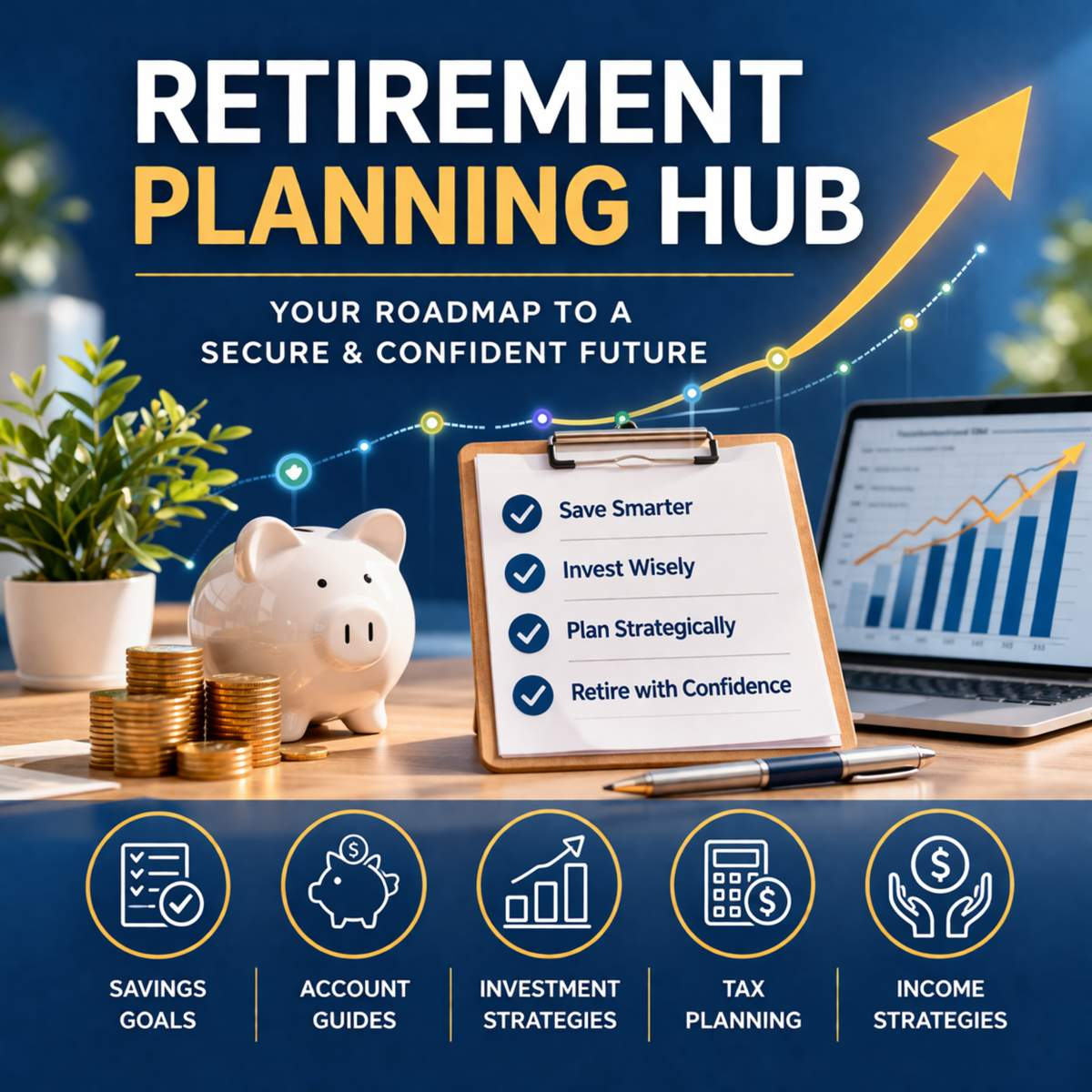
Retirement Planning Hub
Welcome to our comprehensive guide on Retirement Planning, your go-to resource for navigating the complexities of preparing for your golden years. Whether you’re just starting to think about retirement or are in the final stretch before leaving the workforce, we offer detailed insights and actionable advice to help you achieve a secure and comfortable retirement. Explore blog to find the information you need to make informed decisions about your future.
Start Your Retirement Journey
- How Much Do You Really Need to Retire? (savings goals & benchmarks)
- Retirement Accounts Explained: 401(k), IRA, Roth IRA
- Social Security 101: How It Works & When to Claim
- Taxes in Retirement: RMDs & Roth Conversions (planning for efficiency)
- Comprehensive Retirement Planning Checklist (all-in-one guide)
- Retirement Budging 101
- Retirement Distribution Rules and Strategies – How to Withdraw Income with Confidence
🔹 Retirement Planning in Your 20s & 30s
Focus: Laying the foundation
- Why starting early matters (power of compounding).
- Balancing student loans, career, and saving for retirement.
- Intro to employer retirement accounts (401(k), Roth IRA).
- Setting first savings goals (1× salary by 30, etc.).
- Common mistakes to avoid (cash-outs, lifestyle creep).
👉 Suggested reading:
“Retirement Planning in Your 20s and 30s: Building Wealth Early”
🔹 Retirement Planning in Your 50s & 60s
Focus: Transitioning from accumulation to drawdown
- Catch-up contributions and maximizing accounts.
- Evaluating retirement readiness (savings vs. income needs).
- Social Security timing strategies.
- Medicare decisions and healthcare planning.
- Downsizing and debt elimination.
- Finalizing estate and legacy plans.
👉 Suggested cornerstone post:
“Retirement Planning in Your 50s and 60s: Catch-Up Strategies and Transition Planning”
🧭 Retirement Planning Roadmap (Start Here)
Retirement planning isn’t a single decision—it’s a lifelong process. The strategy that works in your 20s is very different from what you need in your 50s or in retirement.
This roadmap walks you through each stage of the journey, with links to detailed guides so you can take action at every step.
🔥 Retirement Roadmap at a Glance
| Phase | Focus | Key Action | Outcome |
|---|---|---|---|
| 1. Foundation | Start early & build habits | Open accounts, begin saving | Momentum |
| 2. Growth | Increase contributions | Invest consistently | Wealth accumulation |
| 3. Optimization | Maximize efficiency | Tax strategy + account mix | Faster growth |
| 4. Pre-Retirement | Prepare transition | Estimate income & expenses | Readiness |
| 5. Retirement Income | Create income streams | Withdraw strategically | Stability |
| 6. Legacy & Protection | Preserve wealth | Healthcare + estate planning | Security |
🔹 Phase 1: Build Your Foundation (Getting Started)
Best For: Beginners, early career
Goal: Start saving and harness compound growth
Key Actions:
- Open a 401(k) or IRA
- Contribute enough to get employer match
- Set your first savings goal (e.g., 10–15%)
Why It Matters:
Time is your greatest advantage—starting early reduces how much you need later.
👉 Start Here:
- Retirement Planning in Your 20s and 30s: Building Wealth Early
- Retirement Accounts Explained: 401(k), IRA, Roth IRA
🔹 Phase 2: Accelerate Growth (Wealth Building Years)
Best For: 30s–40s
Goal: Increase contributions and grow investments
Key Actions:
- Increase savings rate over time
- Invest consistently through market cycles
- Avoid lifestyle inflation
Why It Matters:
Your peak earning years are your biggest opportunity to build wealth.
👉 Start Here:
- How Much Do You Really Need to Retire?
- Retirement Savings Strategies and Calculators
🔹 Phase 3: Optimize Your Strategy (Efficiency Phase)
Best For: Mid-career and higher earners
Goal: Maximize tax efficiency and account strategy
Key Actions:
- Balance Roth vs. Traditional contributions
- Consider backdoor Roth strategies
- Use HSAs for retirement healthcare
Why It Matters:
Tax strategy can significantly impact your long-term retirement income.
👉 Start Here:
- Taxes in Retirement: RMDs & Roth Conversions
- Tax Planning & Optimization for Retirement
🔹 Phase 4: Prepare for Retirement (Transition Phase)
Best For: 50s–early 60s
Goal: Shift from accumulation to planning
Key Actions:
- Estimate retirement expenses
- Maximize catch-up contributions
- Plan Social Security timing
- Evaluate healthcare and Medicare
Why It Matters:
This phase determines whether your plan is realistic—and sustainable.
👉 Start Here:
- Retirement Planning in Your 50s and 60s
- Social Security 101: How It Works & When to Claim
🔹 Phase 5: Create Retirement Income (Distribution Phase)
Best For: Retirees
Goal: Turn savings into reliable income
Key Actions:
- Develop a withdrawal strategy
- Understand Required Minimum Distributions (RMDs)
- Balance income sources (Social Security, investments, etc.)
Why It Matters:
How you withdraw money is just as important as how you saved it.
👉 Start Here:
- Retirement Distribution Rules and Strategies – How to Withdraw Income with Confidence
- Required Minimum Distributions (RMDs) – How to Calculate and Manage Them
🔹 Phase 6: Protect & Preserve Your Wealth (Legacy Phase)
Best For: Late retirement
Goal: Maintain financial security and plan your legacy
Key Actions:
- Plan for healthcare and long-term care
- Manage taxes on withdrawals
- Establish estate and legacy plans
Why It Matters:
Protecting your wealth ensures it lasts—and supports future generations.
👉 Start Here:
- Healthcare and Long-Term Care in Retirement
- Estate and Legacy Planning Basics
Brows by Topic
Retirement Savings Strategies and Calculators
How much will you need—and how do you get there? Learn contribution targets by age, how to use catch-ups, and ways to prioritize 401(k)s, IRAs, and HSAs. Then run the numbers with our step-by-step calculators.
You’ll learn: savings rate benchmarks, Roth vs. traditional trade-offs, and how compound growth affects timelines.
Social Security Planning and Maximizing Benefits
Navigating Social Security can be complex, but it’s a critical component of your retirement planning strategy. Learn about claiming benefits, understanding your eligibility, and integrating Social Security into your overall retirement plan.
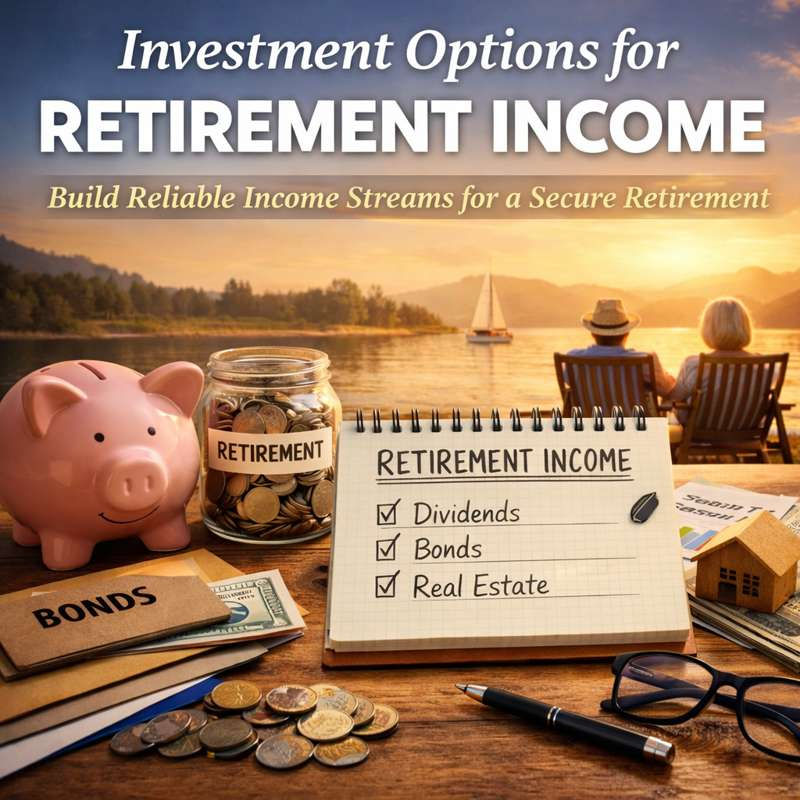
Investment Options for Retirement Income
Discover top investment options for retirement income, including dividend stocks, bonds, real estate, annuities, and more.

Retirement Income Planning and Withdrawal Strategies
As you approach or enjoy retirement, understanding the various investment options available for generating reliable income becomes essential. Learn about various withdrawal strategies, managing taxes, and balancing income sources to maintain financial stability throughout your retirement.

Healthcare and Long-Term Care in Retirement
Healthcare is a significant concern for retirees. Get informed about estimating future healthcare costs, understanding Medicare, and planning for long-term care to protect your health and finances.
Popular Posts
- Retirement Planning – Define Your Vision, Calculate Your Number, and Build a Future
- Retirement Planning Terms: A Guide for Future Retirees
From the Blog
Check out our most recent post covering a number of retirement topics and say up to date with our latest.
-
High-Yield Savings Accounts in Retirement: Smart Strategy or Costly Mistake?
🧠 5 Key Takeaways: High-Yield Savings Accounts in Retirement 💡 💡 Quick Answer: Should You Use a High-Yield Savings Account in Retirement? Yes—but only for the right purpose. A high-yield savings account (HYSA) is best used in retirement for short-term stability—not long-term growth. ✅ Use It For: ⚠️ Avoid Using It For: 🧠 What This […]
-
Required Minimum Distributions (RMDs) – How to Calculate and Manage Them
1. Introduction Once you enter retirement, the focus shifts from growing your nest egg to using it wisely. For anyone with tax-deferred accounts like Traditional IRAs or 401(k)s, this transition comes with an important milestone: Required Minimum Distributions (RMDs). These withdrawals aren’t optional. They represent the IRS’s way of finally collecting tax revenue on money […]
-
The Retiree’s Guide to Certificates of Deposit: Safety, Income, and Smart Laddering
1. Introduction — Why CDs Still Matter for Today’s Retirees Navigating retirement in today’s economy requires balancing two competing realities: markets are more volatile than ever, yet retirees still need steady income that won’t disappear during downturns. Over the last few years, interest rates have climbed sharply, inflation has been unpredictable, and traditional fixed-income markets […]
-
Why Certificates of Deposit Are a Great Retirement Tool (And How to Use Them Wisely)
Introduction — Why Retirees Need Safe, Predictable Income Retirement changes the way you think about money. After decades of earning and saving, the focus shifts from growing your wealth to protecting it—and turning that nest egg into steady, predictable income. Unlike younger investors, retirees can’t afford major losses, and they often prefer investments that offer […]
-
RMD Rules and Tax Implications – What Every Retiree Should Know
Introduction — Why RMDs Matter More Than Ever for Today’s Retirees Required Minimum Distributions (RMDs) are one of the most important—and most overlooked—retirement rules that older Americans face. For many retirees, these mandatory withdrawals trigger more than just additional taxable income. They can reshape your entire financial picture by pushing you into higher tax brackets, […]
-
Retirement Budgeting 101 – How to Plan, Spend, and Enjoy Financial Freedom
💡 Introduction — Why Retirement Budgeting Is Different Retirement isn’t the end of your financial story — it’s the moment the story changes. Your routine paychecks stop, but your financial responsibilities don’t. Income becomes less predictable, expenses shift, and longevity turns from a distant idea into the centerpiece of your plan. In your working years, […]


🔗 Explore Related Financial Topics
Retirement planning connects several core areas of personal finance, including investing, tax strategy, risk management, and long-term wealth building. Explore these related topics to strengthen your overall financial plan.
- Saving & Investing – Retirement accounts rely on disciplined saving and long-term investment strategies designed to grow assets over time.
- Tax Planning & Optimization – Retirement planning is closely tied to tax strategy, including tax-advantaged accounts, withdrawals, and long-term tax efficiency.
- Insurance & Risk Management – Protecting income, managing longevity risk, and planning for healthcare costs are critical parts of retirement security.
- Wealth Building & Financial Independence – Retirement planning supports broader goals of financial independence, asset growth, and sustainable income.
- Financial Planning Roadmap – Follow a structured step-by-step framework that connects budgeting, saving, investing, and retirement planning into a cohesive financial strategy.
About the Author — Jason Bryan Ball
Financial Educator | Founder of Jason’s Fin Tips
Read more about Jason Bryan Ball →