
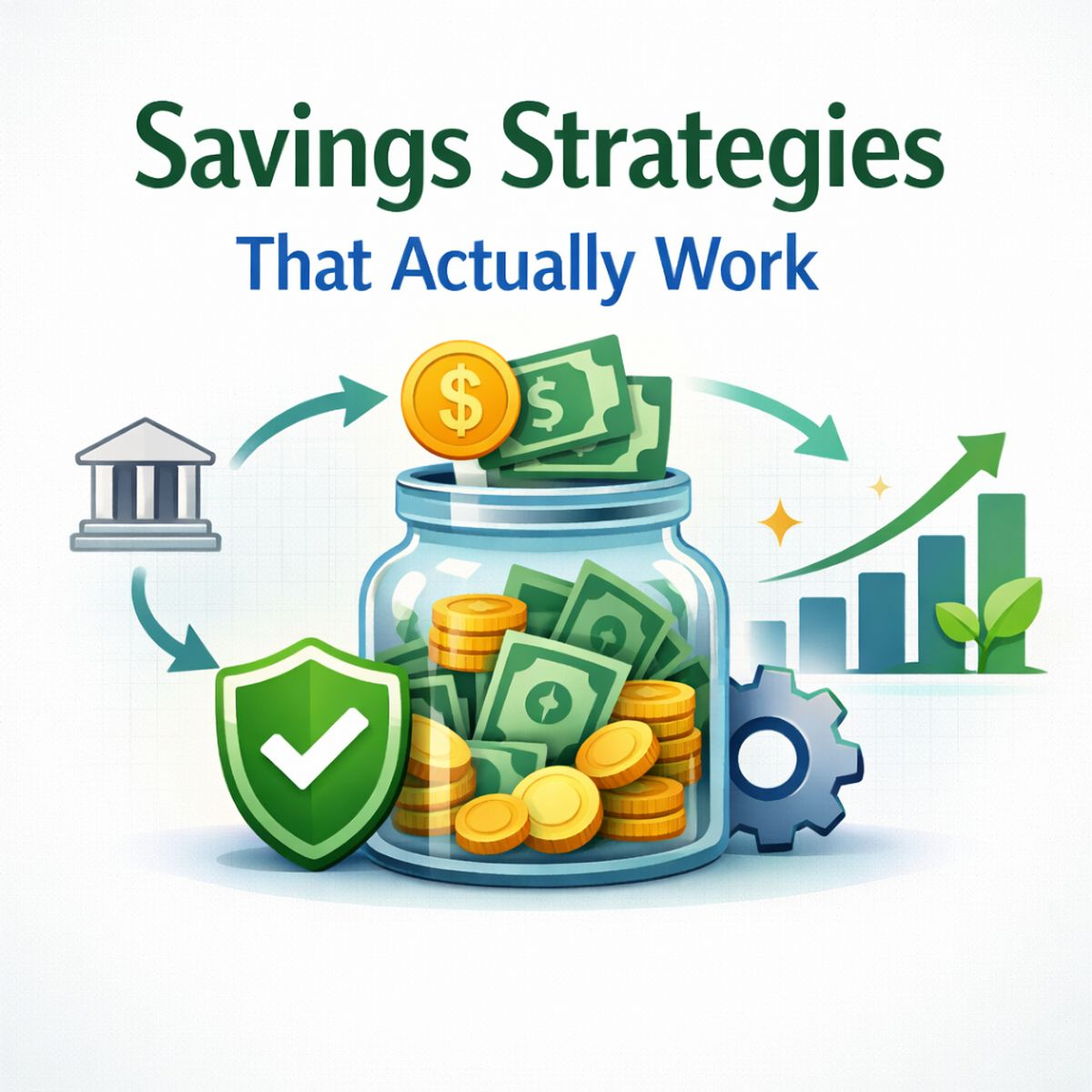
🧭 Savings Strategies & Techniques
Explore Proven Ways to Save More and Build Financial Stability
Saving money isn’t just about setting cash aside—it’s about building a system that works consistently over time.
Whether you’re starting your first savings plan or refining your financial strategy, the right approach can help you save more efficiently and reach your goals faster.
This page brings together practical strategies and techniques to help you:
- Build consistent saving habits
- Reduce unnecessary expenses
- Automate your finances
- Grow your savings more effectively
👉 Use the sections below to explore the strategies that fit your financial situation and goals.
🔹 What Are Savings Strategies?
Savings strategies are the methods and systems you use to consistently set aside money and grow it over time.
At their core, effective saving strategies help you answer three key questions:
- How much should I save?
- How do I save consistently?
- Where should I keep my savings?
Strong savings habits don’t come from a single tactic—they come from combining multiple approaches that work together.
🔑 The Three Pillars of Effective Saving
Behavioral Habits (Consistency & Discipline)
These are the day-to-day actions that drive results. Consistent saving—no matter the amount—is what builds long-term financial stability.
Financial Systems (Automation & Structure)
Systems remove friction and reduce decision-making. Automation, budgeting frameworks, and account structure make saving predictable and repeatable.
Smart Tools (Accounts & Optimization)
The right tools help your money work more efficiently. High-yield savings accounts, cash management tools, and optimized account structures can accelerate your progress.
⚙️ Why Savings Strategies Matter
Without a clear strategy, saving often becomes inconsistent and reactive.
A structured approach helps you:
- Build an emergency fund faster
- Avoid unnecessary debt during financial shocks
- Take advantage of compound growth
- Stay aligned with your financial goals
Over time, even small improvements in your saving system can lead to meaningful long-term results.
The sections below break these strategies into clear, actionable categories so you can build a system that fits your financial situation and goals.
🔹 Explore Savings Strategies by Topic
💰 Building Your Savings Foundation
Start with the fundamentals of saving and financial stability. A strong foundation makes every other strategy more effective.
- Creating a personalized savings plan
- Building an emergency fund
- Aligning your budget with your financial goals
👉 These strategies help you establish stability before focusing on growth.
⚙️ Automating and Simplifying Savings
Consistency is one of the biggest challenges in saving—and automation solves that problem.
- Automated savings systems
- Pay-yourself-first strategies
- Manual vs automated saving approaches
👉 Automation reduces decision fatigue and builds savings habits over time.
📉 Reducing Expenses to Save More
Saving more doesn’t always require earning more—it often starts with optimizing what you already spend.
- Identifying hidden financial leaks
- Cutting recurring expenses
- Making smarter spending decisions
👉 Small expense changes can create significant long-term savings.
🏦 Optimizing Where You Keep Your Money
Where you store your savings matters. The right accounts can help your money grow faster while staying accessible.
- High-yield savings accounts
- Cash management strategies
- Short-term vs long-term savings tools
👉 Even modest interest can compound into meaningful growth over time.
🧠 Behavioral Strategies for Better Saving
Saving success is driven as much by behavior as it is by math. Even the best financial plan won’t work if your habits don’t support it.
Building strong saving habits helps turn short-term effort into long-term consistency.
🔑 Key Behavioral Strategies
The Psychology of Saving Money
Saving often requires delaying gratification. Understanding how your brain responds to spending vs. saving can help you make better financial decisions and avoid impulse purchases.
Habit Formation Techniques
Small, repeatable actions create lasting results. Strategies like “pay yourself first,” setting automatic transfers, and linking saving to existing routines can make saving feel effortless over time.
Overcoming Spending Patterns
Many people struggle with recurring habits like impulse buying, subscription creep, or lifestyle inflation. Identifying these patterns is the first step toward redirecting that money into savings.
⚙️ Simple Ways to Improve Saving Behavior
- Set clear, specific savings goals
- Automate savings to remove decision-making
- Create visual progress (track milestones)
- Reduce friction for saving and increase friction for spending
👉 Building the right habits makes saving sustainable, consistent, and easier to maintain over time.nt.
.
🔗 Featured Savings Guides
Start with these core resources to build your savings system:
- Automation vs. Manual Saving: Which Strategy Suits You Best?
- The Beginner’s Guide to Automated Savings
- How to Build a Personalized Savings Plan for Financial Success
- Smart Budget Adjustments for Effective Long-Term Saving
- Trimming the Fat – How to Identify Hidden Financial Leaks in Your Budget
- Smart Ways to Save Money – A Comprehensive Guide to Building Financial Security
🆕 Latest in Savings Strategies & Techniques
Dive into our most recent blog post and continue your financial education journey.
-
Automation vs. Manual Saving: Which Strategy Suits You Best?
Introduction Welcome to the critical journey of personal finance, where the ability to save effectively stands as a pillar of financial stability and growth. In our quest to secure a prosperous future, each of us faces a pivotal decision: should we embrace the modern convenience of automated saving or adhere to the traditional, hands-on method […]
-
The Beginner’s Guide to Automated Savings – How to Set It and Forget It
✨ 1. Introduction In today’s fast-paced world, achieving financial stability is a cornerstone of personal well-being — yet consistency remains one of the hardest financial habits to master. Many people start saving with good intentions but struggle to stay on track amid bills, spending temptations, and unexpected expenses. That’s where automated savings come in — […]
-
How to Build a Personalized Savings Plan for Financial Success
💡 1. Introduction Saving money is more than just putting cash aside — it’s about building a financial foundation that supports your goals, values, and future ambitions. Yet despite its importance, many people struggle to save consistently because their approach isn’t personalized. A one-size-fits-all plan rarely works. The right savings strategy depends on your income, […]
-
Smart Budget Adjustments for Effective Long-Term Saving
I. Introduction Small adjustments often make the biggest difference in your financial life. Redirecting the cost of a daily coffee, a few unused subscriptions, or even modest lifestyle upgrades can add up to thousands of dollars saved over the next decade. These seemingly minor shifts become powerful when they’re intentional—and repeated consistently. In a world […]
-
Trimming the Fat – How to Identify and Fix Hidden Financial Leaks in Your Budget
Introduction — Why Small Leaks Sink Big Budgets Most people don’t overspend because they’re careless — they overspend because modern life makes spending nearly effortless. With tap-to-pay checkouts, frictionless online shopping, and dozens of subscriptions quietly auto-renewing behind the scenes, money moves out of your account long before you fully realize it. Add rising delivery […]
-
Smart Ways to Save Money – A Comprehensive Guide to Building Financial Security
✅ Key Takeaways — How to Save Smarter in 2025 ✅ Automate your savings. Pay yourself first with recurring transfers before you spend. Consistency matters more than perfection. ✅ Build an emergency fund early. Aim for 3–6 months of essential expenses to protect against income shocks and high-interest debt. ✅ Use high-yield, low-risk accounts. Let […]
-
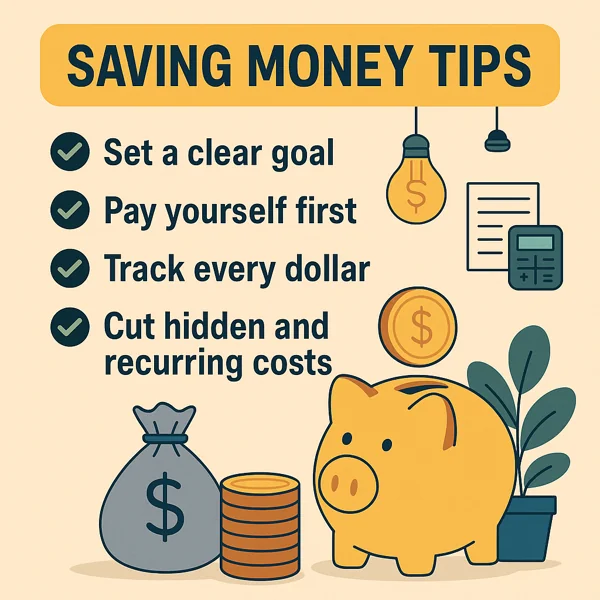
Saving Money Tips: How to Build Wealth and Spend Smarter
🧭 5 Key Takeaways Introduction — Why Saving Money Is the Cornerstone of Financial Freedom Do you ever feel like no matter how much you earn, there’s never enough left to save? You’re not alone. Many Americans face the same challenge — in fact, 44% of adults say they couldn’t cover a $1,000 emergency in […]
-
5 Steps to Seamlessly Integrate Savings into Your Daily Budget
🔑 Key Takeaways: 5 Steps to Seamlessly Integrate Savings into Your Daily Budget Introduction – Make Saving Effortless, Not Optional Saving money shouldn’t feel like a burden or an afterthought — it should feel as natural as paying your rent or buying groceries. Yet for many households, saving remains something we intend to do rather […]
-
How to Prepare Your Finances for a Strike – A Comprehensive Guide
Key Takeaways Introduction Strikes are a fundamental tool for workers seeking better pay, benefits, and working conditions. However, they come with significant financial risks, including lost wages, mounting bills, and potential long-term economic strain. Many workers find themselves unprepared for the financial burden of a strike, leading to debt accumulation, difficulty paying for essentials, and […]
-
Smart Savings – Proven Strategies and Techniques to Grow Your Wealth
Key Takeaways Introduction: The Science of Saving Money Saving money is more than just setting aside cash each month; it’s about developing financial habits that lead to long-term wealth accumulation. Many people struggle with saving because they prioritize current spending over future security. The psychology behind saving often involves overcoming impulsive financial behaviors and adopting […]
-
10 Savings Strategies for Financial Freedom
Key Takeaways Introduction Saving money is one of the most fundamental steps toward achieving financial independence and security. Whether you’re just starting out or refining your approach, a clear savings strategy can help you meet your goals faster and more effectively. This guide explores 10 proven strategies, complemented by real-life examples, actionable tools, and insights […]
-
10 Proven Strategies to Slash Monthly Expenses Without Compromising Your Lifestyle
Key Takeaways Introduction Managing personal finances in today’s fast-paced world can feel like walking a tightrope. Striking a balance between financial sustainability and maintaining your lifestyle often seems challenging, especially with rising living costs. However, living comfortably while saving money isn’t just a dream – it’s a matter of making informed, intentional choices. In this […]



❓ Savings Strategy FAQs
What is the best savings strategy?
The best strategy is one that is consistent and sustainable. For most people, combining automation with a structured budget produces the strongest results.
How much should I save each month?
A common benchmark is 20% of income, but consistency matters more than hitting a specific number.
Is automating savings better than manual saving?
Automation typically leads to better long-term results because it removes the need for ongoing decision-making.
Where should I keep my savings?
Short-term savings are best kept in safe, liquid accounts like high-yield savings accounts.
🏁 Build Your Saving System
Saving money isn’t about one decision—it’s about building a system you can rely on.
Start with the basics, improve gradually, and use the resources above to continue strengthening your financial foundation.
🔗 Explore Related Budgeting & Money Management Topics
Saving money works best when it’s part of a complete financial system. Explore these related areas to strengthen your overall financial plan:
- Back to Budgeting & Money Management Hub
Build a complete system to manage income, expenses, and long-term financial goals - Creating a Budget
Learn how to design a budgeting system that supports consistent saving - Expense Tracking & Analysis
Understand where your money goes and identify opportunities to save more - Debt Management & Repayment Plans
Reduce financial obligations to free up more money for saving - Financial Goal Setting & Prioritization
Align your savings strategy with short-term and long-term financial goals
📘 Featured Financial Planning Guides
- The Financial Planning Roadmap
Follow a step-by-step system to build a complete financial plan - Jason’s Fin Tips Budgeting Frameworks
Explore structured approaches to managing money and improving consistency - How to Create a Financial Plan
Learn how to connect budgeting, saving, and investing into one system