Introduction
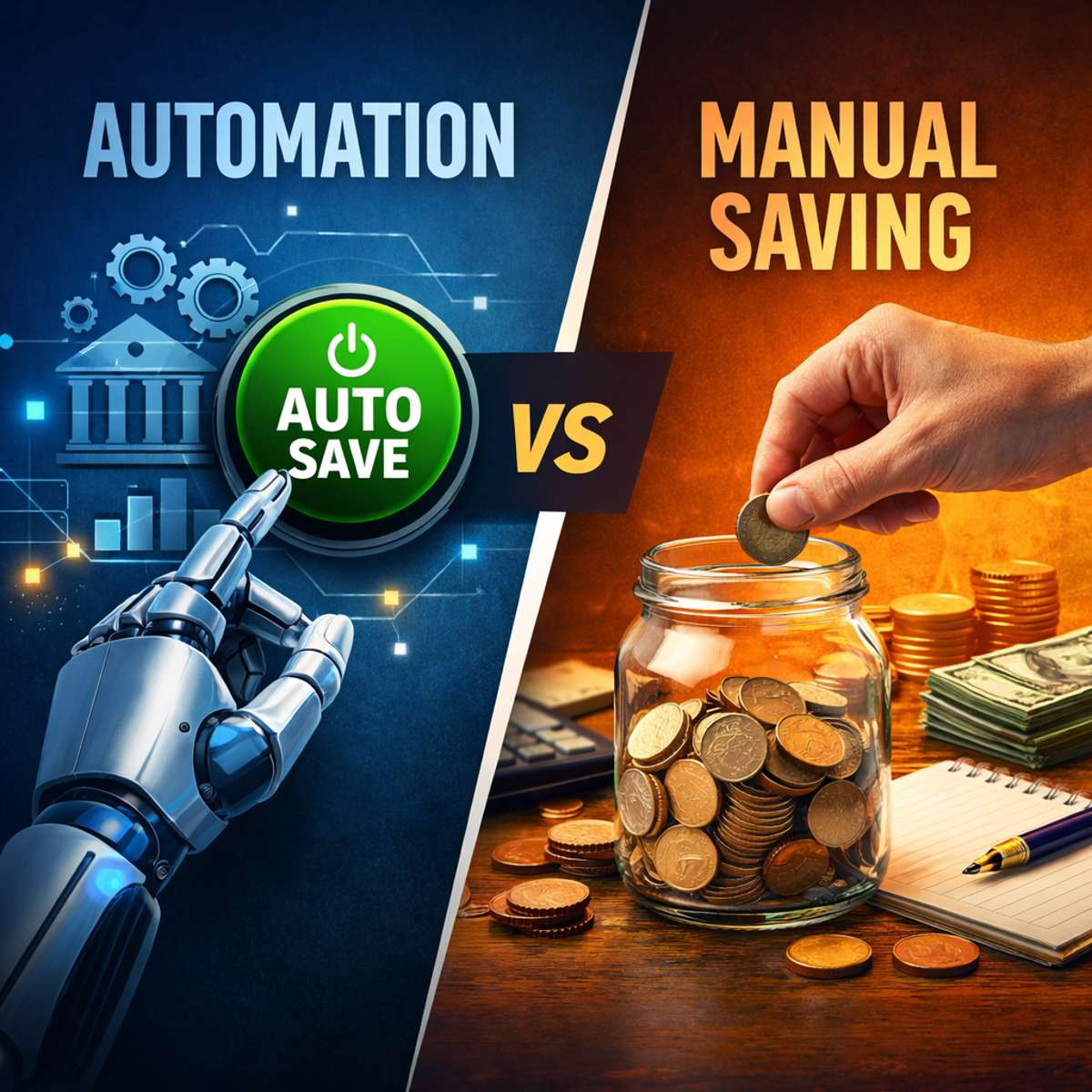
Welcome to the critical journey of personal finance, where the ability to save effectively stands as a pillar of financial stability and growth. In our quest to secure a prosperous future, each of us faces a pivotal decision: should we embrace the modern convenience of automated saving or adhere to the traditional, hands-on method of manual saving? This choice is not just a practical matter—it’s a reflection of our personal values and financial goals, carrying significant implications for our financial health and lifestyle.
Automated saving, with its “set-it-and-forget-it” approach, promises to simplify your financial management, acting like a silent partner in your wealth-building plan. It allows you to cultivate your savings quietly and consistently, with little day-to-day effort. Conversely, manual saving offers the tactile satisfaction of actively managing your finances, giving you full control over every dollar you set aside, and reinforcing your financial discipline and awareness.
Which method aligns best with your financial landscape? Does the seamless integration of automated saving into your lifestyle appeal to you, or do you thrive on the hands-on involvement of manual saving, which echoes your commitment to financial prudence?
As we dive deeper into the art of saving, we encourage you to reflect on your past experiences: the times when saving was effortless and the instances it felt like a struggle. These moments are crucial in choosing a saving strategy that not only meets your financial goals but also fits seamlessly with your life’s rhythm.
Embark with us on a detailed comparison of automated versus manual saving. We’ll unravel the advantages and challenges of each approach to equip you with the insights necessary to make empowered and informed decisions about your savings strategy. This exploration is more than a comparison—it is a journey towards financial enlightenment and achieving your dreams.
As you turn this new page in your financial story, consider this thought-provoking question: Between the predictable rhythm of automated saving and the engaged control of manual saving, which path resonates with you, promising not only financial growth but also a deeper harmony with your personal financial philosophy?
🔹 Quick Answer: Why Do Some People Prefer Manual Saving?
Despite the convenience of automated systems, some individuals prefer manual saving because it provides greater control over their finances, reinforces financial discipline, increases awareness of spending habits, and offers flexibility for irregular income or changing financial priorities.
Key Reasons People Choose Manual Saving
- Greater Control Over Timing and Amounts
Individuals can decide exactly when and how much to save, allowing for real-time adjustments based on cash flow and priorities. - Stronger Awareness of Money Habits
Actively transferring money creates a conscious connection to spending and saving decisions, improving financial awareness. - Flexibility for Variable Income
Those with inconsistent income—such as freelancers or content creators—can adapt their savings based on what they earn each month. - Psychological Reinforcement of Saving Behavior
The act of manually saving builds discipline and reinforces positive financial habits through intentional action.
Why This Matters
While automation is often recommended for consistency, manual saving appeals to individuals who value control, awareness, and behavioral engagement in their financial decisions.
Key Takeaways
- Critical Decision Making: Choosing between automated and manual saving is a pivotal decision that reflects your personal values and financial goals.
- Automated Saving Benefits: Automated saving offers a “set-it-and-forget-it” approach that simplifies financial management and allows for consistent, effortless growth of savings.
- Advantages of Manual Saving: Manual saving provides the opportunity for hands-on financial management, reinforcing financial discipline and deepening awareness of personal spending habits.
- Importance of Personal Reflection: Reflect on your past saving experiences to determine which strategy best aligns with your lifestyle and financial objectives.
Now that you understand the key differences, the next question is: which strategy actually fits your situation?
🔹 Which Saving Strategy Is Better for YOU?
Choosing between automated and manual saving isn’t just about efficiency—it’s about aligning your saving strategy with your income, habits, and financial behavior. The best approach depends on how you manage money in real life, not just what works in theory.
Quick Decision Framework
| If You Are… | Best Strategy |
|---|---|
| Busy with a consistent income and limited time to manage finances | Automated saving |
| Earning variable or irregular income (content creators, freelancers, commission-based roles) | Hybrid approach (automation + manual adjustments) |
| Highly disciplined and prefer hands-on control over every financial decision | Manual saving |
| Struggling to save consistently or often forget to transfer money | Automated saving |
How to Use This Framework
- Start with your reality, not your ideal habits
Choose a system that works even when life gets busy or unpredictable. - Match your saving method to your income structure
Stable income supports automation, while variable income benefits from flexibility. - Be honest about your behavior
If consistency is a challenge, automation can remove friction and build momentum. - Consider combining strategies
Many people benefit from automating a baseline amount while manually adjusting additional savings over time.
Why This Matters
The “best” saving strategy isn’t universal—it’s personal. By aligning your approach with your lifestyle and financial patterns, you increase the likelihood of long-term consistency and success.
Understanding Automated Saving
At the heart of modern financial planning lies the concept of automated saving, a method that leverages technology to streamline the process of setting aside funds for future needs. This approach, often hailed for its simplicity and effectiveness, operates under a straightforward premise: by automating transfers from your checking account to your savings or investment accounts, you ensure a consistent flow of savings without the need for regular, manual intervention.
The Mechanics of Automated Saving
Automated saving begins with setting up a direct transfer system through your bank or a dedicated saving app. This system is designed to move a predetermined amount of money at regular intervals—be it weekly, bi-weekly, or monthly—into a designated savings account. The beauty of this system lies in its “set it and forget it” nature, where once the initial setup is complete, the process continues in the background, quietly building your financial reserves.
The Benefits of Embracing Automation
- Consistency and Discipline: Perhaps the most significant advantage of automated saving is its ability to instill a sense of financial discipline. By making saving an automatic part of your financial routine, you eliminate the risk of forgetfulness or the temptation to skip a saving contribution. It’s akin to having a diligent financial assistant who ensures that a portion of your income is consistently diverted to your savings, building a robust financial cushion over time.
- Time-Saving and Convenience: In our fast-paced world, time is a precious commodity. Automated saving respects this reality by minimizing the time and effort required to manage your savings. No longer do you need to remind yourself to transfer funds each month; automation handles this task, freeing you up to focus on other aspects of your life and financial planning.
- Reduced Temptation to Spend: By automatically transferring funds out of your checking account, automated saving effectively reduces the pool of available cash you might be tempted to spend on non-essential items. This psychological barrier can be a powerful tool in reinforcing your saving habits, ensuring that your savings goals are prioritized over impulsive spending.
Navigating the Potential Drawbacks
While automated saving offers numerous benefits, it’s essential to acknowledge and navigate its potential drawbacks. One such challenge is the lack of flexibility in the short term. Once your saving contributions are automated, it might require additional effort to adjust these settings in response to sudden financial changes or emergencies. Moreover, there’s the risk of the out-of-sight, out-of-mind effect, where the detachment from the saving process might lead to reduced awareness of your financial situation and habits.
In this segment of our exploration, we’ve peeled back the layers of automated saving, revealing its mechanics, benefits, and challenges. As we move forward, we’ll contrast this with the manual approach to saving, offering a comprehensive perspective to guide you in choosing the strategy that best aligns with your financial goals and lifestyle. The journey toward effective saving is not just about the method; it’s about finding harmony between your financial practices and your personal values.
Exploring Manual Saving
In contrast to the set-and-forget nature of automated saving, manual saving harkens back to a more traditional, hands-on approach to financial management. This method involves actively choosing to transfer or set aside money into savings, a practice that demands regular attention, discipline, and a proactive stance towards one’s finances.
The Essence of Manual Saving
Manual saving is characterized by personal involvement in the saving process. Whether it’s physically depositing cash into a savings account, transferring funds between accounts online, or placing money into a dedicated savings jar at home, this approach requires deliberate action. It’s the financial equivalent of tending to a garden with your own hands, where each act of saving is a conscious decision, reinforcing your commitment to financial goals.
Advantages of a Hands-On Approach
- Greater Control and Flexibility: One of the most significant benefits of manual saving is the control it offers. You decide when and how much to save, allowing for adjustments based on current financial circumstances or unexpected needs. This flexibility can be particularly advantageous in times of financial flux, where rigid automated transfers might not be ideal.
- Enhanced Financial Awareness: Engaging directly with your saving efforts tends to foster a deeper awareness of your financial habits and spending patterns. This heightened consciousness can lead to more informed financial decisions, encouraging a more mindful approach to spending and saving.
🔹 Why Manual Saving Feels More Rewarding (Behavioral Finance Insight)
Beyond strategy and structure, manual saving taps into powerful behavioral and psychological drivers that can make the process feel more meaningful and sustainable for some individuals.
- Dopamine Effect of Intentional Saving
Actively transferring money into savings creates a sense of accomplishment, triggering a small psychological reward that reinforces the behavior. - Habit Reinforcement (Action → Reward Loop)
Each manual saving action strengthens the habit loop—decision, action, reward—making saving more intentional and consistent over time. - Increased Financial Awareness
Regular interaction with your finances keeps you closely connected to your income, spending, and progress toward goals. - Reduced “Automation Blindness”
Fully automated systems can sometimes lead to disengagement, where individuals lose visibility into their financial behavior. Manual saving keeps you actively involved.
Why This Matters
For many individuals, long-term financial success isn’t just about systems—it’s about behavior. Manual saving can strengthen the habits and awareness that drive better financial decisions over time.
Facing the Challenges
Despite its benefits, manual saving is not without its challenges. The requirement for self-discipline and regular attention to saving activities can be daunting for some. Without the consistency enforced by automation, there’s a higher risk of savings contributions being overlooked or deprioritized in favor of immediate spending needs.
- Requires Discipline and Effort: The success of manual saving hinges on personal discipline and the effort to make regular contributions. Unlike automated saving, where the process runs in the background, manual saving demands ongoing commitment and action, which can sometimes be challenging to maintain.
- Risk of Inconsistency: Without the systematic approach of automation, manual savers may find their contributions fluctuate, potentially leading to inconsistent savings growth. Life’s distractions and financial temptations can sometimes derail even the best intentions, highlighting the need for vigilance in manual saving practices.
In this exploration of manual saving, we’ve delved into its core principles, benefits, and inherent challenges. As we weave through the tapestry of saving strategies, it becomes clear that the choice between automation and manual saving is not merely a financial decision but a reflection of personal values, lifestyle, and discipline. As we move forward, our comparative analysis will further illuminate these strategies, guiding you toward a saving approach that resonates with your financial aspirations and personal ethos.
While manual saving strengthens awareness and discipline, it may not always provide the consistency needed for long-term growth—this is where automation or a hybrid approach can play a critical role.
Comparing Automation and Manual Saving
Having explored the intricacies of both automated and manual saving, it’s essential to juxtapose these strategies to illuminate their distinct features and how they cater to varied financial personalities and goals. This comparative analysis aims to provide a clearer perspective, assisting you in identifying the saving method that aligns most harmoniously with your financial landscape and personal preferences.
Initial Setup and Ease of Use
- Automated Saving: Once the initial setup is complete, automated saving runs seamlessly in the background, requiring minimal ongoing effort. This ease of use is a significant advantage for those who prefer a hands-off approach to their finances or those with busy lifestyles that might not accommodate regular manual savings activities.
- Manual Saving: In contrast, manual saving demands regular, active participation. While it offers greater control, this approach can be more time-consuming and requires a higher level of financial discipline to ensure consistent saving contributions.
Impact on Financial Habits and Awareness
- Automated Saving: While automation excels in consistency and ease, one potential downside is the reduced day-to-day engagement with your finances, which can lead to a lesser degree of financial awareness. However, for individuals who regularly review their financial statements, this may not be a significant issue.
- Manual Saving: The hands-on nature of manual saving inherently promotes a deeper connection with your financial habits. This regular engagement can lead to a better understanding of spending patterns and more informed financial decisions, fostering a proactive financial mindset.
Suitability for Different Financial Goals and Situations
- Automated Saving: This approach is particularly well-suited for long-term savings goals, such as retirement or building an emergency fund, where consistent, incremental contributions can grow significantly over time. It’s also ideal for individuals who value convenience and are looking for a straightforward way to ensure they’re regularly saving without having to think about it too much.
- Manual Saving: For those with fluctuating incomes or who prefer a more hands-on approach to managing their finances, manual saving offers the flexibility to adjust saving amounts and frequencies as needed. It’s also beneficial for short-term savings goals, where you might want to save more aggressively over a shorter period.
🔹 The Most Effective Strategy: Combining Automation + Manual Saving
While automated and manual saving are often presented as competing approaches, the most effective strategy for many individuals is not choosing one over the other—but combining both.
A hybrid saving strategy leverages the strengths of each method to create a system that is both consistent and adaptable, aligning with real-life income patterns and financial behavior.
How a Hybrid Saving Strategy Works
- Automate Your Baseline Savings
Set up automatic transfers for essential financial goals such as emergency funds, retirement contributions, or long-term investments. This creates consistency and ensures progress happens regardless of day-to-day decisions. - Manually Allocate Additional Income
Use manual saving for bonuses, side hustle income, or surplus funds. This allows you to adjust based on real-time financial conditions and priorities. - Use Automation for Discipline, Manual for Optimization
Automation builds the habit and foundation, while manual saving gives you control to optimize and accelerate your progress.
Example: Hybrid Saving in Action
Imagine you automatically transfer $300 per month into savings. At the end of the month, after reviewing your finances, you manually transfer an additional $150 from leftover income.
- Automation ensures steady, consistent progress
- Manual saving increases contributions when possible
This combination creates both stability and flexibility—a powerful advantage in long-term financial planning.
Why This Strategy Works
- Consistency Without Rigidity
You build reliable saving habits while maintaining flexibility for changing circumstances. - Improved Financial Awareness
Manual contributions keep you actively engaged with your finances. - Better Alignment With Real-Life Income Patterns
Especially effective for individuals with variable or unpredictable income.
When a Hybrid Approach Makes the Most Sense
- You have a mix of fixed and variable income
- You want structure but also control and flexibility
- You are focused on both consistency and optimization
Why This Matters
Financial success is rarely about choosing a single “perfect” system. It’s about building a strategy that adapts to your life. A hybrid approach allows you to benefit from automation’s consistency while maintaining the intentionality and awareness that manual saving provides.
📊 Table 1: Comparing Automated vs. Manual Saving (and Hybrid Strategy)
| Feature | Automated Saving | Manual Saving | Hybrid Strategy (Best of Both) |
|---|---|---|---|
| Consistency | High – automatic transfers ensure regular contributions | Varies – depends on discipline and follow-through | High – automated baseline with flexible manual additions |
| Effort Required | Low – set once and runs automatically | High – requires ongoing attention and action | Medium – automated foundation with periodic adjustments |
| Flexibility | Low to Medium – changes require system updates | High – contributions can be adjusted anytime | High – structured but adaptable to real-time income |
| Financial Awareness | Lower – less frequent interaction with finances | Higher – active involvement increases awareness | High – automation + manual review maintains engagement |
| Control | Lower – system-driven | High – fully user-controlled | Balanced – control with built-in structure |
| Ideal For | Long-term goals (retirement, emergency fund) | Short-term goals, irregular income, hands-on management | Most individuals seeking consistency + flexibility |
| Biggest Advantage | Consistency and habit-building | Awareness and control | Combines discipline with adaptability |
| Biggest Limitation | Can lead to disengagement (“set and forget”) | Risk of inconsistency or missed contributions | Requires some planning and coordination |
Factors to Consider When Choosing a Saving Strategy
Deciding between automated and manual saving involves more than just a preference for technology or a desire for hands-on financial management. It’s about aligning your saving strategy with your personal financial situation, goals, and behaviors. Here, we delve into the key factors you should consider to make an informed decision that best suits your unique financial landscape.
Personal Financial Goals
- Short-Term vs. Long-Term Objectives: Your saving strategy might vary depending on whether you’re focused on short-term objectives like saving for a holiday, or long-term goals such as retirement planning. Automated saving might serve long-term goals well due to its consistency, while manual saving can offer the flexibility needed for shorter-term ambitions.
- Specificity of Goals: Having clear, defined goals can influence your choice. For more abstract goals, the set-it-and-forget-it approach of automation can help ensure steady progress. In contrast, specific, tangible short-term goals might benefit from the active engagement of manual saving.
Lifestyle and Spending Habits
- Consistency of Income: If you have a steady, predictable income, automated saving can seamlessly integrate into your financial routine. However, for those with fluctuating incomes, such as freelancers or commission-based workers, the flexibility of manual saving might be more practical.
- Spending Behavior: Your natural spending habits play a crucial role. If you tend to spend what’s available, automated saving can help “hide” a portion of your funds, reducing the temptation. Conversely, if you’re disciplined with spending, manual saving can give you more control and awareness of your financial state.
Financial Discipline and Habit Formation
- Ease of Forming Habits: Consider how easily you form and stick to new habits. If you’re someone who thrives on routine without much effort, automated saving can complement this trait. For those who prefer active engagement and find satisfaction in manually managing their finances, manual saving might be more rewarding.
- Personal Preference for Financial Engagement: Some individuals enjoy being intimately involved with their financial management, finding it empowering to make active saving decisions. Others might prefer to minimize their day-to-day financial tasks, making automation the more appealing option.
Risk Tolerance and Flexibility Needs
- Comfort with Set Amounts: Automated saving often involves setting a fixed amount to be saved regularly. If you’re comfortable with this and can manage your budget around it, automation could be ideal. If your financial situation requires more flexibility, manual saving might better suit your needs.
- Adaptability to Financial Changes: Life’s unpredictability means financial situations can change rapidly. If you value the ability to quickly adjust your saving strategy in response to life events, manual saving offers this adaptability. Automation, while less flexible, can often be adjusted, though it may require a bit more effort to change established settings.
In considering these factors, it’s clear that the choice between automated and manual saving isn’t one-size-fits-all. It’s a deeply personal decision that hinges on your financial goals, lifestyle, income consistency, spending habits, and how you prefer to engage with your finances. Reflecting on these aspects can help guide you towards a saving strategy that not only meets your financial needs but also fits seamlessly into your life, enhancing your financial wellbeing without adding undue stress or complexity.
📊 Table: How to Choose the Right Saving Strategy Based on Your Situation
| Factor | If This Sounds Like You… | Best Approach |
|---|---|---|
| Financial Goals | Focused on long-term goals like retirement or emergency savings | Automated saving |
| Focused on short-term or flexible goals (vacations, large purchases) | Manual saving | |
| Balancing both short- and long-term goals | Hybrid strategy | |
| Income Stability | Stable, predictable income | Automated saving |
| Irregular or variable income (freelancers, creators) | Manual or hybrid saving | |
| Spending Habits | Tend to spend what’s available | Automated saving (reduces temptation) |
| Naturally disciplined with spending | Manual saving | |
| Financial Awareness | Prefer a hands-off approach | Automated saving |
| Want to stay actively engaged with your finances | Manual saving | |
| Habit Formation | Struggle with consistency | Automated saving |
| Prefer building habits through action and involvement | Manual saving | |
| Flexibility Needs | Comfortable with fixed saving amounts | Automated saving |
| Need to frequently adjust contributions | Manual saving or hybrid approach |
Example Scenario Applications
To illustrate the practical implications of choosing between automated and manual saving, let’s delve into real-world applications and success stories. These narratives not only highlight the tangible benefits of each approach but also underscore the diversity of strategies individuals employ to achieve their financial goals. By examining these examples, you can gain insights into how each saving method might fit into your own financial journey.
Automated Saving in Action
Scenario 1: Building an Emergency Fund
- Situation: Emily, a graphic designer, found it challenging to set aside money for emergencies, often using any surplus income on spontaneous purchases.
- Strategy: She opted for automated saving, setting up a monthly transfer from her checking account to a high-yield savings account dedicated to her emergency fund.
- Outcome: Over a year, Emily amassed a substantial emergency fund without feeling the impact on her daily finances. The “out of sight, out of mind” effect of automation helped her grow her savings effortlessly.
Scenario 2: Consistent Retirement Contributions
- Situation: Raj, an IT professional, wanted to ensure a stable retirement fund but struggled with irregular contributions.
- Strategy: He used his employer’s 401(k) plan to automate contributions directly from his paycheck, taking advantage of employer matching.
- Outcome: Raj’s retirement fund saw consistent growth, benefiting from the compound interest of regular, automated contributions.
Manual Saving Triumphs
Scenario 3: Saving for a Dream Vacation
- Situation: Maria, a teacher, dreamed of a European vacation but needed a disciplined saving plan to make it happen.
- Strategy: She adopted a manual saving approach, setting aside varying amounts from her paycheck based on her monthly expenses, and keeping track of her progress in a savings journal.
- Outcome: The active engagement with her savings allowed Maria to adjust her contributions as needed, and she successfully funded her dream trip within 18 months.
Scenario 4: Flexible Saving for Freelancers
- Situation: Alex, a freelance photographer, faced unpredictable income streams, making fixed savings contributions challenging.
- Strategy: He chose a manual approach, saving a percentage of each project’s earnings, which varied month to month.
- Outcome: This flexible strategy enabled Alex to build a robust savings buffer, adapting to the ebb and flow of his freelance income.
Table 2: Success Story Summary
| Case Study | Strategy Used | Individual | Goal | Outcome |
|---|---|---|---|---|
| 1 | Automated Saving | Emily | Building an emergency fund | Successfully built a substantial fund without impacting daily finances. |
| 2 | Automated Saving | Raj | Consistent retirement contributions | Achieved consistent growth in retirement fund through regular, automated contributions. |
| 3 | Manual Saving | Maria | Saving for a dream vacation | Saved enough for the trip in 18 months through flexible, manual contributions. |
| 4 | Manual Saving | Alex | Adapting savings to fluctuating income | Built a robust savings buffer that adapted to variable freelance income. |
🔹 Are You Saving the Right Way—Or Just the Easy Way?
Automation makes saving easier—but easy doesn’t always mean optimal.
Before you move forward, take a moment to reflect on how you’re actually managing your money:
- Are you relying too heavily on automation without reviewing your progress?
- Are you missing opportunities to save more intentionally when your income increases?
- Are you fully aware of your spending and saving behavior—or just letting it run in the background?
A Simple Reality Check
The most effective financial strategies aren’t just about convenience—they’re about awareness, consistency, and intentional decision-making.
Automation can build momentum.
Manual saving can build discipline.
But without reflection, even the best system can fall short of its potential.
Take Action Today
- Review your current saving system
- Identify where you may be on autopilot
- Look for opportunities to optimize your approach
- Consider whether a hybrid strategy could improve your results
Why This Matters
Saving money isn’t just about setting it and forgetting it—it’s about building a system that works with your behavior, your goals, and your life.
Concluding Thoughts
Through these real-world examples, we see that both automated and manual saving have their place in personal finance, depending on individual circumstances, goals, and preferences. Emily and Raj’s experiences highlight the “set it and forget it” convenience and consistency of automated saving, while Maria and Alex’s stories showcase the control, flexibility, and heightened financial awareness that manual saving can offer.
As we conclude this exploration into the realms of automated and manual saving, it’s evident that there is no one-size-fits-all answer. The optimal approach depends on your unique financial landscape, personal discipline, and life goals. Reflect on your financial journey, your aspirations, and how you interact with your finances on a day-to-day basis. Consider blending both strategies, automating where consistency is needed and adopting a manual approach when flexibility is paramount.
We invite you to engage with us by sharing your own experiences or questions in the comments below. Have you found success with automated or manual saving? Or perhaps you’ve discovered a hybrid approach that serves your financial needs best? Your insights can inspire and guide others in our community as they navigate their own financial paths.
In the end, the journey toward financial well-being is deeply personal, and the strategies we choose should reflect our lifestyles, goals, and values. Whether you lean towards automation, prefer manual saving, or use a combination of both, the key is to make consistent, informed choices that propel you towards your financial aspirations.
Saving Strategy Comparison Checklist – Example
Use this example checklist to evaluate which saving strategy aligns with your personal financial habits, goals, and lifestyle. Check the boxes that apply to you under each column. The column with the most checks may indicate the saving strategy that suits you best.
| Consideration | Automated Saving | Manual Saving |
|---|---|---|
| I prefer a “set it and forget it” approach to saving. | ☐ | ☐ |
| I enjoy actively managing my finances. | ☐ | ☐ |
| I have a consistent and predictable income. | ☐ | ☐ |
| My income fluctuates, making it hard to commit to a fixed saving amount. | ☐ | ☐ |
| I want to save without thinking about it too much. | ☐ | ☐ |
| I like to adjust my savings based on my current financial situation. | ☐ | ☐ |
| I’m looking for a way to build financial discipline. | ☐ | ☐ |
| I prefer having direct control over when and how much I save. | ☐ | ☐ |
| I’m saving for long-term goals (e.g., retirement, emergency fund). | ☐ | ☐ |
| I’m saving for short-term goals (e.g., vacation, large purchase). | ☐ | ☐ |
| I tend to spend money if I know it’s readily available. | ☐ | ☐ |
| I value flexibility in my saving habits over consistency. | ☐ | ☐ |
| I want to enhance my financial awareness by actively managing my savings. | ☐ | ☐ |
| I’m looking for a hassle-free way to ensure I’m saving regularly. | ☐ | ☐ |
How to Use This Checklist:
- Review each consideration carefully. Think about how each statement applies to your current financial habits, goals, and lifestyle.
- Check the box that best aligns with your preferences under either Automated Saving or Manual Saving for each consideration.
- Count the checks in each column. The strategy with the most checks may be more suited to your financial personality and goals.
- Reflect on your selection. The result can guide you towards a saving strategy that aligns with your financial habits and goals. Remember, it’s also possible to blend both strategies to create a customized approach that fits your needs.
This checklist serves as a starting point to help you think critically about your saving habits and preferences. It’s essential to consider the broader context of your financial situation and goals when making a decision.
🔹 Featured Questions About Saving Methods
Why might some people still prefer manually saving their money?
Some people prefer manual saving because it provides greater control over their finances, reinforces financial discipline, increases awareness of spending habits, and allows flexibility for irregular income or changing financial priorities.
What is manual saving money?
Manual saving is the process of intentionally transferring or setting aside money into savings accounts without automation. This approach requires active decision-making and regular involvement in managing finances.
Do I really need automatic savings transfers, or can I manage without them?
You can manage without automatic savings if you are disciplined and consistent. However, automated transfers help ensure regular contributions and reduce the risk of forgetting to save, making them especially useful for building long-term habits.
Is manual saving better than automatic saving?
Neither method is universally better. Manual saving offers control and awareness, while automated saving provides consistency and convenience. Many people benefit most from combining both approaches.
Should I automate my savings or do it manually?
The best approach depends on your income, habits, and goals. Automation works well for consistency, while manual saving is ideal for flexibility and active financial management. A hybrid strategy often provides the best results.
Manual Saving FAQs
- What are the main benefits of manual saving? Manual saving offers greater control and flexibility over your savings, allowing you to adjust your contributions based on your current financial situation and goals. It also encourages active engagement with your finances.
- How can I stay disciplined with manual saving? Setting clear financial goals, maintaining a budget, and regularly reviewing your progress can help you stay disciplined with manual saving. Some find it helpful to set calendar reminders or allocate specific times for financial management.
- Is manual saving better for short-term or long-term goals? Manual saving can be effective for both short-term and long-term goals, but it’s particularly useful for short-term objectives where flexibility in saving amounts may be beneficial.
- Can manual saving help improve my financial awareness? Yes, the active nature of manual saving can enhance your financial awareness by requiring regular interaction with your finances, helping you understand your spending and saving patterns better.
General Saving Strategy FAQs
- Can I use both automated and manual saving strategies together? Absolutely! Many people find a hybrid approach effective, using automated saving for consistent, long-term goals and manual saving for more flexible, short-term objectives.
- How do I choose between automated and manual saving? Consider your financial habits, goals, and lifestyle. Automated saving might suit you if you prefer a hands-off approach, while manual saving may be better if you like having more control over your finances.
- What should I do if my financial situation changes? Review and adjust your saving strategy as needed. For automated saving, this might mean changing your transfer amounts or frequency. For manual saving, it might involve altering how much you set aside each period.
- Where should I keep my savings? Choose a savings account with a competitive interest rate, low fees, and good security. Consider special accounts for specific goals, like high-yield savings accounts, certificates of deposit (CDs), or investment accounts for long-term goals.
🔗 Continue Your Financial Journey
Now that you understand the differences between automated and manual saving—and how to choose the right strategy—take the next step in building a stronger financial foundation:
- 👉 Budgeting with Purpose
Learn how to align your spending and saving with your financial goals. - 👉 Building an Emergency Fund
Discover how much to save and how to build a financial safety net. - 👉 Saving with Irregular Income
Strategies for freelancers, creators, and anyone with fluctuating earnings. - 👉 Creating a Complete Financial Plan
Turn your saving strategy into a long-term wealth-building system.