
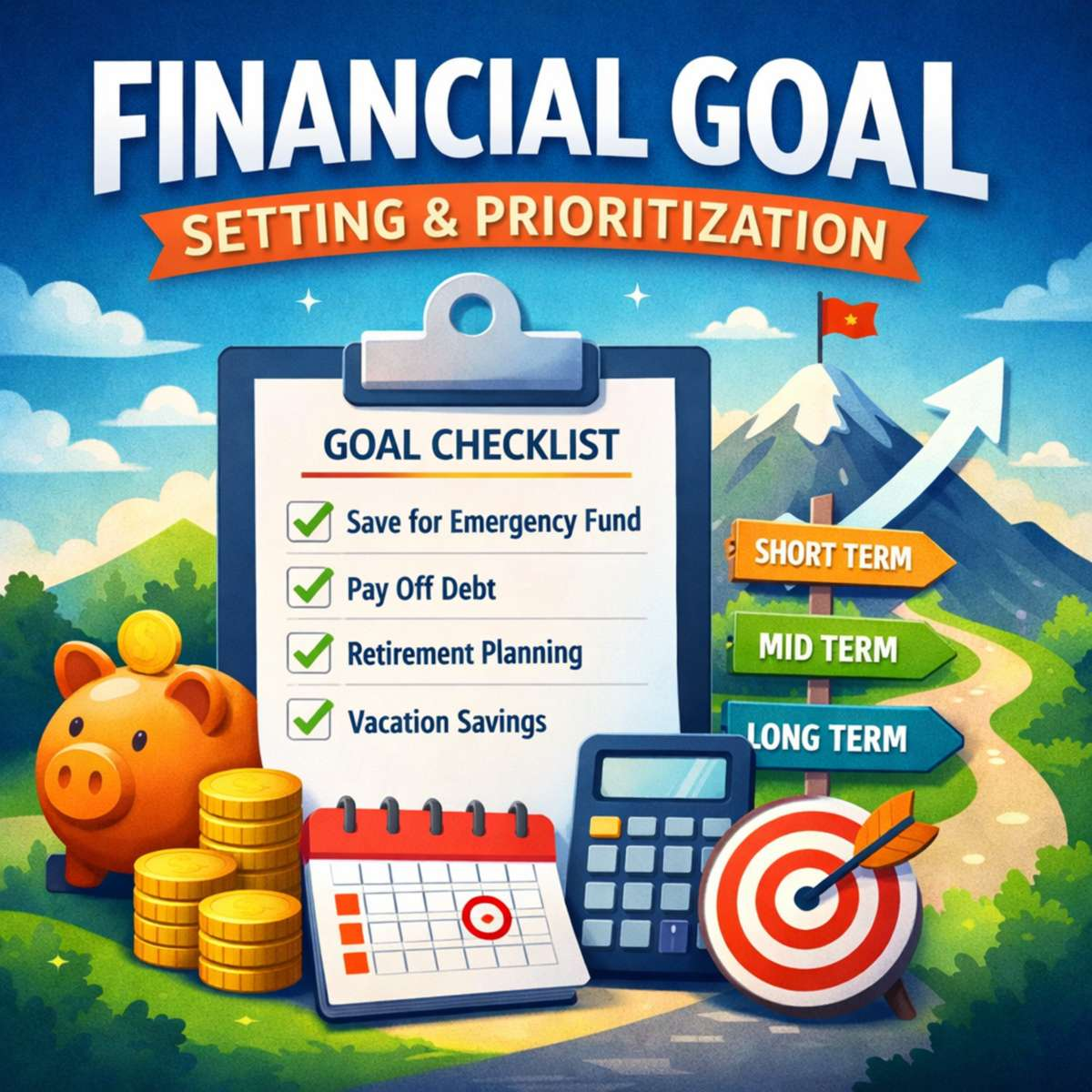
🎯 Financial Goal Setting & Prioritization
Turn Your Money Into a Clear, Actionable Plan
Financial success doesn’t happen by chance—it happens when your money is aligned with a clear set of priorities.
This section helps you define what matters most, organize competing financial goals, and build a structured plan so every dollar you earn has a purpose.
Whether you’re saving for an emergency fund, paying off debt, or building long-term wealth, this hub will guide you step-by-step.
🧭 Start Here: Financial Goal Setting Roadmap
Financial goals are easier to reach when you follow a clear process.
This roadmap breaks goal setting into simple phases so you can move from uncertainty and competing priorities to a more focused, organized financial plan. Instead of trying to do everything at once, you can work through each stage in order and build momentum over time.
Financial Goal Setting Roadmap at a Glance
| Phase | Focus | What You Gain |
|---|---|---|
| 1. Define Goals | Identify the financial outcomes that matter most to you | Direction |
| 2. Make Goals Measurable | Turn broad goals into clear, specific targets | Clarity |
| 3. Prioritize | Rank goals based on urgency, importance, and timing | Focus |
| 4. Align With Your Budget | Fit your goals into your current cash flow and spending plan | Control |
| 5. Take Action | Use habits, automation, and systems to make steady progress | Progress |
| 6. Adjust Over Time | Update your goals as your life, income, and priorities evolve | Long-term success |
👉 This roadmap helps turn financial goal setting into a structured system rather than a one-time exercise.
🧠 Why Financial Goal Setting Matters
Financial goal setting is what transforms money from something you manage day-to-day into a system that supports your long-term life plan.
Without clear goals, financial decisions tend to become short-term, reactive, and inconsistent.
❌ Without Clear Financial Goals
When you don’t define what your money is working toward:
- Money decisions become reactive
You respond to expenses as they come instead of planning ahead - Spending lacks direction
It’s harder to distinguish between needs, wants, and priorities - Progress feels inconsistent or invisible
You may be saving or paying down debt—but without measurable targets, it’s difficult to see real progress - Financial stress increases
Uncertainty around money often leads to anxiety and second-guessing decisions - Opportunities are missed
Without a plan, it’s easy to overlook chances to build savings, reduce debt, or invest effectively
✅ With Clear Financial Goals
When your financial goals are clearly defined and prioritized:
- Every dollar has a purpose
Your income is intentionally directed toward specific outcomes - Progress becomes measurable
You can track milestones, celebrate wins, and stay motivated - Decision-making becomes easier
You can quickly evaluate whether a financial choice supports or delays your goals - Consistency improves
Clear goals create structure, making it easier to build lasting habits - Financial confidence grows
You gain a sense of control and direction over your financial future
⚖️ The Bigger Picture
Financial goals don’t just improve your numbers—they improve how you think about money.
They help you:
- Shift from short-term thinking → to long-term planning
- Move from uncertainty → to clarity
- Replace guesswork → with intentional strategy
🚀 Key Insight
Financial success isn’t just about how much you earn—it’s about how clearly you define what your money is meant to do.
👉 Financial goals turn money management into a structured, repeatable system—not guesswork.
🎯 Setting Authentic Financial Goals (What Actually Matters to You)
Not all financial goals are created equal.
Some goals come from:
- Social pressure
- Comparison to others
- Generic advice (“max everything,” “buy a house,” etc.)
But the most effective financial plans are built around authentic goals—goals that reflect your values, priorities, and life vision.
🧠 What Are Authentic Financial Goals?
Authentic financial goals are goals that:
- Align with your personal values
- Reflect your actual lifestyle preferences
- Support the life you want—not someone else’s version of success
👉 When your goals are authentic, motivation becomes natural and sustainable.
⚖️ Why Authentic Goals Matter
When goals aren’t aligned with your values:
- Progress feels forced
- Motivation fades quickly
- Money decisions feel restrictive
When goals are aligned:
- Saving and spending feel intentional
- Trade-offs become easier
- Long-term consistency improves
👉 The difference isn’t discipline—it’s alignment.
🔍 How to Identify Your Authentic Financial Goals
Use these guiding questions:
- What does financial success look like to me?
- What do I want my money to enable in my life?
- Which expenses actually improve my happiness or quality of life?
- What am I willing to sacrifice—and what am I not?
👉 Your answers help separate meaningful goals from external noise.
🧭 Aligning Authentic Goals With Your Financial Plan
Once you’ve identified your authentic goals:
- Prioritize them using your financial framework
- Allocate money intentionally (not evenly)
- Build systems that support what matters most
👉 This is how budgeting shifts from restriction → to purposeful spending.
🚀 Key Insight
The most successful financial plans aren’t the most aggressive—they’re the most aligned.
👉 When your goals reflect your real priorities, consistency becomes easier and results follow.
⚖️ How to Prioritize Your Financial Goals
Not all financial goals should be pursued at the same time.
Use this simple framework to guide your decisions:
| Priority Level | Focus | Examples |
|---|---|---|
| 🔴 Essential | Financial stability | Emergency fund, housing, basic expenses |
| 🟠 High Priority | Risk reduction | High-interest debt payoff |
| 🟡 Growth | Wealth building | Investing, retirement savings |
| 🟢 Lifestyle | Personal goals | Travel, upgrades, discretionary spending |
👉 Prioritization ensures your money goes where it creates the most impact first.
📚 What You’ll Learn in This Section
This section brings together in-depth guides to help you build a complete financial goal system:
- Understanding financial goals and how they shape your financial future
- Setting clear, actionable goals using structured frameworks
- Prioritizing goals based on your financial situation
- Aligning goals with budgeting, saving, and investing
- Tools and systems to track progress
- Overcoming common obstacles and setbacks
- Adjusting goals as your life evolves
- Coordinating financial goals as a couple or family
👉 Each guide builds on the last to help you move from planning to execution.
📖 From the Blog: Financial Goal Setting & Prioritization
Read our most recent content
-
How to Set and Achieve Financial Goals – A Step-by-Step Guide for Long-Term Success
1. Introduction – Why Setting Financial Goals Is the Foundation of Financial Success Achieving long-term financial stability doesn’t happen by chance—it happens by direction, intention, and consistent follow-through. Financial goals give every dollar you earn a clear purpose, transforming vague hopes (“I want to save more”) into measurable, achievable outcomes (“I will save $300/month until […]
-
10 Life-Changing Financial Goals & How to Achieve Them!
Introduction – Navigating Your Financial Journey Every successful financial plan starts with a clear destination. Setting well-defined goals is like charting a course before setting sail—without them, managing money can feel like drifting in open waters without a compass. Goals give direction to your financial choices, transforming vague hopes into actionable steps that lead toward […]
-
The Ultimate New Year Financial Reset Checklist
Introduction A new year presents more than a symbolic fresh start — it creates a natural inflection point in your financial life. It’s the moment to step back, take inventory of your progress, and choose the direction you want your money to support in the year ahead. Whether the last twelve months felt steady, stretched, […]
-
Financial Goal Setting and Prioritization – A Strategic Guide to Achieving Financial Success
Key Takeaways Introduction Financial success doesn’t happen by chance—it requires strategic planning and consistent effort. Without clear goals, money management can become reactive instead of proactive, leading to financial stress and missed opportunities. This guide provides a structured approach to financial goal setting and prioritization, helping you take control of your financial future. What Are […]
-
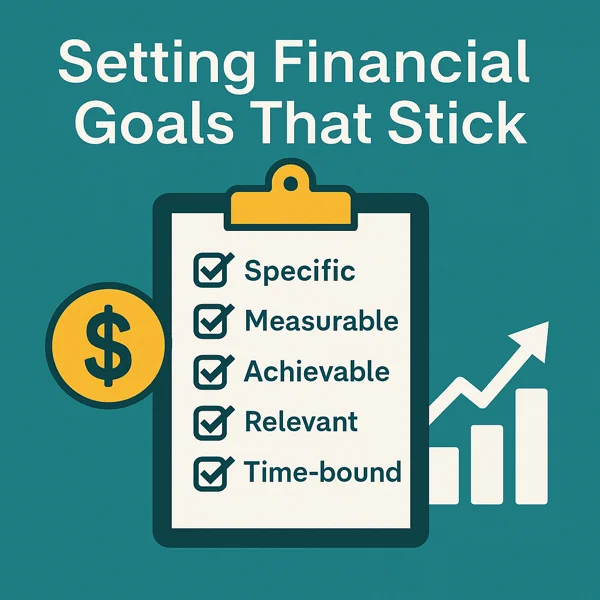
Setting Financial Goals That Stick
🎯 Use the SMART goal framework to turn dreams into clear, trackable priorities — short-term to long-term. 🔎 Introduction: Why Most Financial Goals Fail We’ve all set vague goals like “save more,” “pay off debt,” or “start investing”—but without structure, most of these good intentions fall apart. The reason? They’re not specific, trackable, or built […]
-
Thriving Through Turbulence – How to Manage Your Money When the Economy Feels Unsteady
Introduction – Navigating a Financially Unsteady World In today’s economy, uncertainty isn’t just a phase—it’s the backdrop of everyday life. Inflation bites, interest rates climb, markets swing wildly, and news of layoffs trickles into more and more industries. For many Americans, these conditions spark understandable anxiety. But while you can’t control the economy, you can […]




🚀 Quick Start: What Should You Do First?
If you’re just getting started, follow this simple path:
- Start by defining your top 3 financial goals
- Make each goal specific and measurable
- Prioritize based on urgency and impact
- Align your goals with your current budget
- Take one small action today
👉 You don’t need a perfect plan—you just need a clear starting point.
⚠️ Common Financial Goal-Setting Mistakes
Even with the best intentions, many people struggle because of these common issues:
- Setting vague goals (“save more,” “spend less”)
- Trying to focus on too many goals at once
- Ignoring high-interest debt while pursuing other goals
- Not aligning goals with actual income and expenses
- Failing to revisit and adjust goals over time
👉 Avoiding these mistakes can significantly improve your results.
🔗 Continue Building Your Financial System
Financial goal setting is one part of a complete financial plan.
Explore related areas to strengthen your strategy:
- Budgeting & Money Management Hub – Build your complete financial system
- Creating a Budget – Design a plan for your income and expenses
- Expense Tracking & Analysis – Understand where your money goes
- Saving Strategies & Techniques – Build consistent savings habits
- Debt Management & Repayment Plans – Eliminate debt strategically
👉 Each section builds on your goals and helps turn them into real financial progress.