
🟦 Investment Basics & Strategies
Build a Strong Foundation for Long-Term Wealth
Investing is one of the most powerful tools for building long-term wealth—but getting started can feel overwhelming. With so many options, strategies, and risks to consider, it’s easy to feel unsure about where to begin.
This section provides a clear, structured path to help you understand how investing works, what to invest in, and how to build a strategy aligned with your financial goals.
👉 For a complete framework that connects investing with budgeting, saving, and long-term planning, explore the Financial Planning Roadmap in our Finance Hub.
📊 Investment Basics — Quick Summary
- Investing helps grow your money over time through assets like stocks, bonds, and funds
- Higher potential returns typically come with higher levels of risk
- Diversification reduces risk by spreading investments across different assets
- Consistency matters more than trying to time the market
- Starting early allows compounding to significantly increase long-term growth
👉 Key Insight:
Successful investing is not about predicting the market—it’s about staying disciplined and investing consistently over time.
🧭 Who This Section Is For
This section is designed to support:
- Beginners opening their first investment account
- Individuals transitioning from saving to investing
- Long-term planners preparing for retirement
- Self-directed investors looking to strengthen their strategy
🧭 Investment Roadmap (Start Here)
Building wealth through investing doesn’t happen by chance—it follows a structured path.
📊 Step-by-Step Investment Roadmap
| Step | Focus | What You’ll Learn | Outcome |
|---|---|---|---|
| 1 | Foundations | What investing is, risk vs. return | Confidence to begin |
| 2 | Investment Accounts | Brokerage vs. retirement accounts | Where to invest |
| 3 | Asset Classes | Stocks, bonds, funds, alternatives | What to invest in |
| 4 | Strategy | Diversification, allocation | How to invest |
| 5 | Growth | Compounding, time horizon | Long-term wealth building |
👉 Start with: Investment Planning: Grow with Purpose and Confidence
📌 What Is Investing?
Investing is the process of allocating money into assets—such as stocks, bonds, or funds—with the goal of generating returns over time. Unlike saving, which focuses on preserving money, investing is designed to grow wealth by taking on calculated levels of risk.
📊 Types of Investments
Understanding your options is essential to building a well-diversified portfolio.
| Asset Type | Risk Level | Return Potential | Best For |
|---|---|---|---|
| Stocks | High | High | Long-term growth |
| Bonds | Low–Moderate | Moderate | Stability & income |
| Mutual Funds | Moderate | Moderate | Diversification |
| ETFs | Moderate | Moderate–High | Low-cost diversified investing |
| Alternatives | High | Variable | Advanced strategies |
⚖️ Understanding Risk vs. Return
One of the most important principles in investing is the relationship between risk and return:
- Higher potential returns typically require accepting higher risk
- Short-term volatility is normal in financial markets
- Long-term investing helps smooth out market fluctuations
Your investment strategy should align with:
- Your time horizon
- Your financial goals
- Your tolerance for risk
Understanding risk tolerance is a key part of building a structured financial strategy and long-term financial plan.
👉 If you’re unsure how investing fits into your overall plan, start with a step-by-step financial planning approach.
📈 How Compounding Builds Wealth
Compounding allows your investments to grow exponentially over time by earning returns on both your initial investment and your accumulated gains.
- Year 1: You earn returns on your original investment
- Year 2: You earn returns on your investment and prior gains
- Year 3+: Growth accelerates as returns build on each other
🔍 Example:
- Invest $10,000 at 7% annual return
- Year 1 → $10,700
- Year 2 → $11,449
- Year 10 → ~$19,671
👉 Key Insight:
The earlier you start investing, the more powerful compounding becomes.
🧠 Common Investing Mistakes to Avoid
Avoiding common mistakes can significantly improve long-term results:
- Trying to time the market
- Failing to diversify investments
- Making emotional decisions during market swings
- Ignoring fees and expenses
- Investing without clear financial goals
Before choosing an investment strategy, it’s important to have a strong foundation in budgeting and cash flow management to ensure you’re investing sustainably over time.
🧩 Core Investment Strategies
There are several proven strategies investors use to build wealth:
- Buy and Hold Investing – Focus on long-term growth
- Dollar-Cost Averaging – Invest consistently over time
- Index Investing – Track the market with low-cost funds
- Income Investing – Generate cash flow through dividends or interest
🔗 From the Blog: Investment Insights & Strategies
Deepen your understanding with practical guides and real-world insights:
-
Key Market Dates Every Investor Should Watch – Earnings, Dividends, and Major Market Movers
📅 Introduction — Why Market Timing Starts With the Calendar Markets don’t move randomly—they follow a calendar. Earnings reports, Federal Reserve decisions, dividend payouts, and tax deadlines all act as predictable catalysts that influence market volatility, investor sentiment, and long-term returns. For investors, understanding these key market dates isn’t about trying to time the market […]
-
The Importance of Investing in the Modern Economy
Key Takeaways 1️⃣ Build on Strong FoundationsStart early, stay consistent, and let the power of compounding work for you. Time—not timing—is the most powerful ally in wealth creation. 2️⃣ Set Clear Financial GoalsDefine specific, measurable, and time-bound goals to give every investment purpose and direction. Your goals are the compass guiding your financial decisions. 3️⃣ […]
-
How to Do a Fundamental Analysis of a Stock Price
Key Takeaways Introduction The stock market moves every second, but not all price changes reflect a company’s true worth. That’s where fundamental analysis comes in. Instead of chasing short-term trends, fundamental analysis helps you look beneath the surface — at the business itself — to decide whether a stock is undervalued or overpriced. In this […]
-
When the Music Stops – Could a Crypto Run Collapse the Market?
✅ Key Takeaways Introduction – A Digital Bank Run? Bank runs are not new. For centuries, people have lined up at banks in panic to demand their money, fearing insolvency. But in today’s digital financial system, a new phenomenon threatens investors: the crypto run. Instead of standing in lines outside banks, millions of crypto investors […]
-
Crypto in Your 401(k) -What You Need to Know Before You Invest
Introduction The rise of cryptocurrency investing has pushed Bitcoin, Ethereum, and other digital assets into mainstream conversations about wealth building. But for many Americans, the bulk of their investable assets isn’t in a brokerage account — it’s in their 401(k). That leads to the question: Can you put crypto in a tax-qualified 401(k)? The answer […]
-
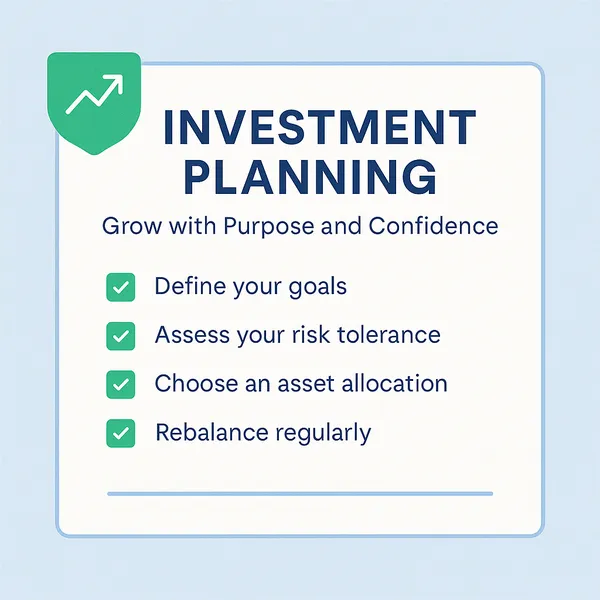
Investment Planning: Grow with Purpose and Confidence
📊 Grow with Purpose and Confidence Investing isn’t just about chasing returns. It’s about building a strategy that aligns with your goals, timeline, and tolerance for risk. Whether you’re new to investing or fine-tuning a portfolio, this guide walks you through the foundational pillars of a strong investment plan. 🌍 Why Investment Planning Matters Investing […]




💡 Why Investing Matters
Investing plays a critical role in your overall financial strategy. It helps you:
- Build long-term wealth
- Stay ahead of inflation
- Prepare for retirement
- Achieve financial independence
Investing is one part of a broader financial system that includes saving, debt management, and long-term planning. When these elements work together, they create a more resilient financial future.
👉 Key Insight:
Time in the market is often more powerful than timing the market.
💡 Example: How Investing Builds Wealth Over Time
If you invest $500 per month at an average annual return of 7%:
| Time Period | Total Invested | Estimated Value |
|---|---|---|
| 10 Years | $60,000 | ~$86,000 |
| 20 Years | $120,000 | ~$260,000 |
| 30 Years | $180,000 | ~$610,000 |
👉 What this shows:
- Growth accelerates over time
- Compounding becomes more powerful the longer you invest
- Consistency matters more than trying to time the market
❓ Frequently Asked Questions
What is the best way to start investing?
Start by opening a brokerage or retirement account, defining your goals, and investing consistently in diversified assets such as index funds.
How much money do I need to start investing?
Many platforms allow you to start with small amounts—even $1. Consistency matters more than the starting amount.
Is investing risky?
All investing carries risk, but diversification and long-term strategies can help manage and reduce that risk.
🔗 Continue Your Financial Learning
Building wealth requires integrating multiple financial strategies:
- 💰 Types of Savings Accounts and Best Practices
Learn how saving supports investing - 🏦 Retirement Savings Plans and Contributions
Understand how tax-advantaged accounts accelerate growth - 📈 Stock Market Investing and Portfolio Management
Dive deeper into managing investments - 🚀 Wealth Building Techniques and Passive Income Streams
Explore advanced strategies
How to Create a Financial Plan
A practical, structured guide to organizing goals, priorities, and long-term financial strategy.
→ Step-by-Step Planning Guide
Life Insurance Planning Hub
Explore foundational insurance principles and strategic planning considerations.
→ Explore Insurance Strategy
👉 Back to Saving & Investing Hub
👉 Start your journey with the Financial Planning Roadmap
👉 Explore the Finance Hub