
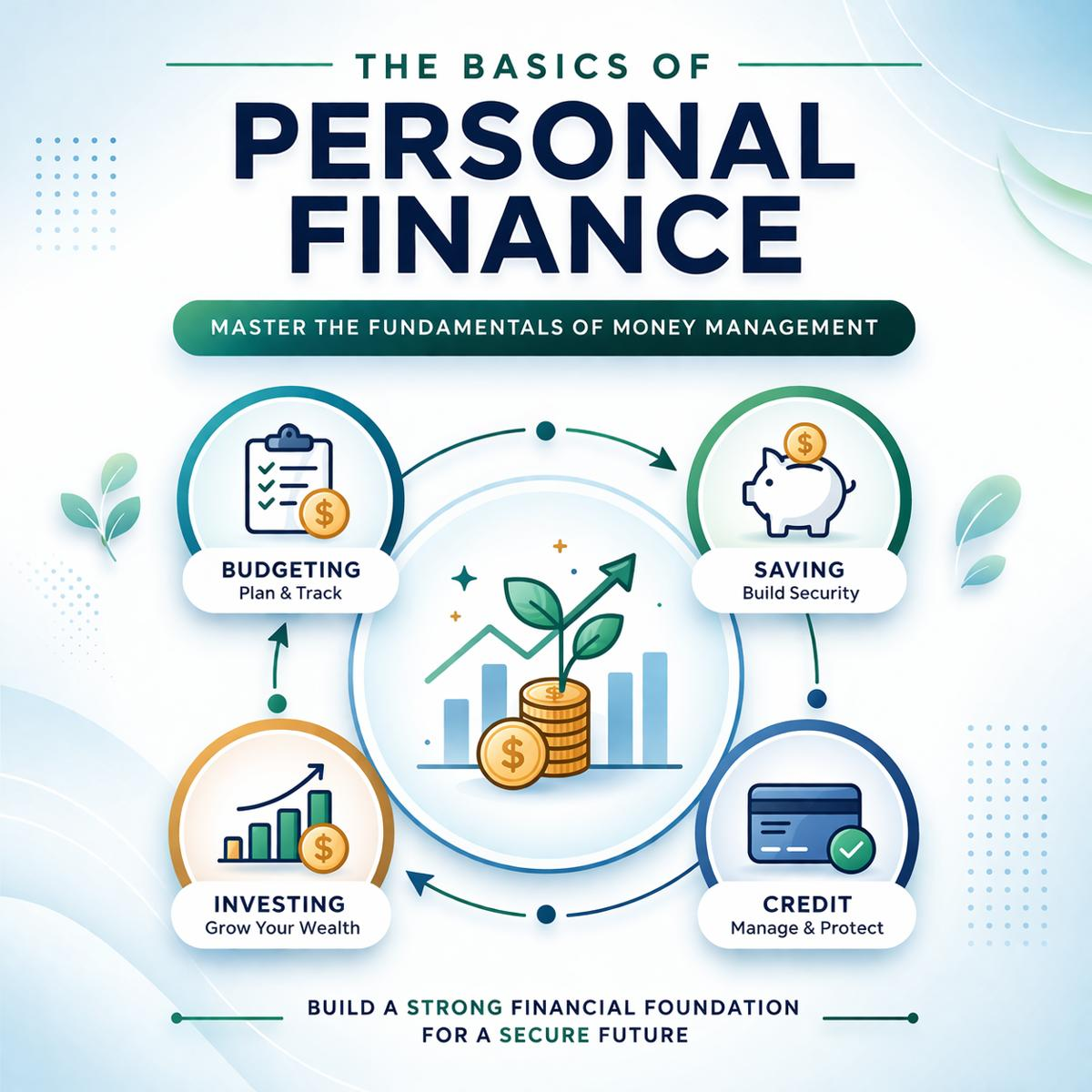
🧭 The Basics of Personal Finance
Master the Fundamentals of Money Management
Understanding personal finance is the foundation of financial success. This section introduces the essential principles that help you manage, grow, and protect your money with confidence.
Whether you’re just getting started or refining your financial strategy, this page serves as your starting point for building a complete financial system—step by step.
👉 Use this guide to move from financial uncertainty to clarity, control, and long-term progress.
🚀 Start Here: Personal Finance Roadmap
🧭 Build Your Financial Foundation Step by Step
If you’re unsure where to begin, follow this structured roadmap. Each phase builds on the last to help you create a strong, stable financial life:
| Phase | Focus | What You Gain |
|---|---|---|
| 1. Awareness | Understand your income, expenses, and habits | Clarity |
| 2. Control | Build a budget and stabilize cash flow | Stability |
| 3. Protection | Create an emergency fund and reduce risk | Security |
| 4. Growth | Begin saving and investing consistently | Momentum |
| 5. Optimization | Improve credit and reduce debt efficiently | Efficiency |
| 6. Planning | Set long-term goals and build a financial plan | Direction |
👉 This roadmap transforms personal finance from overwhelming into a clear, repeatable system you can follow with confidence.
🎯 What You’ll Learn in This Section
This page organizes the core pillars of personal finance, giving you a structured path forward:
💰 Budgeting & Expense Management
Build a system that helps you take control of your money and align spending with your goals.
- Track income and expenses effectively
- Identify waste and improve spending habits
- Create a realistic, sustainable budget
👉 Start with: How to Track Monthly Expenses Easily
💵 Saving & Emergency Funds
Create financial stability and prepare for life’s unexpected moments.
- Build a 3–6 month emergency fund
- Automate savings for consistency
- Strengthen your financial safety net
👉 Start with: Saving Strategies That Actually Work
📈 Investing Basics
Learn how to grow your wealth over time through smart, consistent investing.
- Understand compound interest
- Diversify your investments
- Invest with purpose and long-term focus
👉 Start with: Beginner’s Guide to Investing
💳 Credit & Debt Management
Use credit wisely and eliminate high-interest debt efficiently.
- Understand how credit scores work
- Reduce and manage debt strategically
- Build and maintain strong credit
👉 Start with: Credit Score Basics
🎯 Goal Setting & Financial Planning
Turn your financial goals into a clear, actionable plan.
- Define short- and long-term goals
- Build a structured financial roadmap
- Align your finances with your life priorities
👉 Start with: Financial Goal Setting Guide
🧠 Why Mastering the Basics Matters
Personal finance isn’t just about numbers—it’s about control, flexibility, and long-term opportunity.
When you understand the fundamentals, you can:
- Make confident financial decisions
- Reduce financial stress and uncertainty
- Avoid costly mistakes
- Build lasting wealth over time
Research from the Federal Reserve shows that many Americans struggle to cover unexpected expenses—highlighting the importance of building a strong financial foundation early.
👉 Mastering the basics puts you in a position of strength—not reaction.
🧭 How to Use This Page
Think of this page as your financial starting point and navigation hub:
- Start with the roadmap above
- Focus on one pillar at a time
- Apply what you learn before moving forward
- Revisit this page as your financial situation evolves
👉 You don’t need to do everything at once—consistent progress creates lasting results.
🆕 Continue Learning: Latest Personal Finance Basics
-
The True Cost of Owning an SUV: Rivian R2 vs. Gas and Hybrid SUVs (Five-Year Cost Comparison)
Key Takeaways A $45,000 SUV may not actually cost $45,000 to own. Here’s what fuel, maintenance, insurance, depreciation, and resale value can add to the real cost. Introduction When shopping for a new SUV, most buyers naturally focus on the sticker price. It’s easy to compare two vehicles with similar MSRPs and assume they’ll cost […]
-
How Life Cycle Theory Helps You Build Wealth Smarter at Every Stage of Life!
1. Introduction — Why Life Cycle Theory Still Matters in 2025 Financial planning can feel overwhelming when income rises and falls, expenses shift, and life events demand new decisions. Yet across these transitions, people still want the same thing: a stable lifestyle today and financial security tomorrow. That’s exactly where Life Cycle Theory provides clarity. […]
-
How to Find a Financial Planner You Can Trust (Without Overpaying)
Key Takeaways Introduction Managing your finances is both essential and deeply personal. Your decisions around saving, spending, investing, taxes, and planning for the future influence nearly every aspect of your life — your security, your stress levels, and your long-term goals. Yet for many people, these decisions can feel overwhelming. Retirement planning, debt management, insurance […]
-
What to Teach Kids About Money – A Comprehensive Guide for Parents
Key Takeaways Introduction – Building a Foundation for Financial Confidence Money is part of daily life — from buying groceries to paying bills — yet talking about it with kids can feel uncomfortable for many parents. While schools often focus on math and reading, financial literacy isn’t always part of the curriculum. That’s why it’s […]
-
The Importance of Emergency Funds in Personal Finance- A Beginner’s Guide
Key Takeaways Introduction Emergencies happen when we least expect them. Whether it’s a sudden medical bill, car repair, or job loss, having a financial cushion can make all the difference. An emergency fund is one of the most essential aspects of personal finance, offering security and peace of mind. This guide will help you understand […]
-
Mastering Financial Planning – Navigating Tools, Apps, and Strategies for Smart Money Management
💡Introduction – Building a Smarter Financial Future In today’s digital age, managing money has evolved far beyond pen-and-paper budgets and static spreadsheets. The right combination of tools, apps, and strategies can help you monitor spending in real time, automate savings, invest efficiently, and stay on track with your long-term financial goals. Yet, technology alone doesn’t […]
-
The Hidden Pay Cut → The Illusion of a Raise
Key Takeaways Introduction – The Raise That Wasn’t Your boss just congratulated you on a raise. You smile, imagining the extra breathing room in your budget. But then you hit the grocery store, pay the electric bill, and look at your rent — and suddenly, that “raise” feels like a step backward. This is the […]
-
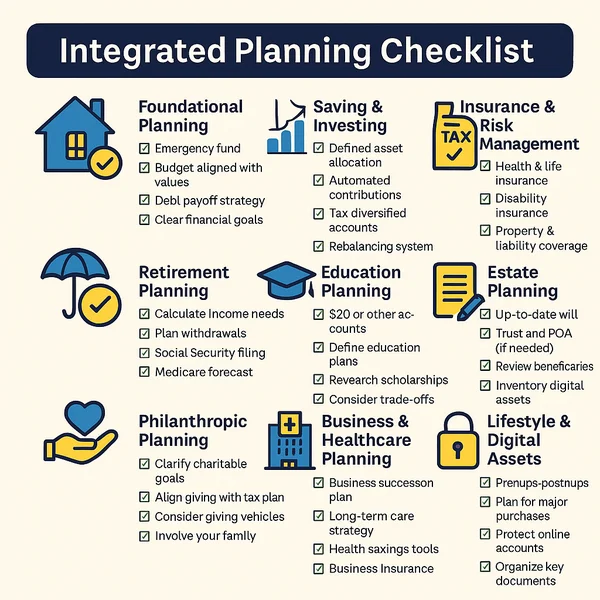
Integrated Financial Planning Checklist – Bringing It All Together
🧭 Bringing It All Together Integrated planning isn’t just about checking off boxes—it’s about ensuring your entire financial life functions as a unified, strategic system. This post transforms our checklist into a living, breathing guide to managing your finances holistically. Whether you’re just getting started or fine-tuning an existing plan, here’s how to build, maintain, […]
-
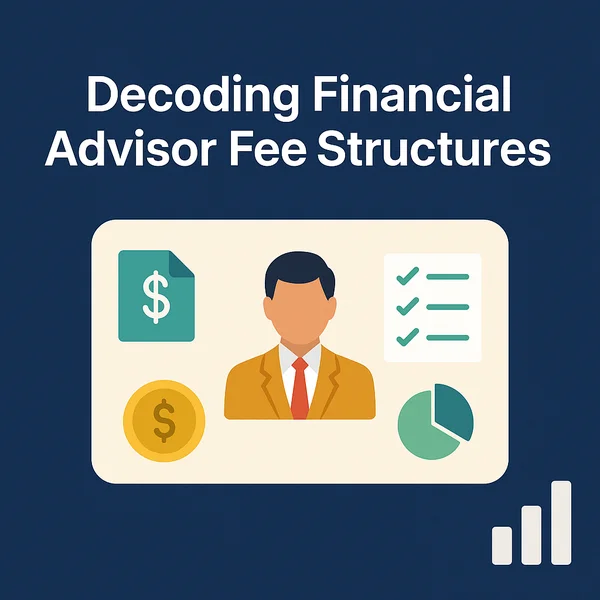
Decoding Financial Advisor Fee Structures – A Comprehensive Guide
✅ 5 Key Takeaways Before Choosing a Financial Advisor Why Understanding Fee Structures is Crucial Understanding how financial advisors are compensated isn’t just about comparing costs—it’s about protecting your financial interests. Fee structures directly influence the nature of the advice you receive, the level of service provided, and the potential for conflicts of interest. By […]
-
Financial Advisor Selection Checklist – How to Choose the Right Planner for You
✅ Financial Advisor Selection Checklist Choosing a financial advisor is one of the most important steps in building a secure financial future. But with so many titles, fee structures, and qualifications out there, how can you tell who’s truly acting in your best interest? This comprehensive checklist will walk you through everything you need to […]
-
Essential Financial Terms Every Beginner Must Know
📘 Introduction Understanding personal finance starts with mastering the language of money. Whether you’re just beginning to budget, exploring your first investment, or planning long-term goals like retirement, knowing the right financial terms empowers you to make smarter, more confident decisions. This beginner-friendly guide breaks down essential financial terminology across key areas—budgeting, credit, investing, insurance, […]
-
How to Choose the Right Financial Planner for Every Stage of Life
🔑 Key Takeaways A Tale of Financial Transformation: How the Right Planner Changes Everything Meet Sarah—a passionate teacher in her early thirties, committed to her students but quietly overwhelmed by her finances. Student loans loomed large, saving for a home felt out of reach, and financial stress began to spill into her daily life. Like […]









❓ Frequently Asked Questions
What is personal finance?
Personal finance is the process of managing your money through budgeting, saving, investing, and planning to achieve your financial goals.
What should I learn first in personal finance?
Start with budgeting and expense tracking. Then build savings, reduce debt, and begin investing.
How much should I save in an emergency fund?
Most experts recommend saving 3–6 months of essential expenses, depending on your income stability and risk tolerance.
🧾 Final Thought
Mastering personal finance doesn’t happen overnight—but it does start with a solid foundation.
By focusing on the basics and building step by step, you create a system that supports your goals, adapts to your life, and grows with you over time.
👉 Start where you are, stay consistent, and keep building forward.
🔗 Continue Your Financial Journey
Once you understand the basics, explore deeper topics across your financial plan:
- 👉 Financial Planning Roadmap: A Step-by-Step Guide
- 👉 Budgeting & Money Management Hub
- 👉 Credit & Debt Management Hub
- 👉 Saving & Investing Hub
👉 These resources help you move from foundational knowledge to advanced financial strategy and long-term wealth building.
🔗 Related Reading: Build Your Personal Finance Foundation
Strengthen your understanding of core financial concepts with these essential guides. Each resource is designed to help you build knowledge step by step and apply it to your real-life financial decisions.
📘 Understanding Financial Terms
Learn the key financial concepts every beginner should know—from income and expenses to interest rates and inflation.
👉 Build confidence by understanding the language of money.
🧱 Building a Strong Financial Foundation
Explore the core habits and systems that support long-term financial stability, including budgeting, saving, and planning.
👉 Create a structure that supports your financial goals.
📊 Reading and Analyzing Financial Statements
Understand how to read bank statements, track financial activity, and identify patterns in your spending.
👉 Turn raw numbers into actionable financial insights.
🌱 Financial Planning for Different Life Stages
Learn how financial priorities evolve over time—from early career to retirement—and how to adjust your strategy accordingly.
👉 Align your financial decisions with your current stage of life.