
🧾 Retirement Tax Planning and Optimization
Maximize Your Retirement Income While Minimizing Taxes
🧠 Introduction
Retirement isn’t just about how much you save—it’s about how much you keep after taxes.
Without a clear tax strategy, withdrawals from retirement accounts can push you into higher tax brackets, reduce your income, and limit the longevity of your savings. The reality is simple: tax inefficiency can quietly erode decades of disciplined investing.
This page is your central resource for understanding how to structure, withdraw, and manage retirement income in a tax-efficient way. From Roth strategies to Required Minimum Distributions (RMDs), you’ll learn how to align your retirement plan with long-term tax optimization.
🎯 Who This Page Is For
This guide is designed for:
- Individuals planning for retirement within the next 5–20 years
- Retirees managing withdrawals and income strategies
- Investors seeking tax-efficient retirement income
- Anyone looking to reduce taxes on Social Security, IRAs, or 401(k)s
🧭 Start Here: Retirement Tax Planning Framework
If you’re unsure where to begin, use this step-by-step framework to build a tax-efficient retirement strategy. Each phase builds on the previous one, helping you move from awareness to long-term optimization.
Phase 1: Understand Account Types → Build Clarity
Before making any decisions, you need a clear picture of how your retirement accounts are taxed.
Focus:
Identify and categorize all your accounts:
- Tax-deferred accounts (Traditional IRA, 401(k)) → taxed on withdrawal
- Tax-free accounts (Roth IRA, Roth 401(k)) → tax-free withdrawals (if qualified)
- Taxable accounts (brokerage accounts) → capital gains and dividend taxes
Why It Matters:
Each account type gives you different tax treatment and flexibility. Without understanding this, you lose control over how your income is taxed in retirement.
Action Steps:
- List all retirement and investment accounts
- Note current balances and tax status
- Estimate future tax exposure for each
👉 Outcome: You gain visibility into how your future income will be taxed.
Phase 2: Optimize Contributions → Improve Efficiency
Once you understand your accounts, the next step is to optimize how you contribute today.
Focus:
Maximize tax-advantaged opportunities:
- Contribute to employer-sponsored plans (especially with matching)
- Evaluate Traditional vs. Roth contributions based on your current vs. expected future tax rate
- Consider Health Savings Accounts (HSAs) if eligible
Why It Matters:
Your contribution strategy determines whether you pay taxes now or later—a critical decision that affects long-term outcomes.
Action Steps:
- Review contribution limits annually
- Align contributions with your current tax bracket
- Diversify between pre-tax and Roth accounts
👉 Outcome: You create a more tax-efficient foundation for retirement.
Phase 3: Plan Withdrawal Strategy → Reduce Taxes
Retirement income doesn’t just happen—you control how and when it’s taxed.
Focus:
Develop a withdrawal sequence that minimizes taxes:
- Withdraw from taxable accounts first (in many scenarios)
- Delay tax-deferred withdrawals when possible
- Use Roth accounts strategically to avoid higher tax brackets
Why It Matters:
The order in which you withdraw funds can significantly impact:
- Your tax bracket
- Social Security taxation
- Medicare premium thresholds
Action Steps:
- Map out a withdrawal plan for different retirement phases
- Avoid large, unplanned withdrawals
- Use Roth withdrawals to “fill in” lower tax brackets
👉 Outcome: You reduce lifetime tax liability and preserve more income.
Phase 4: Coordinate Income Sources → Create Stability
Retirement income often comes from multiple sources—and how they interact matters.
Focus:
Align:
- Social Security benefits
- Pension income
- Investment withdrawals
Why It Matters:
Poor coordination can lead to:
- Higher taxation of Social Security (up to 85%)
- Unexpected jumps in taxable income
- Reduced flexibility in managing taxes
Action Steps:
- Evaluate the timing of Social Security benefits
- Consider delaying benefits for higher payouts
- Coordinate withdrawals to manage combined income
👉 Outcome: You stabilize income and avoid unnecessary tax spikes.
Phase 5: Manage RMDs → Maintain Control
Required Minimum Distributions (RMDs) can disrupt even the best retirement plans if not managed properly.
Focus:
Understand and plan for mandatory withdrawals from tax-deferred accounts.
Why It Matters:
- RMDs increase taxable income
- They can push you into higher tax brackets
- They may increase Medicare premiums
Action Steps:
- Know your required starting age (currently 73+)
- Calculate expected RMD amounts
- Consider strategies like:
- Roth conversions before RMD age
- Qualified Charitable Distributions (QCDs)
👉 Outcome: You reduce forced taxable income and maintain flexibility.
Phase 6: Monitor Tax Brackets → Optimize Long-Term Outcomes
Tax planning is not a one-time decision—it’s an ongoing process.
Focus:
Actively manage your taxable income each year.
Why It Matters:
Small adjustments can:
- Keep you in a lower tax bracket
- Reduce lifetime tax liability
- Improve overall retirement sustainability
Action Steps:
- Review income annually
- Use tax projections to guide decisions
- Adjust withdrawals, conversions, and income timing
👉 Outcome: You create a dynamic, tax-efficient retirement strategy.
📊 Quick Summary of the Framework
| Phase | Focus | Outcome |
|---|---|---|
| 1. Understand Account Types | Identify tax characteristics | Clarity |
| 2. Optimize Contributions | Maximize tax advantages | Efficiency |
| 3. Plan Withdrawal Strategy | Control income timing | Lower taxes |
| 4. Coordinate Income Sources | Align income streams | Stability |
| 5. Manage RMDs | Reduce forced income | Tax control |
| 6. Monitor Tax Brackets | Adjust annually | Long-term savings |
🚀 Why This Framework Works
This approach turns retirement tax planning into a structured, repeatable process:
- You gain control over how your income is taxed
- You avoid costly, last-minute decisions
- You build a strategy that adapts over time
👉 Instead of reacting to taxes, you begin planning around them proactively.sswork.
🧩 Key Retirement Tax Strategies to Know
Tax-Efficient Investing
- Use Roth IRAs for tax-free withdrawals
- Leverage Traditional IRAs and 401(k)s for tax deferral
- Balance account types for flexibility in retirement
Strategic Withdrawals
- Withdraw from taxable accounts first (in many cases)
- Delay tax-deferred withdrawals when beneficial
- Use Roth accounts strategically to manage tax brackets
Social Security Tax Planning
- Up to 85% of benefits may be taxable depending on income
- Coordinating withdrawals can reduce taxation
Required Minimum Distribution (RMD) Management
- Required starting age (currently 73+)
- Failure to withdraw can result in penalties
- Strategies like Qualified Charitable Distributions (QCDs) can reduce taxable income
📊 Tax Treatment of Common Retirement Accounts
| Account Type | Tax Treatment | Best Use |
|---|---|---|
| Traditional IRA / 401(k) | Tax-deferred → taxed on withdrawal | Income smoothing |
| Roth IRA | Tax-free withdrawals | Long-term tax efficiency |
| Taxable Brokerage | Capital gains taxes | Flexibility + liquidity |
👉 A diversified mix of account types gives you control over how your income is taxed in retirement.
⚠️ Common Retirement Tax Planning Mistakes
Avoid these costly errors:
- Waiting until retirement to think about taxes
- Ignoring the tax impact of withdrawals
- Taking large withdrawals in a single year
- Overlooking Roth conversion opportunities
- Failing to plan for RMDs
💡 Why Retirement Tax Planning Matters
Even small tax inefficiencies can have a major long-term impact.
- A 1–2% annual tax drag can significantly reduce retirement income
- Poor withdrawal sequencing can push you into higher tax brackets
- Unplanned RMDs can increase taxes and Medicare premiums
👉 Strategic tax planning helps you protect your income and extend the life of your retirement savings.
📰 Latest Articles on Retirement Tax Planning
-
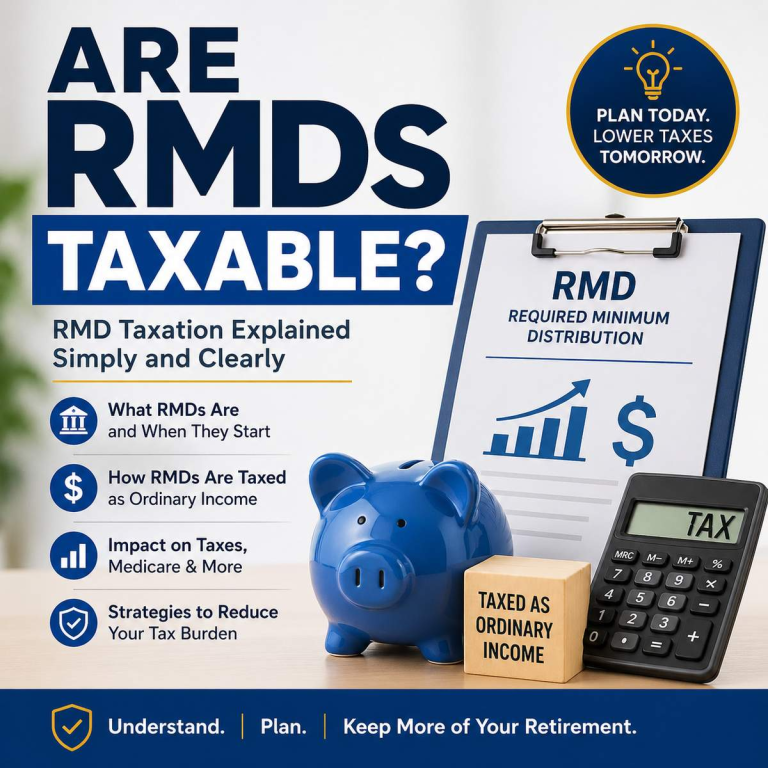
RMD Taxation Explained – How Your Retirement Withdrawals Are Taxed
💡Quick Take -What Are RMD Taxes? Required Minimum Distribution (RMD) taxes refer to the income taxes you pay on mandatory withdrawals from tax-deferred retirement accounts such as Traditional IRAs, 401(k)s, and 403(b)s. 👉 Simple rule: If your retirement contributions were tax-deferred, your RMD withdrawals will be taxed when you take them. 👉 Bottom line: RMDs […]
-
Roth IRAs vs. Traditional IRAs: Navigating Retirement Tax Benefits
Key Takeaways Introduction: Mastering Your Retirement Savings with IRAs Are you ready to navigate the complex world of retirement savings? Individual Retirement Accounts (IRAs) are pivotal for anyone planning a financially secure retirement. Offering more than just a nest egg, IRAs provide significant tax benefits and adaptability to suit diverse financial landscapes. In this comprehensive […]
-
Understanding Retirement Tax Planning: A Beginner’s Guide
Key Takeaways Introduction Navigating the Path to a Tax-Savvy Retirement As we embark on the journey toward retirement, one of the most critical roadmaps we need is not just about saving but optimizing our nest egg in the face of taxes. Imagine sailing towards a serene retirement island, only to find that a portion of […]
-
Maximizing Your Retirement Income through Strategic Tax Planning
Key Takeaways Introduction: Mastering Tax Planning for a Fulfilling Retirement Retirement is often envisioned as a serene chapter of life, a well-earned respite after decades of diligence and saving. Yet, the specter of taxes looms large, threatening to cloud these golden years without careful navigation. Beyond mere savings, the art of enhancing retirement income lies […]
-
The Role of Required Minimum Distributions (RMDs) in Retirement Planning
Key Takeaways Introduction Imagine this: You’ve just celebrated your 72nd birthday, and amidst the joy and reflections on a life well-lived, you receive a letter about Required Minimum Distributions (RMDs) from your retirement account. Suddenly, you’re thrust into a world of tax codes, IRS regulations, and financial decisions that seem more complex than ever before. […]
-
How Tax Laws Affect Your Retirement Savings
Key Takeaways Introduction The Unseen Force Shaping Your Future: Navigating Tax Laws for Retirement Bliss Have you ever stopped to consider how the silent undercurrents of tax laws are sculpting the contours of your future retirement? Imagine standing at the threshold of your golden years, only to realize that the financial landscape you’re about to […]





❓ Frequently Asked Questions
What is retirement tax planning?
Retirement tax planning is the process of managing income, withdrawals, and investments to minimize taxes during retirement.
How can I reduce taxes in retirement?
You can reduce taxes by using Roth accounts, managing withdrawal timing, and staying within favorable tax brackets.
Are Roth conversions worth it?
Roth conversions can be highly effective when done in lower-income years, allowing for tax-free withdrawals later.
What are Required Minimum Distributions (RMDs)?
RMDs are mandatory withdrawals from tax-deferred retirement accounts that begin at a certain age and are subject to income tax.
🔗 Continue Your Financial Journey
Build a stronger financial strategy with these resources:
🏁 Conclusion
Retirement tax planning isn’t about complexity—it’s about control.
By taking a structured approach, you can: