
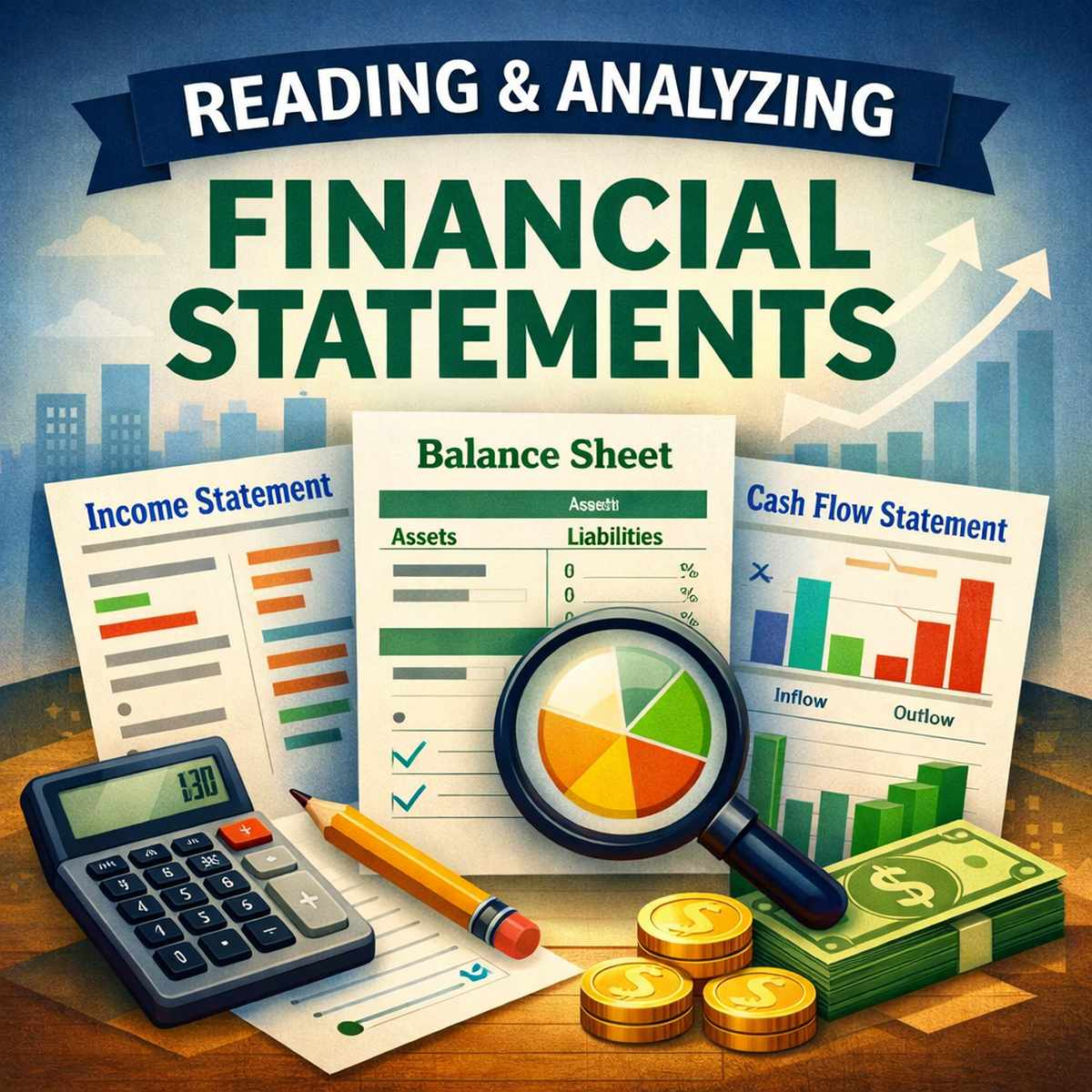
📊 Reading and Analyzing Financial Statements
Understand the Numbers Behind Your Financial Decisions
Financial statements are more than just reports—they are the foundation of smart financial decision-making.
Whether you’re managing your personal finances, evaluating a business, or improving your financial literacy, understanding how to read and analyze financial statements gives you a powerful advantage.
This guide helps you break down complex financial data into clear, actionable insights.
📊 What Is a Financial Statement?
A financial statement is a structured report that shows how money flows through a person or business. It helps you understand financial performance, overall stability, and cash availability.
The three core financial statements are:
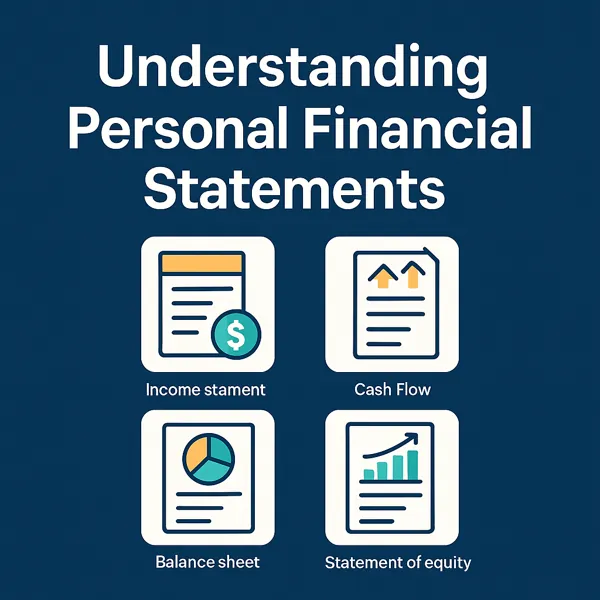
- Income Statement → Shows income, expenses, and profit over a period of time
- Balance Sheet → Displays assets, liabilities, and net worth at a specific point in time
- Cash Flow Statement → Tracks the actual movement of cash in and out
👉 Together, these statements provide a complete picture of financial health and are essential for making informed financial decisions.
🔑 What You’ll Learn in This Section
In this subcategory, you’ll build practical skills to interpret key financial documents:
- Income Statements → Understand profitability and cash flow trends
- Balance Sheets → Analyze assets, liabilities, and net worth
- Cash Flow Statements → Track how money moves in and out
- Financial Ratios → Evaluate performance and financial health
- Real-World Applications → Apply insights to personal and business decisions
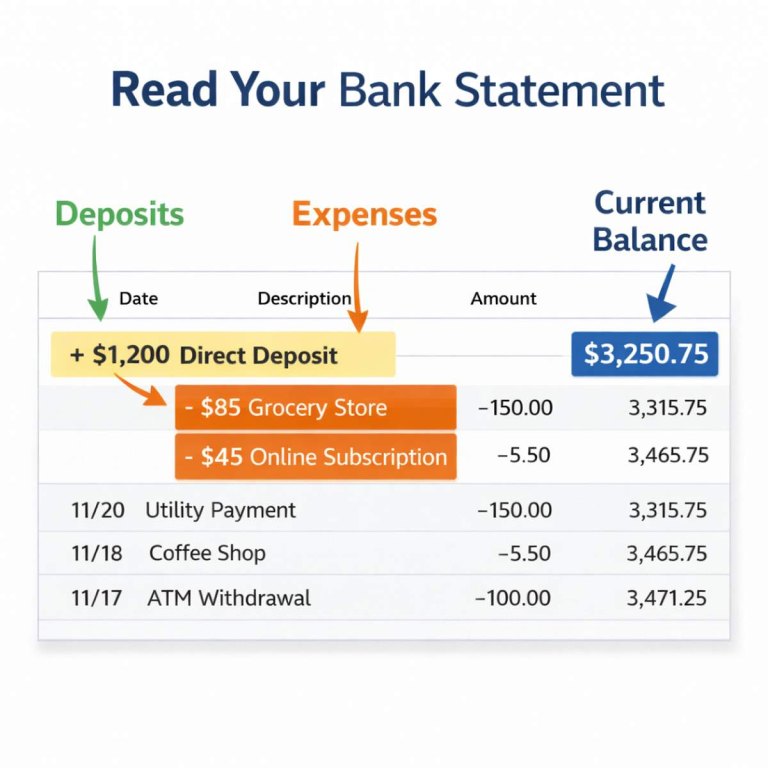
- How to Read Your Bank Statements → we’ll help you decode your bank statement step-by-step
👉 Each topic is designed to move you from basic understanding → confident analysis
🧭 Start Here: Financial Statement Analysis Framework
If you’re new to financial statements, follow this structured approach:
| Phase | Focus | Key Skill | Outcome |
|---|---|---|---|
| 1. Foundations | Understand statement types | Identify core documents | Clarity |
| 2. Structure | Learn how statements are built | Read line items | Confidence |
| 3. Interpretation | Analyze trends and relationships | Spot patterns | Insight |
| 4. Evaluation | Use ratios and comparisons | Measure performance | Decision-making |
| 5. Application | Apply to real scenarios | Personal & business use | Financial control |
👉 This framework transforms financial statements from confusing documents into decision-making tools
🔍 How Financial Statements Work Together
Financial statements are not meant to be viewed in isolation—they function as a connected system.
- The income statement measures performance (Are you making money?)
- The balance sheet shows position (What do you own vs. owe?)
- The cash flow statement tracks liquidity (Do you actually have cash available?)
👉 When combined, they answer three critical financial questions:
- Are you profitable?
- Are you financially stable?
- Do you have enough cash to operate and grow?
Understanding how these statements interact transforms raw numbers into meaningful financial insight.
📊 Quick Breakdown: What to Look for in Each Financial Statement
When reviewing financial statements, focus on a few key indicators:
- Income Statement
- Revenue growth trends
- Expense consistency
- Profit margins
- Balance Sheet
- Debt vs. assets
- Liquidity (cash vs. obligations)
- Net worth over time
- Cash Flow Statement
- Positive vs. negative cash flow
- Operating vs. investing activity
- Consistency of cash generation
👉 Even a quick review of these areas can reveal financial strengths and risks.
⚠️ Common Mistakes to Avoid
- Looking at numbers without context
- Ignoring cash flow vs. profit differences
- Focusing on a single statement instead of all three
- Not comparing data over time
- Overlooking key ratios
📚 Explore the Latest Guides on Financial Statements
-
Decoding Your Bank Statements – What Those Numbers Really Mean
🏦 1. Introduction Have you ever opened your bank statement and felt like you’re reading a foreign language? You’re not alone. Between transaction codes, acronyms, and endless lines of figures, a simple statement can feel more like a puzzle than a financial snapshot. Yet within those numbers lies a powerful story — one that reveals […]
-
Decoding Business Success – How to Easily Understand and Utilize Financial Statements
Key Takeaways Introduction Running a business without understanding your financial statements is like navigating open waters without a compass — you might stay afloat for a while, but you’ll struggle to chart a clear course. In today’s fast-paced economy, knowing the financial health of your business isn’t optional; it’s essential for making informed decisions, securing […]
-
Essential Guide to Personal Financial Statements – Unlock Your Financial Potential
Key Takeaways Introduction to Personal Financial Statements Why Knowing Your Numbers Matters Imagine planning a cross-country trip without a map, GPS, or even a clear destination. You might move forward—but without direction or control. The same applies to your finances. Personal financial statements are your financial roadmap, helping you see exactly where you are, where […]
-
How to Read Financial Statements Like a Pro (Even if You’re a Beginner)
💡 Introduction – Why Financial Statements Matter If financial statements look like a jumble of numbers and accounting jargon, you’re not alone. Even experienced professionals can feel overwhelmed at first glance. Yet, understanding financial statements is one of the most valuable skills you can develop—whether you’re running a business, investing for retirement, or improving your […]
-
How to Master Personal Financial Statements: A Step-by-Step Guide to Tracking Your Wealth and Income
Key Takeaways 1️⃣ Financial statements are essential tools for wealth building and security – Tracking your finances provides clarity and helps you make informed decisions. 2️⃣ A net worth statement, income statement, and cash flow statement are the three key financial documents – Understanding these documents will help you assess your financial health. 3️⃣ Regularly […]
-
Understanding the Role of Loans and Liabilities in Building Financial Stability
5 Key Takeaways from This Guide Introduction Debt is often painted as the villain of personal finance, but not all loans and liabilities are created equal. Some debts can help build wealth, while others can trap you in financial distress. Understanding how loans and liabilities impact your financial health is essential for crafting a stable […]
-
Financial Statements Made Easy: A Step-by-Step Guide to Financial Literacy
Key Takeaways Understanding financial statements isn’t just for investors or business owners—it’s a valuable skill for anyone managing money. Whether you’re investing, running a business, or planning your financial future, decoding these documents can transform how you make decisions. How Financial Statement Analysis Helps You For Investors: For Business Owners: For Students and Enthusiasts: Breaking […]
-
Mastering Financial Statements: Your Gateway to Financial Confidence
5 Key Takeaways Introduction Financial statements are often perceived as intimidating, but they are the key to understanding and managing financial health. Whether you’re an individual planning your personal budget or a business leader seeking sustainable growth, mastering these documents unlocks a wealth of actionable insights. In this guide, we’ll explore how to analyze financial […]
-
Mastering Personal Financial Ratios: Your Guide to Financial Stability and Growth
Key Takeaways Introduction In the complex world of personal finance, a critical yet often overlooked tool exists that can offer deep insights into your financial health: personal financial ratios. Commonly employed by businesses to monitor performance and guide strategic decisions, these metrics are equally invaluable for individuals striving to enhance their financial well-being. This guide […]
-
Understanding the Role of Tax Returns in Personal Financial Planning
Key Takeaways Introduction Did you know that many Americans feel anxious about their tax filings? Yet, what if I told you that your tax return is not just a bureaucratic necessity but a goldmine of information that can transform your financial planning? Most people view tax returns solely as a compliance measure to satisfy the […]







🔗 Continue Your Financial Learning
Financial statement analysis is just one part of building a strong financial foundation. Strengthen your knowledge with these essential topics:
- Basics of Personal Finance → Learn how income, expenses, saving, and investing work together
- Understanding Financial Terms → Build confidence by mastering key financial concepts
- Building a Strong Financial Foundation → Develop habits that support long-term financial success
- Financial Planning for Different Life Stages → Adapt your strategy as your life and goals evolve
🏁 Why This Matters
Financial literacy isn’t just about understanding definitions—it’s about applying knowledge to real-life decisions.
By learning how to read and analyze financial statements, you can:
- Make more informed financial decisions
- Evaluate opportunities with greater confidence
- Identify risks before they become problems
- Build long-term financial stability
👉 Start with the framework above and apply one concept today. Small improvements compound into meaningful financial progress over time.
🔙 Back to Financial Education & Literacy
Return to the main hub to explore the full financial literacy roadmap and continue building your knowledge step by step.