

Financial Planning for Different Life Stages
Financial planning is a continuous process that evolves with your life’s changing needs. Whether you’re starting your career, managing a family, or planning for retirement, having a well-structured financial strategy is crucial. This guide outlines essential financial considerations for every life stage, helping you build financial security and long-term wealth.
Young Adults and Early Career
Laying a strong financial foundation early can lead to long-term success. Key areas to focus on include:
- Budgeting and Cash Flow Management – Establishing a budget and tracking expenses.
- Building an Emergency Fund – Preparing for unexpected financial setbacks.
- Managing Debt and Credit – Developing responsible debt repayment habits and maintaining a strong credit score.
- Investing for the Future – Understanding retirement accounts, compound interest, and investment basics.
- Essential Insurance Needs – Exploring health, renters, and auto insurance options.
Family and Mid-Career
As responsibilities grow, financial planning shifts toward wealth accumulation and asset protection:
- Homeownership and Mortgage Planning – Understanding loan options and home affordability.
- Education Savings Plans – Exploring 529 plans and other college savings strategies.
- Insurance and Risk Management – Ensuring adequate life and disability insurance coverage.
- Tax-Efficient Wealth Building – Leveraging tax-advantaged accounts and deductions.
- Retirement Contributions – Maximizing employer benefits and increasing savings.
Late Career and Pre-Retirement
Preparation for retirement involves maximizing savings and reducing financial risks:
- Optimizing Retirement Savings – Contributing to 401(k)s, IRAs, and catch-up contributions.
- Social Security and Pension Strategies – Determining the best time to claim benefits.
- Investment Adjustments – Transitioning to a more conservative portfolio.
- Estate Planning – Updating wills, trusts, and power of attorney.
- Long-Term Care Planning – Understanding healthcare and assisted living costs.
Retirement and Beyond
Ensuring a stable and comfortable retirement requires careful financial management:
- Sustainable Withdrawal Strategies – Managing 401(k) and IRA withdrawals.
- Minimizing Tax Impact – Implementing tax-efficient withdrawal techniques.
- Healthcare and Medicare Planning – Navigating healthcare costs and supplemental plans.
- Legacy and Wealth Transfer – Creating a strategy for inheritance and charitable giving.
- Adjusting Lifestyle and Expenses – Managing spending to align with income sources.
Special Financial Situations
Unique life circumstances may require tailored financial approaches:
- Entrepreneurs and Business Owners – Managing business finances and retirement plans.
- Divorce and Widowhood – Adjusting financial plans after major life changes.
- Single Parents – Balancing financial priorities with a single income.
- Economic Downturns – Protecting finances during uncertain times.
- Caring for Aging Parents – Planning for caregiving costs and responsibilities.
No matter your stage in life, proactive financial planning is essential to achieving long-term stability. Explore our in-depth resources to take control of your financial future with confidence.
-
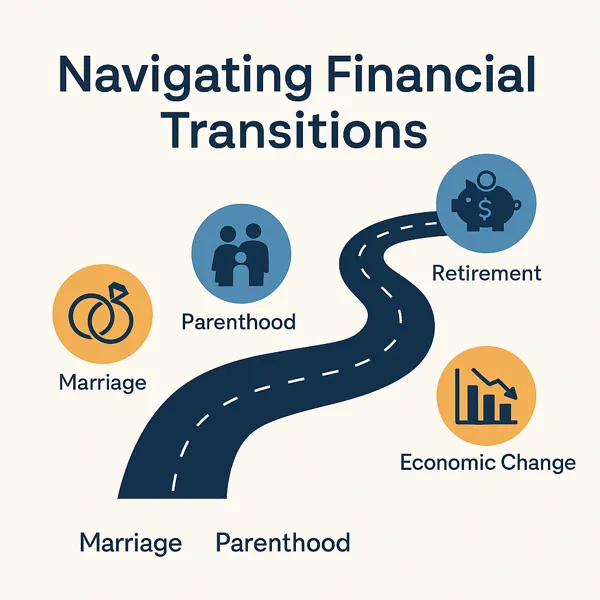
Navigating Financial Transitions – How to Adjust Your Plan When Life Changes
💡 Introduction — Why Financial Plans Must Evolve Life rarely moves in a straight line—and neither does your money. Careers shift, families grow, health needs change, and the economy moves through cycles that directly affect your financial reality. A financial plan that once fit your life perfectly can quickly become outdated when circumstances evolve. That’s […]
-
The Financial Life Cycle: A Comprehensive Guide to Managing Your Finances at Every Stage (2026 Edition)
Introduction – Why Your Financial Life Cycle Matters More Than Ever Financial planning is no longer a one-time task you check off a list—it’s a dynamic process that evolves as your life changes. In today’s economy, rising living costs, shifting career paths, and longer lifespans mean your financial strategy must adapt continuously. The decisions you […]
-
The Rising Cost of Childcare in America – How Families Can Plan, Budget, and Cope
💡 Introduction — When Childcare Costs More Than College For many parents across the United States, childcare has become a financial obstacle nearly as large as a mortgage — and in some cases, even more expensive than college tuition. The cost of care for one child can easily exceed $13,000 per year, and many families […]
-
Financial Life Cycle Checklist – Key Steps for Every Stage of Wealth
🏁 Introduction Wealth isn’t built overnight — it’s a lifelong process that evolves with your goals, responsibilities, and circumstances. From opening your first bank account to passing on your legacy, your financial journey moves through distinct stages, each requiring new strategies and priorities. The financial life cycle provides a framework for navigating these transitions intentionally. […]
-
Navigating Fatherhood: A Financial Planning Guide for New and Expectant Dads
Key Takeaways for New Dads Your New Role Comes with New Priorities Welcome to one of the most life-changing journeys you’ll ever take—fatherhood. It’s a path paved with awe, sleepless nights, and a growing sense of purpose. Holding your newborn for the first time can make you feel like the strongest person in the room—and […]
-
Financial Planning for New and Expectant Moms: A Guide to Secure Your Family’s Future
Introduction: Welcoming a new child into the world is one of life’s most exhilarating experiences. It’s a journey filled with love, joy, and an array of new responsibilities, particularly in the realm of finance. As a Certified Financial Planner™, I understand the unique financial challenges and opportunities that arise during this transformative phase. This guide […]
-
First Job, First Budget: Crafting Your Financial Plan
Introduction Welcome to the exciting journey of financial independence! Landing your first job is a significant milestone, and it’s the perfect time to start thinking about how to manage your finances effectively. But where do you begin? The answer lies in crafting a budget that aligns with your early career earnings and goals. In this […]
-
Navigating Career Transitions: Financial Planning Tips
Introduction Embarking on a career transition, whether by choice or circumstance, can be a time of significant change and uncertainty. This period often brings forth questions about the future, especially regarding financial stability. How does one ensure financial security when transitioning between jobs or facing potential job loss? This blog post aims to guide you […]
-
Smart Finance: Navigating Early Career Financial Stability
As you embark on your professional journey, understanding and implementing effective financial planning is crucial. This is not merely about making ends meet; it’s about setting the foundation for a secure financial future. In this comprehensive guide, we delve into the essentials of financial planning for young professionals, providing actionable strategies to help you steer […]
-
Newlywed Financial Planning Checklist
Introduction Financial planning is a crucial step for newlyweds to build a strong and stable future together. Use this checklist to navigate key financial discussions and decisions. Step 1: Understand Each Other’s Financial Background ☐ Discuss financial habits and money mindset☐ Review income, expenses, and savings☐ Check credit scores and reports together☐ Disclose all debts […]
-
Money Matters for Newlyweds: Budgeting, Savings, and Financial Goals
Key Takeaways Introduction Marriage marks the beginning of a new journey, one filled with shared dreams, responsibilities, and financial decisions. Aligning your financial goals early in your marriage can prevent misunderstandings, strengthen your relationship, and set the stage for long-term financial success. In this guide, we will explore essential financial priorities for newlyweds and actionable […]
-
Preparing to Start a Family – A Financial Planning Guide
Key Takeaways Introduction Starting a family is one of life’s most exciting and transformative experiences. However, it also comes with significant financial responsibilities that require careful planning. Whether you’re expecting your first child or considering expanding your family, taking proactive financial steps can help you navigate parenthood with confidence. In this guide, we’ll walk you […]











Back to
Master the basics of personal finance with resources to help you understand key concepts and build a strong financial foundation.