
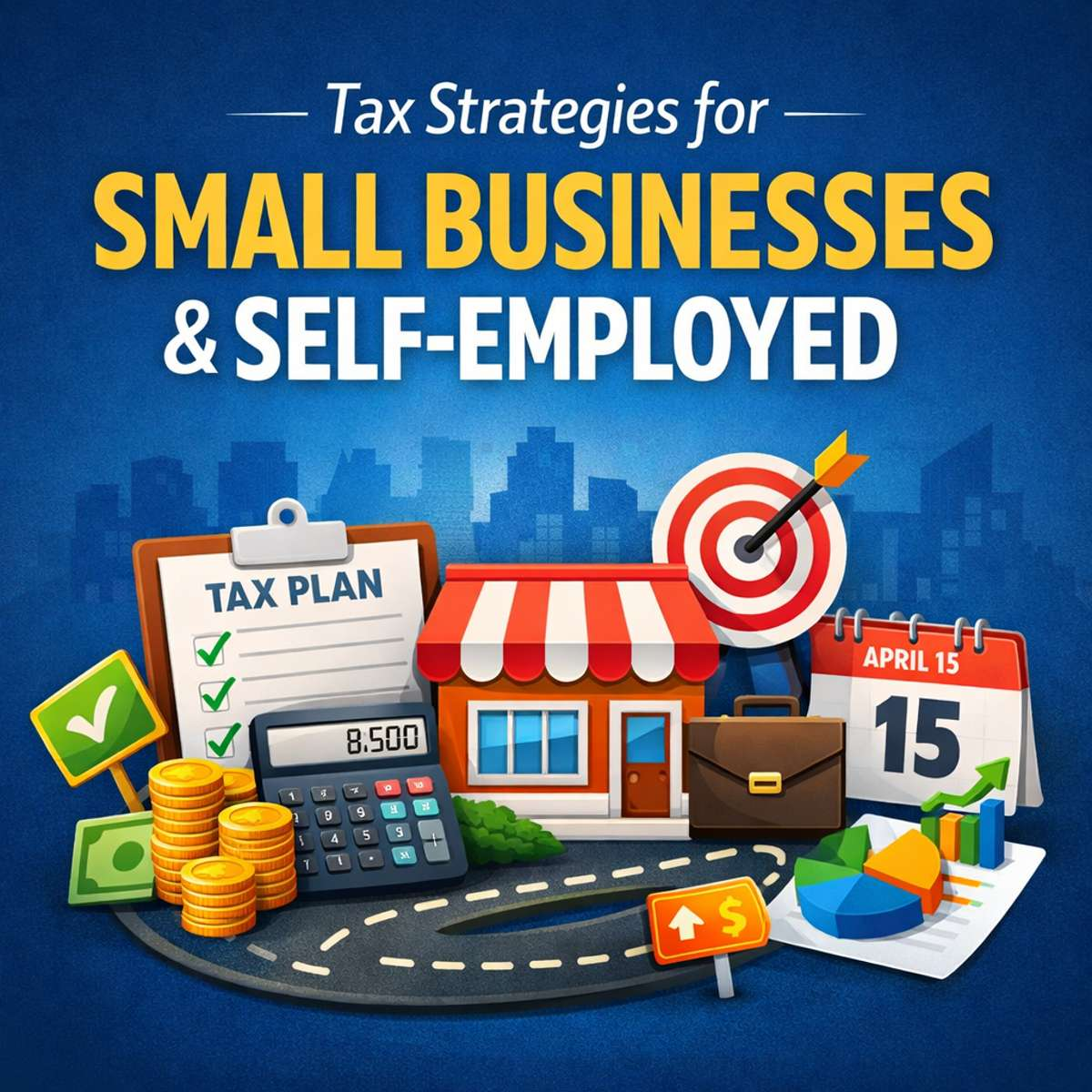
🧾 Tax Strategies for Small Businesses & Self-Employed Individuals
Build a Smarter, More Efficient Tax Strategy for Your Business
Managing taxes as a business owner isn’t just about compliance—it’s about strategy, control, and long-term financial efficiency.
Whether you’re a freelancer, content creator, sole proprietor, or small business owner, the right tax approach can help you:
- Reduce your overall tax burden
- Improve cash flow throughout the year
- Avoid costly mistakes and penalties
- Build a stronger, more scalable business
👉 This guide provides a structured, step-by-step system to help you move from reactive tax filing to proactive tax planning.
🧭 Start Here: Small Business Tax Strategy Framework
If you’re unsure where to begin, follow this structured roadmap:
| Phase | Focus | Key Action | Outcome |
|---|---|---|---|
| 1. Foundation | Understand obligations | Learn tax types & deadlines | Clarity |
| 2. Organization | Track finances | Record income & expenses | Control |
| 3. Optimization | Maximize deductions | Capture tax savings | Lower taxes |
| 4. Strategy | Reduce taxable income | Apply timing strategies | Efficiency |
| 5. Structure | Choose entity | Evaluate LLC / S-Corp | Tax savings |
| 6. Planning | Stay ahead | Quarterly & year-end moves | Stability |
| 7. Growth | Scale strategically | Plan expansion | Long-term success |
👉 This framework turns tax planning into a repeatable system—not guesswork.
🔍 How to Apply This Framework (Quick Breakdown)
1. Foundation: Understand Your Tax Obligations
Before making any tax decisions, you need clarity on:
- Income tax vs. self-employment tax
- Federal, state, and local requirements
- Filing deadlines and compliance rules
👉 If you skip this step, everything else becomes guesswork.
2. Organization: Build Your Financial System
A strong tax strategy starts with clean records:
- Track all income sources
- Categorize expenses properly
- Separate business and personal finances
👉 Good systems reduce stress and prevent missed deductions.
3. Optimization: Capture Every Tax Saving Opportunity
This is where real savings begin:
- Identify all eligible deductions
- Apply available tax credits
- Track expenses consistently
👉 Many business owners overpay simply due to missed opportunities.
🔗 Internal Link: Maximizing Deductions and Credits
4. Strategy: Reduce Taxable Income Intentionally
Move beyond deductions into proactive planning:
- Time income and expenses strategically
- Contribute to retirement accounts
- Manage net income across tax years
👉 This is where tax planning becomes powerful.
🔗 Internal Link: Tax Planning Strategies and Tips
5. Structure: Align Your Business for Tax Efficiency
Your entity structure impacts your taxes significantly:
- Sole proprietor vs. LLC vs. S-Corp
- When an S-Corp election makes sense
- Long-term scalability considerations
👉 This is one of the highest-leverage decisions you can make.
6. Planning: Stay Ahead of Taxes Year-Round
Avoid last-minute surprises:
- Make quarterly estimated payments
- Review finances regularly
- Execute year-end strategies
👉 Proactive planning improves both cash flow and control.
7. Growth: Scale Without Increasing Tax Inefficiency
As your business grows:
- Hiring decisions affect taxes
- Payroll and compliance increase complexity
- Multi-state taxation may apply
👉 Growth requires a more advanced tax strategy—not just more revenue.tax planning into a repeatable system—not guesswork.
👤 Who This Page Is For
This guide is designed for:
- Freelancers and independent contractors
- Content creators and digital entrepreneurs
- Small business owners and sole proprietors
- Side hustlers earning additional income
👉 If you earn income outside of a traditional W-2 job, this strategy applies to you.
🧩 Core Tax Strategy Pillars
1. Understand Your Tax Responsibilities
Before optimizing your taxes, build clarity around:
- Income tax vs. self-employment tax
- Federal, state, and local tax obligations
- Filing requirements and deadlines
- Quarterly estimated tax payments
👉 Start here if you’re unsure what you owe or when you owe it.
2. Build Strong Financial Systems
Your tax strategy is only as strong as your records.
- Track all income sources
- Categorize business expenses correctly
- Separate personal and business finances
- Use bookkeeping tools or simple systems
👉 Strong systems reduce errors, stress, and missed deductions.
3. Maximize Deductions & Credits
This is where many business owners leave money on the table.
Common deductions include:
- Home office expenses
- Equipment and software
- Business travel and meals
- Education and training
Tax credits may include:
- Research & Development (R&D) Credit
- Work Opportunity Tax Credit (WOTC)
- Small Business Health Care Tax Credit
👉 Explore more: Maximizing Deductions and Credits
4. Reduce Taxable Income Strategically
Go beyond deductions by actively managing taxable income:
- Time income and expenses strategically
- Defer income when appropriate
- Accelerate deductible expenses
- Contribute to retirement accounts
👉 Explore more: Tax Planning Strategies and Tips
5. Optimize Your Business Structure
Your business entity directly impacts how you’re taxed.
- Sole proprietor vs. LLC vs. S-Corporation
- When an S-Corp election may reduce taxes
- Administrative and compliance trade-offs
👉 The right structure can unlock significant tax savings over time.
6. Plan Ahead (Quarterly & Year-End)
Tax planning should happen throughout the year—not just at filing time.
- Make quarterly estimated tax payments
- Review income and expenses regularly
- Execute year-end strategies like:
- Retirement contributions
- Expense timing
- Charitable giving
👉 Planning ahead improves cash flow and reduces surprises.
7. Scale Your Business with Tax Awareness
As your income grows, your tax complexity increases.
- Hiring employees vs. contractors
- Payroll tax considerations
- Multi-state tax exposure
- Strategic reinvestment decisions
👉 Growth without planning can increase your tax burden—strategy keeps it efficient.
🔎 Key Tax Topics to Understand
To build a complete strategy, focus on:
- Self-employment taxes (15.3%)
- Quarterly estimated payments and safe harbor rules
- Annual tax deadlines and compliance requirements
- Audit triggers and documentation best practices
- Industry-specific strategies for creators and freelancers
❌ Common Tax Planning Mistakes
Avoid these costly errors:
- Waiting until tax season to plan
- Failing to track expenses consistently
- Missing deductions and credits
- Ignoring quarterly tax obligations
- Choosing the wrong business structure
👉 Small mistakes can lead to large, unnecessary tax costs over time.
📚 Featured Guides (Start Here)
Build your knowledge with these essential resources:
- Self-Employment Taxes Explained
- Quarterly Taxes Simplified
- The Ultimate Small Business Tax Preparation Checklist
- How to Deduct Business Travel Expenses
- Strategic Tax Planning for Entrepreneurs
❓ Frequently Asked Questions
What taxes do small business owners pay?
Most business owners pay income tax and self-employment tax, along with potential state and local taxes.
Do I need to pay quarterly taxes?
Yes—if you expect to owe at least $1,000 in taxes, quarterly estimated payments are typically required.
What is the biggest tax mistake business owners make?
The most common mistake is failing to plan ahead and only reacting during tax season.
📰 Latest Insights in Tax Planning
-
How to Reduce Taxable Income for Small Businesses: A Strategic Tax Reduction System
📌 Introduction: Stop Reacting to Taxes—Start Controlling Them Most business owners approach taxes the same way every year: They calculate what they owe—and then look for ways to reduce the damage. But that approach misses a critical truth: 👉 Taxes are not just calculated—they are influenced. In reality, taxable income is highly controllable when you […]
-
Self-Employment Taxes Explained: How to Manage Quarterly Taxes, Deductions, and Business Income
Self-Employment Taxes Explained Managing Quarterly Taxes, Deductions, and Business Income Working for yourself can provide flexibility, independence, and the opportunity to build income on your own terms. However, it also comes with financial responsibilities that traditional employees rarely have to manage directly. One of the most important—and often misunderstood—responsibilities is self-employment taxes. Understanding how these […]
-
Avoiding Common Tax Mistakes Made by Freelancers
Key Takeaways Introduction: Navigating the Freelance Tax Maze Are you a freelancer puzzled by the labyrinth of tax rules and regulations? Do you worry about whether you’re saving enough for taxes or if you could be missing out on critical deductions? If so, you’re not alone. Each year, countless freelancers face the daunting task of […]
-
Quarterly Taxes Simplified: A Calendar for the Self-Employed
Key Takeaways Welcome to the Essential Guide to Managing Quarterly Taxes for the Self-Employed Navigating the world of taxes can often seem daunting, especially when you’re self-employed and responsible for managing your own tax payments. Unlike traditional employees, whose taxes are deducted by their employers, self-employed individuals must proactively estimate and pay their taxes quarterly. […]
-
The Ultimate Checklist for Small Business Tax Preparation
Key Takeaways Introduction: Navigating Small Business Tax Preparation Tax season can be a time of significant stress and complexity for small business owners and self-employed individuals. With the myriad of tax laws, regulations, and paperwork involved, it’s easy to feel overwhelmed. However, with the right preparation and knowledge, tax season can also become an opportunity […]
-
How to Deduct Business Travel Expenses: A Complete Guide
Key Takeaways Introduction Navigating the intricate landscape of tax deductions is a pivotal aspect of financial planning for small businesses and self-employed individuals, especially when it pertains to business travel expenses. In the dynamic world of entrepreneurship, travel is often an indispensable component of operations—be it for networking, client meetings, or exploring new markets. However, […]




🔗 Continue Your Financial Journey
The Ultimate Tax Planning Roadmap
Learn that taxes are not just a once-a-year obligation—they are one of the most powerful forces shaping your financial life.
→ Learn to Reducing Taxes and Building Long-Term Wealth
The Financial Planning Roadmap
A clear framework to help you build financial stability in logical stages.
→ View the Roadmap
Take the next step in building your financial strategy:
🏁 Final Thoughts
Tax planning isn’t about complexity—it’s about consistency and intentional decision-making.
By applying a structured approach, you can:
- Reduce your tax burden
- Improve financial clarity
- Keep more of your income
- Build long-term business success
👉 Start with Phase 1 today and build your strategy step by step.
⚠️ Important Note
Tax rules change frequently, and every business situation is unique. For complex strategies or specific tax advice, consider consulting with a qualified tax professional or reviewing guidance from the Internal Revenue Service.