
🧭 Key Takeaways
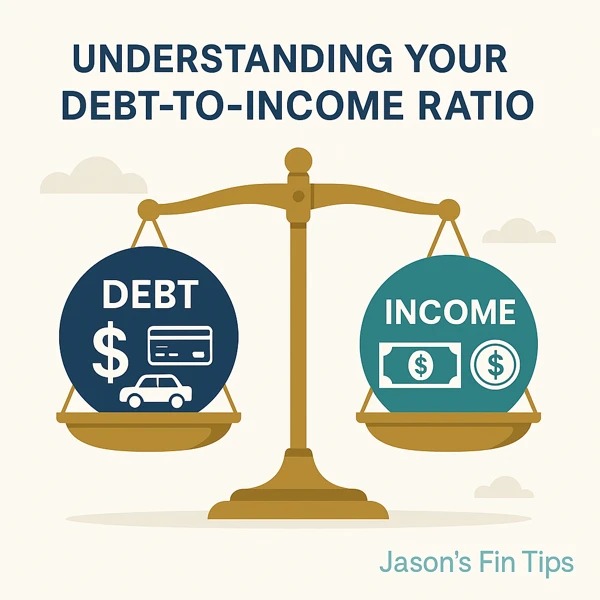
- Your Debt-to-Income Ratio (DTI) reveals how much of your income goes toward repaying debt each month — a key indicator of financial health.
- Lenders use your DTI to measure borrowing capacity, creditworthiness, and loan eligibility. A lower ratio signals lower risk and better loan terms.
- Aim for a total DTI under 36% whenever possible. While some programs allow up to 43–50%, staying below 36% provides financial breathing room.
- High DTI ratios are warning signs of financial stress. If you’re living paycheck to paycheck, making only minimum payments, or relying on credit to cover expenses, it’s time to act.
- Lower your DTI by paying down high-interest debt, consolidating loans, or boosting income through side work or refinancing.
- Monitor your DTI quarterly to track progress — even small reductions (from 45% to 40%) can open doors to better credit opportunities and long-term stability.
What Your DTI Reveals About Financial Stability
Have you ever wondered why your loan application was denied even though your credit score looked great?
The answer might lie in a single number — your Debt-to-Income (DTI) ratio.
Your DTI measures how much of your income goes toward paying off debts each month. It’s one of the most important factors lenders use to evaluate your financial health and determine whether you can take on more credit.
In this guide, we’ll explain what your DTI ratio means, how to calculate it, what a good ratio looks like, and how to improve it. Whether you’re applying for a mortgage, consolidating debt, or simply looking to strengthen your financial foundation, understanding your DTI is essential.
1. What Is the Debt-to-Income Ratio?
Your Debt-to-Income ratio (DTI) is the percentage of your gross monthly income (before taxes) that goes toward repaying debts.
Formula: DTI=Total Monthly Debt PaymentsGross Monthly Income×100\text{DTI} = \frac{\text{Total Monthly Debt Payments}}{\text{Gross Monthly Income}} \times 100DTI=Gross Monthly IncomeTotal Monthly Debt Payments×100
A lower ratio indicates financial balance and less risk for lenders. A higher ratio suggests that too much of your income is tied up in debt obligations — a warning sign for both you and your creditors.
2. How to Calculate Your DTI (Step-by-Step)
Step 1: Add Up All Monthly Debt Payments
Include:
- Mortgage or rent
- Auto loans
- Student loans
- Credit card minimum payments
- Personal loans
- Child support or alimony obligations
Step 2: Find Your Gross Monthly Income
Include:
- Salary or wages before taxes
- Bonuses and commissions
- Self-employment income
- Rental or investment income
Step 3: Divide and Multiply by 100
DTI=Total Monthly Debt PaymentsGross Monthly Income×100\text{DTI} = \frac{\text{Total Monthly Debt Payments}}{\text{Gross Monthly Income}} \times 100DTI=Gross Monthly IncomeTotal Monthly Debt Payments×100
Example Calculation:
| Debt Type | Monthly Payment |
|---|---|
| Mortgage | $1,500 |
| Auto Loan | $400 |
| Credit Cards | $200 |
| Total Debt Payments | $2,100 |
If your gross monthly income is $6,000:
DTI = $2,100 ÷ $6,000 = 35%
Result: You’re using 35% of your income to service debt — a manageable level for most lenders.
3. Types of Debt-to-Income Ratios
Not all DTI ratios are the same. Lenders often calculate two versions:
Front-End Ratio (Housing DTI)
- Focuses solely on housing costs — mortgage, property taxes, insurance, and HOA fees.
- Ideal for most borrowers: ≤ 28%.
Back-End Ratio (Total DTI)
- Includes all monthly debt payments.
- Ideal target: ≤ 36%.
Some lenders may allow up to 43–50% if compensating factors (like strong credit or large savings) are present.
4. Why Your DTI Ratio Matters
Your DTI ratio serves two crucial purposes:
For Lenders
It indicates your repayment ability and overall credit risk. A lower DTI shows that you have enough income left to handle unexpected expenses — making you a safer borrower.
For You
It’s a window into your own financial stability. Monitoring DTI helps you understand whether your current debt load is sustainable or if it’s holding you back from financial goals.
Loan Program Guidelines
| Loan Type | Max Acceptable DTI | Notes |
|---|---|---|
| Conventional (Fannie Mae/Freddie Mac) | ≤ 43% | Ideal applicants often under 36% |
| FHA Loans | ≤ 50% | Allows higher DTI with good credit |
| VA Loans | ≤ 41% | May approve higher with residual income |
| Auto Loans | ≤ 40% | Depends on lender |
| Credit Cards | ≤ 36% preferred | Helps qualify for better rates |
A lower DTI can mean lower interest rates, more favorable terms, and higher approval odds.
💳 How Creditors Use Your Debt-to-Income Ratio
Your Debt-to-Income (DTI) ratio doesn’t just reflect your financial balance — it directly shapes how lenders and creditors decide whether, and on what terms, to extend you credit.
When you apply for a mortgage, auto loan, credit card, or personal loan, lenders use your DTI as a key underwriting metric alongside your credit score, income history, and payment record. Here’s how the process works:
1. Measuring Repayment Capacity
Creditors calculate your DTI to determine whether you can reasonably manage additional debt without financial strain.
- A low DTI (below 36%) indicates that you have room in your budget to take on new payments safely.
- A high DTI (above 43%) signals that too much of your income already goes toward existing obligations, making you a higher-risk borrower.
💡 Think of DTI as a financial “stress test” — it shows how comfortably you can absorb new debt while maintaining stability.
2. Establishing Loan Approval Thresholds
Different lenders and loan types use varying DTI cutoffs:
| Loan Type | Typical Maximum DTI | Notes |
|---|---|---|
| Conventional Mortgages (Fannie Mae/Freddie Mac) | Up to 43% | Some lenders allow higher with strong credit and reserves. |
| FHA Loans | Up to 50% | Flexible, especially for first-time buyers. |
| VA Loans | Around 41% | May exceed if residual income is high. |
| Auto Loans | 36–45% | Stricter for longer loan terms. |
| Credit Cards & Personal Loans | Often below 40% | Issuers use internal scoring models but still weigh DTI heavily. |
3. Determining Interest Rates and Loan Terms
Even if approved, your DTI can affect pricing and loan structure:
- Lower DTI → lower interest rate and longer repayment flexibility.
- Higher DTI → higher rates, shorter terms, or smaller approved amounts.
- Some lenders require borrowers above a certain DTI to add a co-signer or provide collateral.
📈 Example:
Two applicants with identical credit scores may receive very different offers — the one with a 25% DTI might qualify for a 6% rate, while the one at 45% DTI could be offered 9% or less favorable terms.
4. Assessing Credit Risk Holistically
While your credit score shows how you’ve handled debt in the past, your DTI shows how much you can handle today.
Together, they paint a complete picture of risk:
- Credit score = reliability
- DTI ratio = capacity
Creditors often analyze both using proprietary scoring models. For example:
- A borrower with a 760 credit score but 50% DTI might still face rejection.
- A borrower with a 690 credit score but 28% DTI may be seen as lower risk overall.
5. Factoring in Compensating Variables
When DTI is high, lenders look for offsetting strengths such as:
- Strong credit history and on-time payments.
- Significant cash reserves or savings.
- High income stability or dual household earnings.
- Low loan-to-value ratio (LTV) in secured lending.
If you can demonstrate these compensating factors, you may still qualify — though likely with adjusted terms.
6. Impact on Future Credit Opportunities
Maintaining a healthy DTI improves your creditworthiness across multiple products:
- Easier pre-approval for mortgages and auto financing.
- Lower interest rates on credit cards and personal loans.
- Stronger negotiating leverage for refinancing or credit limit increases.
Conversely, a persistently high DTI can limit new borrowing options even if you’ve never missed a payment.
💡 Pro Insight from Financial Planners
“Creditors care about your capacity to pay, not just your willingness to pay. Your DTI ratio is the simplest way they measure that capacity.”
Practical Takeaway
Regularly calculating and tracking your DTI — especially before major credit applications — puts you in control.
If you know your ratio and can improve it ahead of time, you’ll be positioned for better rates, higher approvals, and stronger overall financial health.
5. What’s Considered a Good DTI Ratio?
| DTI Range | Rating | Meaning |
|---|---|---|
| 0%–20% | Excellent | Minimal debt; strong flexibility |
| 21%–35% | Good | Balanced financial health |
| 36%–43% | Acceptable | Qualifies for most credit products |
| 44%–50% | Risky | May face loan restrictions |
| 50%+ | High Risk | Creditors likely to deny new debt |
If your DTI exceeds 43%, lenders may hesitate — but you still have options to improve it.
6. How to Lower Your Debt-to-Income Ratio
Improving your DTI is about adjusting both sides of the equation — reducing debt and increasing income.
Step 1: Increase Your Income
- Take on part-time or freelance work.
- Request a raise or promotion.
- Explore monetizing a hobby or skill.
Step 2: Reduce Your Debt
- Focus on high-interest debt first (avalanche method).
- Consolidate multiple debts into one lower-interest loan.
- Refinance to reduce monthly payments.
Step 3: Avoid Taking On New Debt
- Delay large purchases until DTI improves.
- Avoid co-signing loans for others.
Step 4: Apply Windfalls Wisely
- Use bonuses, tax refunds, or gifts to pay down principal balances.
Step 5: Review Regularly
- Track your DTI every 3–6 months.
- Reassess financial progress before applying for new credit.
7. Using DTI to Plan Your Financial Future
A low DTI ratio doesn’t just help you qualify for loans — it strengthens your long-term financial health.
- Budgeting: Helps set realistic limits for monthly spending.
- Homeownership Readiness: A DTI below 36% signals mortgage affordability.
- Emergency Preparedness: A lower DTI means more flexibility during job loss or economic downturns.
- Goal Alignment: Helps balance debt repayment with saving and investing.
By targeting a DTI of 30% or less, you’ll maintain strong financial agility and resilience.
8. Common Misconceptions About DTI
| Myth | Reality |
|---|---|
| “High income = low DTI automatically.” | False. If debt rises with income, DTI can remain high. |
| “DTI includes groceries, utilities, and insurance.” | False. Only recurring debt obligations count. |
| “Paying off loans early hurts your DTI.” | False. Reducing debt always helps. |
| “DTI and credit score measure the same thing.” | False. Credit score measures history; DTI measures capacity. |
9. ⚠️ Warning Signs Your Debt-to-Income Ratio Is Too High
Your DTI ratio doesn’t exist in isolation — it affects your daily financial flexibility. Even before lenders say no, there are clear red flags that your debt may be reaching unhealthy levels.
1. You’re Living Paycheck to Paycheck
If your income is consumed by recurring debt payments, leaving little for savings or emergencies, your DTI is likely too high.
Rule of thumb: If you have less than 10% of your income left after bills, it’s time to reassess.
2. You’re Only Making Minimum Payments
Relying on minimum credit card or loan payments is a telltale sign that debt is straining your budget. This keeps balances high and interest costs mounting — raising your DTI over time.
3. You Delay or Skip Saving
When saving for retirement, emergencies, or large purchases becomes impossible, your DTI ratio is signaling that debt is crowding out your future priorities.
4. Your Credit Utilization Keeps Rising
If you’re leaning on credit cards for everyday expenses or maxing out revolving accounts, it’s not just a credit score issue — it’s a DTI warning sign that cash flow is tightening.
5. Loan or Credit Applications Are Declined
Repeated denials or high-interest offers often indicate that lenders see your DTI as risky, even if your credit score is decent.
6. Stress Over Monthly Payments
Feeling anxious when bills arrive or juggling due dates is an emotional indicator that your DTI may be stretching your finances too thin.
7. You’re Borrowing to Pay Other Debt
Using personal loans, balance transfers, or new credit cards to cover existing obligations is a strong sign your DTI is unsustainable.
💡 Pro Tip:
A DTI above 43% is often a tipping point where lenders start viewing applicants as higher risk.
If your ratio is approaching that range — or you’re experiencing any of these warning signs — focus on reducing debt balances and rebuilding cash reserves before applying for new credit.
10. Debt-to-Income Scenarios
Every borrower’s financial picture tells a story. Understanding how different incomes, debt loads, and financial decisions affect your Debt-to-Income ratio (DTI) can help you see where you stand — and what steps to take next.
Below are several illustrative scenarios that reflect common borrower profiles and what each can learn from their DTI outcome.
Scenario 1: Emily — The Responsible Teacher
| Category | Detail |
|---|---|
| Gross Monthly Income | $5,000 |
| Total Monthly Debt Payments | $1,200 (mortgage, car loan, credit card) |
| Debt-to-Income Ratio (DTI) | 24% |
| Assessment | Excellent — Emily’s DTI is well below the 36% benchmark. |
| Why It Works | She manages her debt responsibly, makes more than the minimum payments, and allocates a portion of her budget to savings and emergencies. |
| Next Step | Emily could consider refinancing to shorter loan terms or increasing retirement contributions. Maintaining this level of control ensures long-term financial flexibility and strong credit standing. |
Scenario 2: Marco — The Self-Employed Freelancer
| Category | Detail |
|---|---|
| Gross Monthly Income | $4,000 (variable) |
| Total Monthly Debt Payments | $1,800 (auto loan, student loan, credit cards) |
| Debt-to-Income Ratio (DTI) | 45% |
| Assessment | High Risk — Lenders may hesitate without compensating factors. |
| Challenges | Marco’s income fluctuates month-to-month, making debt payments unpredictable. High interest credit cards amplify the problem. |
| Improvement Plan |
- Consolidate credit card balances into a lower-interest personal loan.
- Refinance his car loan to reduce the monthly payment.
- Set aside a 3-month emergency fund to stabilize self-employment volatility.
If he lowers his debt by $400 monthly, his DTI could drop to 35%, placing him in a strong approval range. |
Scenario 3: Ava & Jordan — Newlyweds Planning to Buy a Home
| Category | Detail |
|---|---|
| Combined Gross Monthly Income | $8,000 |
| Total Monthly Debt Payments | $3,200 (student loans, car loan, personal loan) |
| Debt-to-Income Ratio (DTI) | 40% |
| Assessment | Acceptable — Eligible for FHA or VA loans but above the ideal 36%. |
| Why It Matters | With a higher DTI, their mortgage pre-approval amount will be limited, potentially affecting home price range. |
| Improvement Strategy |
- Pay off the smallest loan ($300/month personal loan) to bring DTI to 36%.
- Delay new large purchases until after securing a mortgage.
- Use any dual income surplus to build cash reserves and improve credit utilization ratios. |
Scenario 4: Brandon — The Recent Graduate with Student Loans
| Category | Detail |
|---|---|
| Gross Monthly Income | $3,500 |
| Total Monthly Debt Payments | $1,400 (student loan + credit card) |
| Debt-to-Income Ratio (DTI) | 40% |
| Assessment | Moderate to High — Early-career debt load is limiting flexibility. |
| Why It Matters | Student loans consume a large share of Brandon’s income, reducing his ability to save or qualify for additional credit. |
| Action Steps |
- Explore federal Income-Driven Repayment (IDR) plans to reduce monthly payments.
- Use extra income from side work to pay down high-interest debt.
- As income grows, target a long-term DTI goal of 30% or less. |
Scenario 5: Lisa — Mid-Career Homeowner with Strong Equity
| Category | Detail |
|---|---|
| Gross Monthly Income | $9,000 |
| Total Monthly Debt Payments | $3,150 (mortgage, two car loans, small credit card) |
| Debt-to-Income Ratio (DTI) | 35% |
| Assessment | Good — On the high end of the healthy range. |
| Opportunities | Lisa’s DTI is solid, but she could unlock additional financial flexibility. |
| Optimization Plan |
- Refinance her mortgage to a lower interest rate if market conditions allow.
- Pay off one car loan early, which could drop her DTI to 28%.
- Redirect freed-up cash to investments or home improvements to increase net worth. |
Scenario 6: David — High Earner with High Lifestyle Debt
| Category | Detail |
|---|---|
| Gross Monthly Income | $12,000 |
| Total Monthly Debt Payments | $6,600 (two luxury car leases, large mortgage, credit cards) |
| Debt-to-Income Ratio (DTI) | 55% |
| Assessment | Severely Overextended — May face denials despite high income. |
| The Trap | David earns well but overspends. Lenders may see him as high risk despite strong credit. High DTI can also limit retirement contributions and emergency savings. |
| Rebalancing Steps |
- Eliminate one car lease and pay off credit card debt ($1,200/month reduction).
- Downsize discretionary spending and refinance mortgage if possible.
- Target DTI below 40% within 12 months to restore financial flexibility. |
🔍 Lessons from These Scenarios
- High income doesn’t guarantee a low DTI — spending habits matter more.
- Consistency and discipline in managing loans and credit cards drive financial health.
- Even small monthly reductions in debt can significantly improve your ratio and credit opportunities.
- For sustainable progress, pair debt reduction with strategic income growth.
💡 Pro Tip:
Track your DTI monthly just like you track your credit score. Use online tools or your budgeting app to monitor trends — early awareness helps prevent borrowing from turning into burden.
11. 💪 What to Do If Your Debt-to-Income Ratio Is Too High
A high Debt-to-Income (DTI) ratio doesn’t mean financial failure — it’s a signal to rebalance. By taking proactive steps, you can regain stability, improve creditworthiness, and free up income for savings and investments.
1. Assess the Root Cause
Before taking action, pinpoint what’s driving your DTI:
- Has income dropped recently?
- Are interest costs consuming more than expected?
- Are lifestyle or discretionary expenses contributing to rising debt?
Identifying the source helps tailor the right solution — whether that’s reducing expenses, refinancing loans, or boosting income.
2. Create a Debt Reduction Plan
Focus on paying down high-interest debt first — often credit cards and personal loans.
- Avalanche method: Prioritize debts with the highest interest rates.
- Snowball method: Tackle smaller balances first for motivational wins.
- Automate payments to ensure consistency.
As balances decline, your DTI ratio improves even before your next loan application.
3. Explore Refinancing or Consolidation
Lowering your monthly payments can reduce your DTI quickly:
- Mortgage or Auto Refinance: Lock in lower rates or extend repayment terms.
- Debt Consolidation Loan: Replace multiple debts with one manageable monthly payment.
- Balance Transfer Offers: Move high-interest credit card debt to 0% APR promotions (only if you can pay off before the intro period ends).
⚠️ Note: Avoid extending loan terms too far — long-term interest costs can offset short-term relief.
4. Increase Income Streams
Boosting income is often the most powerful DTI fix:
- Negotiate a raise or performance-based bonus.
- Take on part-time or freelance work.
- Monetize a skill — tutoring, writing, or consulting.
- Rent out unused space or items.
Even an additional $200–$500 monthly can make a measurable difference.
5. Reevaluate Your Budget
Audit your spending for areas to trim:
- Subscriptions, streaming, or unused memberships.
- Dining out and impulse purchases.
- Insurance or utility comparisons for better rates.
Redirect savings toward debt payments to accelerate DTI improvement.
6. Avoid New Credit Until Ratios Improve
Each new loan or credit card increases your total monthly obligations — worsening DTI.
If possible, pause all new borrowing until your ratio falls below 36–40%.
7. Seek Professional Guidance
If debt feels overwhelming:
- Certified Credit Counselors (via NFCC or local nonprofits) can negotiate lower interest rates or payment plans.
- CFP® Professionals can integrate DTI management into your long-term financial plan.
- Avoid “debt settlement” companies promising instant relief — these often harm your credit more than help.
8. Track Progress Monthly
Recalculate your DTI regularly to stay motivated.
Seeing even a small reduction — like moving from 48% to 44% — shows tangible progress.
A good goal:
- Short-term target: Below 43%
- Long-term ideal: 30% or lower
💡 Key Insight:
Lowering your DTI isn’t about deprivation — it’s about creating flexibility.
A healthier ratio means better loan options, lower stress, and more control over your financial future.
12. Tools & Resources
- Debt-to-Income Calculator: Create a simple tool or link to one (e.g., CFPB calculator).
- Credit Counseling Resources: National Foundation for Credit Counseling (NFCC)
- Budgeting Apps: Mint, YNAB, Empower, or EveryDollar.
Conclusion – Use DTI as Your Financial Compass
Understanding and managing your Debt-to-Income ratio is one of the most empowering steps you can take toward financial independence. It’s more than just a number — it’s a reflection of balance, discipline, and foresight.
As you evaluate your financial health, calculate your DTI and use it as a benchmark to guide smarter decisions about spending, saving, and borrowing. A strong DTI today sets the foundation for tomorrow’s opportunities — from homeownership to financial freedom.
Ready to take the next step?
Explore Jason’s Fin Tips for expert guides on debt management, credit repair, and long-term financial planning strategies.
