
Key Takeaways
- Early Recognition is Critical: Identifying the warning signs of credit card debt early can prevent financial problems from escalating.
- Common Red Flags: Difficulty making payments, maxed-out credit cards, and reliance on credit for necessities are key indicators of trouble.
- Proactive Steps: Budgeting, debt repayment strategies, and seeking professional help can restore financial stability.
- Prevention Matters: Developing healthy spending habits and leveraging financial tools can keep debt under control.
Introduction
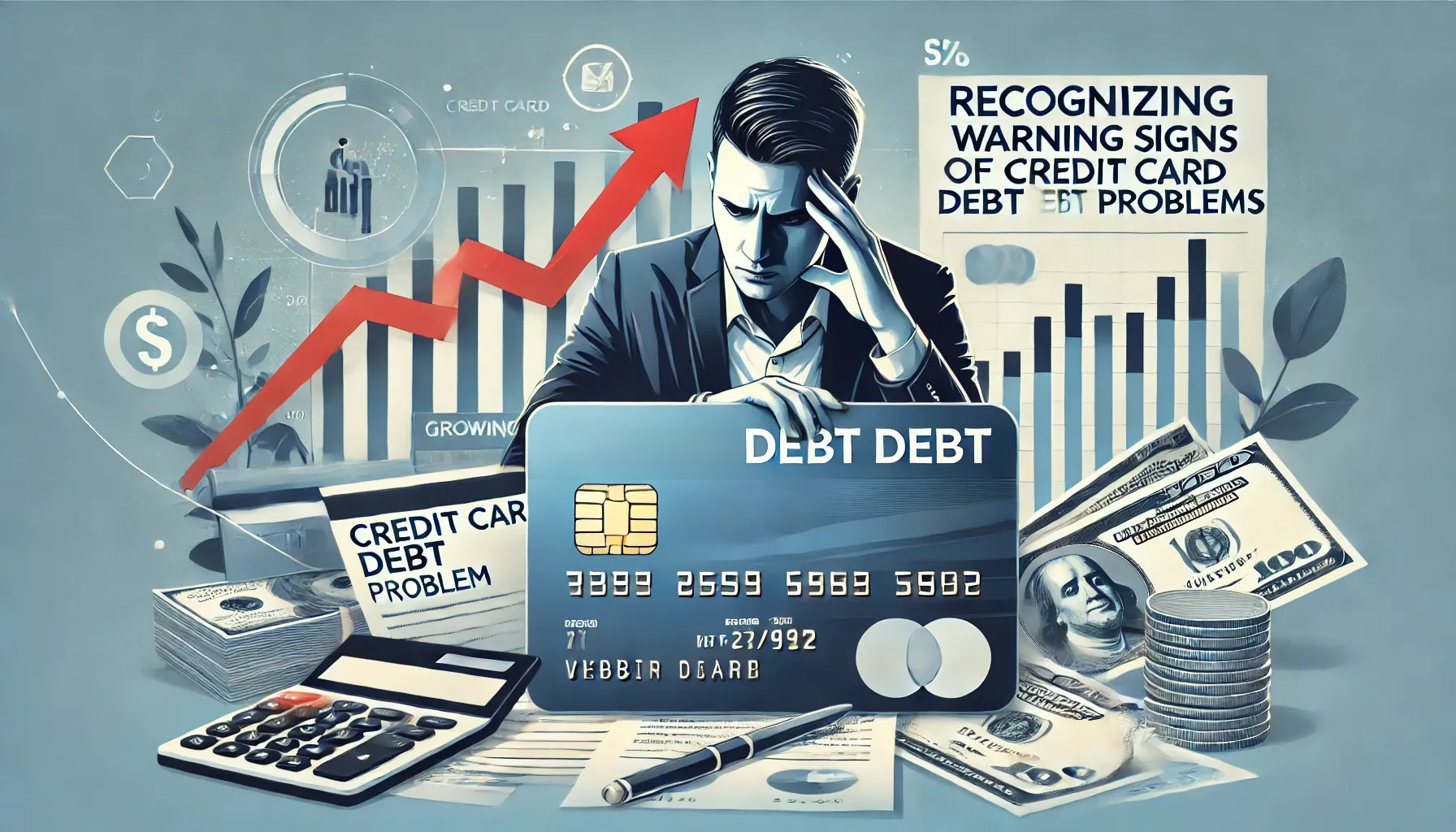
Credit cards can be powerful financial tools when used responsibly, offering convenience, rewards, and a safety net in emergencies. However, unchecked credit card usage can quickly lead to mounting debt, financial stress, and long-term instability. Recognizing the early warning signs of credit card debt problems is essential to prevent issues from escalating. This guide will help you identify the red flags, assess your financial health, and take proactive steps to regain control over your finances.
Understanding the Risks of Credit Card Debt
How Credit Card Debt Escalates
Credit card debt often builds gradually but can spiral out of control due to high-interest rates and compounding balances. Making only the minimum payments allows interest to accumulate, significantly increasing the total amount owed. Over time, this creates a cycle where more of your payment goes toward interest rather than reducing the principal.
Consequences of Unchecked Debt
- Negative Impact on Credit Scores: High credit utilization and missed payments can lower your credit score, making it harder to secure loans or favorable interest rates in the future.
- Mental and Emotional Strain: Debt-related stress can lead to anxiety, depression, and strained relationships.
- Financial Instability: Excessive debt limits your ability to save for emergencies, retirement, or other life goals.
Common Credit Card Debt Red Flags
Key Indicators of Financial Trouble
- Difficulty Making Minimum Payments: If you struggle to pay even the smallest required amount, it’s a clear sign of financial strain.
- Using Credit Cards for Necessities: Relying on credit to cover rent, utilities, or groceries often indicates a lack of sufficient cash flow.
- Maxing Out Credit Limits: Regularly reaching or exceeding your credit limit can signal poor financial management.
- Frequent Cash Advances: Cash advances come with high fees and interest rates, compounding financial problems.
- Avoiding or Missing Payments: Skipping payments or consistently paying late suggests an inability to manage your obligations.
Psychological and Behavioral Red Flags
- Avoiding Statements: Ignoring credit card bills or avoiding account reviews can indicate denial about your financial situation.
- Constant Anxiety: Persistent worry about balances or upcoming bills is a common emotional symptom of debt issues.
- Lack of Financial Reviews: Avoiding budget checks or financial assessments may hide deeper problems.
Conducting a Personal Debt Checkup
Evaluating Debt Health
- Debt-to-Income (DTI) Ratio: Calculate your DTI by dividing your total monthly debt payments by your gross monthly income. A DTI above 36% is a warning sign of excessive debt.
- Credit Utilization Rate: Aim to use less than 30% of your total available credit to maintain a healthy credit profile.
- Review Credit Card Statements: Identify spending patterns, unnecessary charges, or recurring expenses that can be trimmed.
Identifying Problem Areas
- Unnecessary Expenses: Identify and eliminate discretionary expenses like dining out or subscription services.
- Seasonal Overspending: Track patterns of increased spending during holidays or sales events to curb impulsive purchases.
Taking Proactive Steps to Address Debt Issues Early
Creating a Financial Plan
- Budgeting: Separate essential and discretionary spending to allocate more funds toward debt repayment.
- Debt Repayment Strategies: Consider methods like the snowball (smallest debt first) or avalanche (highest interest first) to tackle debt efficiently.
- Emergency Fund: Start small by saving a few hundred dollars to avoid reliance on credit for unexpected expenses.
Seeking Professional Help
- Financial Advisors: Professionals can help create a tailored debt management plan.
- Nonprofit Credit Counselors: Organizations like the National Foundation for Credit Counseling (NFCC) offer free or low-cost services to help manage debt.
Example Scenario: Recognizing and Addressing Debt Problems
Meet Sarah
Sarah is a 32-year-old marketing professional who uses her credit card for most of her expenses. Over the past year, she started relying on her card to cover daily necessities like groceries and utility bills due to unexpected medical expenses that depleted her savings. Her balances climbed steadily, and she began missing payment deadlines due to insufficient funds.
Sarah noticed she was avoiding her credit card statements and felt overwhelmed by the thought of tackling her debt. After reading about the debt-to-income (DTI) ratio, she calculated hers and discovered it was at 42%, well above the recommended threshold. Realizing the severity of her situation, Sarah took the following steps:
- Created a Budget: She categorized her spending and identified areas where she could cut back, like dining out and streaming services.
- Adopted the Snowball Method: She focused on paying off her smallest debt first while making minimum payments on her other cards to build momentum.
- Consulted a Credit Counselor: A counselor helped her negotiate lower interest rates with her credit card companies.
- Started Saving Again: Sarah set up a small emergency fund to avoid relying on her credit card for unexpected expenses in the future.
After a year of disciplined effort, Sarah reduced her debt by 40% and improved her credit score significantly. Her journey highlights the importance of recognizing warning signs early and taking proactive steps to address them.
Preventing Debt Escalation
Developing Better Spending Habits
- Use Cash or Debit Cards: Limit credit card use to essential purchases or planned expenses.
- 24-Hour Rule: Delay non-essential purchases for at least 24 hours to assess their necessity.
Building an Emergency Fund
- Start with small, achievable savings goals, like $500. Gradually increase this to cover three to six months of expenses.
- Set up automatic transfers to a dedicated savings account to ensure consistent contributions.
Leveraging Financial Tools
- Credit Monitoring Apps: Tools like Credit Karma help you track your credit score and identify problem areas.
- Budgeting Apps: Apps like Mint or YNAB can simplify budget creation and monitoring.
- Payment Alerts: Enable alerts for payment due dates or when balances near your credit limit.
Quick Tips for Managing Credit Card Debt
- Avoid Carrying a Balance: Aim to pay off your balance in full each month to avoid interest charges.
- Negotiate with Creditors: Call your credit card company to request a lower interest rate or better terms.
- Set Up Auto-Payments: Ensure you never miss a payment by automating your bill payments.
- Limit New Credit Card Applications: Avoid applying for new cards unless absolutely necessary to prevent increasing your debt-to-income ratio.
- Review Statements Regularly: Regularly review your credit card statements to catch errors or unauthorized charges early.
Helpful Tables
Table 1: Common Credit Card Debt Red Flags
| Red Flag | Description |
|---|---|
| Difficulty Making Minimum Payments | Struggling to pay even the smallest required amounts. |
| Using Credit for Necessities | Relying on credit cards to cover essential expenses. |
| Maxing Out Credit Limits | Frequently nearing or exceeding credit limits. |
| Frequent Cash Advances | Using cash advances with high fees and interest. |
| Avoiding or Missing Payments | Skipping payments or paying consistently late. |
Table 2: Debt Repayment Strategies Comparison
| Strategy | Focus | Advantages | Disadvantages |
| Snowball Method | Smallest debt first | Builds momentum and confidence quickly | May pay more in interest overall. |
| Avalanche Method | Highest-interest debt first | Minimizes overall interest paid | Takes longer to see progress. |
| Hybrid Approach | Combines snowball and avalanche | Flexible and customizable | Requires careful planning. |
Table 3: Tools for Managing Debt
| Tool | Purpose | Example Apps |
| Credit Monitoring | Tracks credit score and utilization | Credit Karma, Experian |
| Budgeting | Helps manage income and expenses | Mint, YNAB |
| Payment Alerts | Sends reminders for payment due dates | Bank or credit card apps |
Encouraging Financial Literacy
Learning About Credit
- Understand key terms like APR, late payment penalties, and grace periods to make informed decisions about credit usage.
- Research how credit scores are calculated and strategies to improve them over time.
Teaching Financial Responsibility
- Share financial management tips with family and friends to promote healthier habits collectively.
- Explore online courses, books, or podcasts focused on personal finance to deepen your knowledge.
Conclusion
Recognizing the early warning signs of credit card debt problems is the first step toward regaining control over your financial health. By conducting a personal debt checkup, addressing red flags early, and implementing strategies to prevent escalation, you can avoid the pitfalls of excessive debt. Commit to proactive financial management and continuous learning to secure a stable and stress-free financial future.
Take charge of your finances today—the sooner you act, the greater your ability to shape a prosperous tomorrow.
