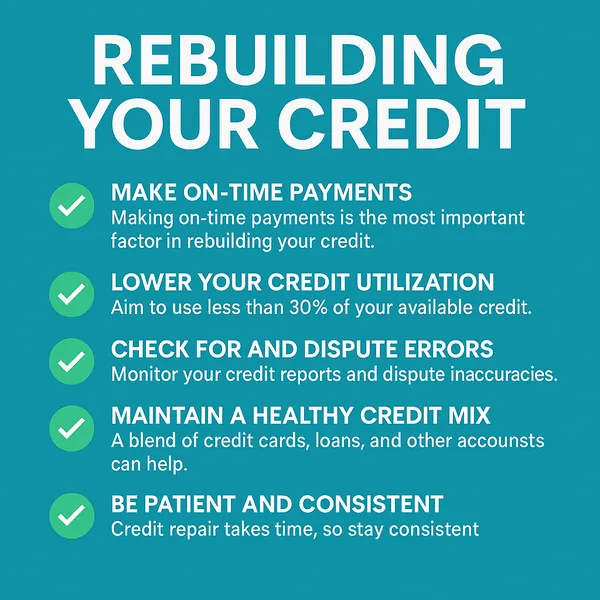
🧠 5 Key Takeaways for Credit Repair
- ✅ Make On-Time Payments: Your payment history accounts for 35% of your credit score. Paying bills on time is the single most important factor in rebuilding your credit.
- 📉 Lower Your Credit Utilization: Aim to use less than 30% of your available credit—under 10% is ideal for boosting your score.
- 🕵️ Check for and Dispute Errors: Monitor your credit reports from all three bureaus and dispute any inaccuracies to prevent false damage to your score.
- 🔄 Maintain a Healthy Credit Mix: A blend of credit cards, loans, and other accounts can help—but don’t open new accounts unless necessary.
- ⏳ Be Patient and Consistent: Credit repair is a long game. Stay focused, and your persistence will pay off.
Rebuilding Your Credit: Proven Steps for Long-Term Financial Health
A good credit score is one of the most powerful tools for financial success. It influences your ability to qualify for loans, access lower interest rates, rent housing, and even secure certain jobs. If your score isn’t where you’d like it to be, don’t worry—rebuilding credit is a journey, not a sprint. With the right strategy and consistency, you can repair and improve your credit over time.
📊 Understanding Credit Scores
What Is a Credit Score?
A credit score is a three-digit number that represents your creditworthiness, typically ranging from 300 to 850. Most lenders use FICO or VantageScore models to evaluate how likely you are to repay your debts. The higher your score, the lower your perceived risk.
What Factors Impact Your Score?
| Factor | Weight | Description |
|---|---|---|
| Payment History | 35% | Consistency in paying bills on time. |
| Credit Utilization | 30% | Percentage of your available credit you’re using. |
| Length of Credit History | 15% | How long your credit accounts have been active. |
| Credit Mix | 10% | Variety of credit types, such as credit cards, auto loans, and mortgages. |
| New Credit Inquiries | 10% | Hard pulls when you apply for new credit. |
💡 Why Rebuilding Credit Is Worth the Effort
Improving your credit score can:
- Reduce loan and credit card interest rates
- Help you qualify for better credit products
- Lower your insurance premiums
- Improve rental and employment prospects
Poor credit can limit these opportunities and cost you thousands more in interest and fees over time.
🔧 Techniques to Repair Your Credit Score
Here are tried-and-true strategies:
- Make Consistent On-Time Payments
Set up autopay or calendar reminders to avoid missed payments. - Pay Down High Balances
Focus on reducing credit card balances to improve your utilization rate. - Ask for a Credit Limit Increase
If your income and payment history are solid, this can lower utilization without new debt. - Dispute Credit Report Errors
Get free reports at AnnualCreditReport.com and dispute inaccuracies directly with the bureaus. - Use a Secured Credit Card or Credit Builder Loan
These tools can help you demonstrate responsible use of credit. - Avoid Unnecessary Hard Inquiries
Only apply for new credit when necessary, as each inquiry can slightly reduce your score.
📘 Example Scenarios of Credit Rebuilding
Scenario 1: Reducing High Credit Utilization
Maria’s Challenge:
Maria had $4,000 in credit card debt on a $5,000 limit—an 80% utilization rate.
Actions Taken:
- She paid $500/month toward her balance.
- Requested and received a credit limit increase to $7,500.
Outcome:
Her utilization dropped below 30%, and within six months, her credit score improved by over 50 points.
Scenario 2: Recovering from Missed Payments
David’s Challenge:
Due to a family emergency, David missed three car loan payments.
Actions Taken:
- Contacted his lender and enrolled in a hardship repayment plan.
- Set up automatic payments to avoid future misses.
- Requested a goodwill adjustment to remove one late payment record.
Outcome:
After six months of consistent payments, his credit score began to rebound.
🔁 Thoughts: Credit Repair Takes Time—but It Works
Rebuilding your credit is a journey that demands discipline, strategy, and time. But the payoff—better financial opportunities, peace of mind, and long-term savings—is well worth the effort.
Start small. Stay consistent. And celebrate every improvement.
🔄 Frequently Asked Questions: Credit Repair Essentials
1. Making Timely Payments
Why It’s Important
Payment history is the single largest factor in your credit score—accounting for 35%. Even one missed payment can significantly lower your score.
How to Stay on Track
- Set Up Reminders: Use apps or calendar alerts for payment due dates.
- Automate Payments: Enroll in autopay for recurring bills to avoid accidental misses.
- Address Late Payments Quickly: Contact your lender if you’ve missed a payment—some may remove late marks as a goodwill adjustment if you have a good track record.
2. Reducing Credit Utilization
What Is Credit Utilization?
Your credit utilization ratio measures how much of your available revolving credit you’re using.
- ✅ Target: Below 30% is ideal; under 10% is best for score optimization.
Strategies to Lower Utilization
| Strategy | Description | Pros | Cons |
|---|---|---|---|
| Pay Down Balances | Focus on reducing high balances. | Fastest way to lower utilization. | Requires extra payments. |
| Request Credit Limit Increase | Ask your issuer to raise your limit. | Lowers utilization without new debt. | May require strong credit or income proof. |
3. Diversifying Credit Types
Why Credit Mix Matters
Lenders like to see a healthy mix of credit types—such as credit cards, auto loans, and mortgages—managed responsibly.
How to Diversify Without Risk
- Apply for a Secured Credit Card: Easier to qualify for and helps build positive history.
- Consider a Credit-Builder Loan: A small loan designed to improve your score.
- Keep Old Accounts Open: Maintaining older accounts lengthens your credit history.
4. Disputing Errors on Your Credit Report
Common Errors to Watch For
- Incorrect personal information.
- Accounts that don’t belong to you.
- Duplicate accounts.
- Incorrect payment status or balances.
Steps to Dispute Errors
| Step | Action | Example |
|---|---|---|
| 1 | Get your credit reports | Visit AnnualCreditReport.com to get free reports. |
| 2 | Review for errors | Check personal info, accounts, payment status, duplicates. |
| 3 | File disputes online with credit bureaus | Use Equifax, Experian, or TransUnion dispute portals. |
| 4 | Provide supporting documentation | Upload statements or receipts proving your case. |
5. Avoiding Hard Credit Inquiries
Understanding Hard vs. Soft Inquiries
- Hard Inquiries: When applying for credit; can slightly lower your score.
- Soft Inquiries: Background checks, pre-approvals; do not affect your score.
How to Minimize Hard Inquiries
- Limit unnecessary credit applications.
- Shop for loans within a short timeframe (typically 14–45 days) to have multiple inquiries treated as one.
6. Establishing New Credit Wisely
Why Opening New Credit Can Help—If Managed Carefully
Opening new accounts can boost your score by increasing available credit and demonstrating responsible use.
Best Practices
- Start with secured credit cards or credit-builder loans.
- Use new credit for small purchases; always pay the balance in full monthly.
- Avoid opening several new accounts at once.
💡 Additional Credit Repair Tips for Long-Term Success
Monitor Your Credit Regularly
Use free credit monitoring services or apps to track progress and detect fraud early.
Create and Follow a Budget
Budgeting tools like Mint or YNAB help ensure you can cover payments and avoid new debt.
Build an Emergency Fund
Aim for 3–6 months of expenses to avoid relying on credit during emergencies.
Seek Professional Guidance
If you feel overwhelmed, connect with nonprofit credit counseling agencies like NFCC or FCAA for personalized support.
🚨 Common Pitfalls to Avoid
| Pitfall | Description | Impact on Score |
|---|---|---|
| Closing Old Credit Accounts | Reduces available credit and shortens history. | Can lower credit score and utilization ratio. |
| Applying for Too Much Credit | Multiple applications in a short time. | Triggers multiple hard inquiries; lowers score. |
| Falling for Credit Repair Scams | Companies promising fast fixes. | Can waste money and delay legitimate repair efforts. |
⏳ How Long Does Credit Repair Take?
Credit repair is a gradual process.
- Disputing errors: May see results within 30 to 90 days.
- Building positive payment history: May take 6–12 months or longer.
- Reducing utilization: Improvements may reflect as soon as your lender reports the changes—often within one billing cycle.
📚 Resources for Credit Repair
| Resource | Features | Cost |
|---|---|---|
| Credit Karma | Free credit score updates, alerts | Free |
| Experian | FICO score tracking, identity protection | Free basic plan; Premium $9.99+/mo |
| Mint | Budgeting, credit score tracking | Free |
Free Credit Reports
- AnnualCreditReport.com — Federally authorized free reports.
Credit Counseling Services
- National Foundation for Credit Counseling (NFCC)
- Financial Counseling Association of America (FCAA)
🎯 Conclusion
Repairing your credit takes patience, consistency, and strategic action.
By applying the steps in this guide—making timely payments, lowering utilization, diversifying your credit mix, and avoiding common pitfalls—you can steadily rebuild your score and unlock better financial opportunities.
Take your first step today: check your credit report and create your credit repair action plan.
❓ Frequently Asked Questions (FAQs)
Can I Repair My Credit Score on My Own?
Yes, absolutely.
Most people can successfully repair their credit on their own by following the steps outlined in this guide. While professional credit repair services are available, they are optional—and best reserved for complex situations, such as identity theft or legal disputes.
How Much Can I Improve My Credit Score in a Year?
The amount your score can improve depends on your starting point, the severity of past issues, and your consistency in following good credit habits.
- Typical improvement range: 50 to 150+ points in a year for those addressing high utilization, missed payments, or errors.
- Key factor: The earlier you start consistent action, the sooner you may see results.
Will Paying Off Debt Instantly Boost My Credit Score?
Paying off debt—especially credit card balances—can result in a quick score improvement by lowering your credit utilization ratio, which is a major factor in your score.
However, remember that:
- It’s only one factor among several.
- Your score will also reflect your overall payment history, credit mix, and age of credit accounts.
Are Credit Monitoring Tools Safe to Use?
Yes—credit monitoring tools from reputable providers are safe, secure, and offer valuable insights into your credit health.
Look for trusted names such as:
- Credit Karma
- Experian
- Mint
Always avoid lesser-known tools or those requiring unusual permissions.
How Can I Protect Myself from Credit Repair Scams?
Be cautious of companies that:
- Promise instant credit score increases.
- Guarantee results.
- Demand large upfront fees.
Best practice:
Stick with DIY credit repair methods like those in this guide or work with reputable nonprofit credit counseling agencies such as NFCC or FCAA.
💪 Start Your Credit Repair Journey Today
Rebuilding your credit is a powerful step toward financial freedom and better opportunities.
Stay consistent, avoid shortcuts, and watch your credit score become a tool that works for you—not against you.
Check out