
5 Key Takeaways
- Payment history accounts for 35% of your total credit score, making it the most important factor.
- Even one missed payment can significantly lower your credit score and remain on your report for up to 7 years.
- Late payments reported at 30, 60, 90, and 120 days have increasing levels of impact on your credit score.
- You can recover from negative payment history by starting fresh with on-time payments and disputing errors on your credit report.
- Automating payments and negotiating with creditors can help you maintain a positive payment history.
The Role of Payment History in Shaping Your Credit Score
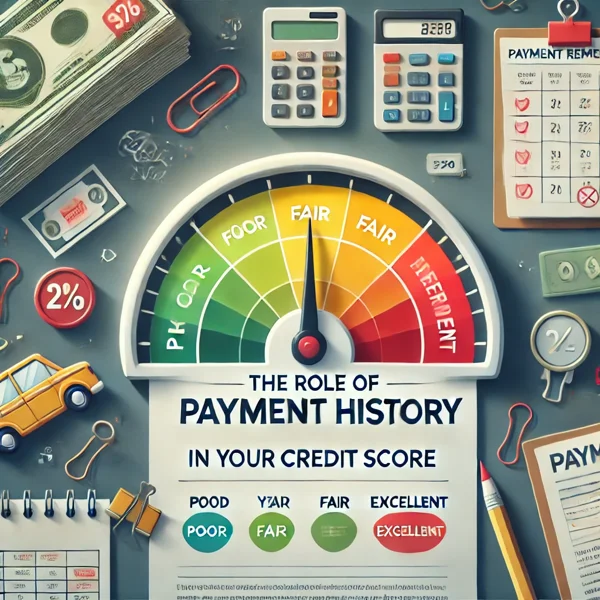
Your credit score is one of the most important numbers in your financial life. It affects everything from the interest rates you pay on loans to whether or not you can rent an apartment or get approved for a mortgage. Among the factors that contribute to your credit score, payment history is king. In fact, it accounts for 35% of your total credit score, making it the most significant piece of the puzzle.
In this post, we’ll explore the crucial role payment history plays in shaping your credit score, how missed or late payments impact you, and most importantly, how you can maintain a positive payment history or recover from past mistakes. Whether you’re looking to improve your score or just keep it in good shape, this guide has you covered.
What Is Payment History, and Why Is It So Important?
Payment history is a record of whether you’ve paid your credit obligations on time. Credit bureaus like Experian, TransUnion, and Equifax collect this information from lenders and use it to calculate your credit score.
Lenders rely on your credit score to determine how risky it is to lend to you. A positive payment history signals that you’re a responsible borrower who can manage debt well. On the other hand, a negative payment history, marked by late or missed payments, raises red flags for lenders.
Here’s why payment history holds so much weight:
- Reliability Indicator: Lenders view your payment history as a sign of how reliable you are when it comes to repaying debts. A strong history shows that you’re consistent and trustworthy.
- Predicts Future Behavior: Lenders believe that how you’ve handled debt in the past is the best predictor of how you’ll handle it in the future.
- Biggest Factor in Your Score: With payment history making up 35% of your credit score, even small missteps, like a single late payment, can have a significant impact.
In short, if you want to build and maintain a strong credit score, paying your bills on time needs to be a top priority.
| Credit Score Factor | Percentage of Total Score | Explanation |
|---|---|---|
| Payment History | 35% | Shows whether you’ve paid past credit accounts on time. |
| Credit Utilization | 30% | How much of your available credit you’re using; lower is better. |
| Length of Credit History | 15% | Age of your credit accounts, including your oldest and newest accounts. |
| New Credit Inquiries | 10% | Number of recent credit inquiries you’ve made (hard pulls). |
| Credit Mix | 10% | Variety of credit accounts (credit cards, mortgages, loans). |
How Late or Missed Payments Affect Your Credit Score
Life happens. You may have forgotten a payment or hit a financial rough patch. So how does missing a payment actually impact your credit score?
1. Late Payments: Timing Matters
Creditors usually report payments that are 30 days or more late to the credit bureaus. Payments that are less than 30 days late may result in fees, but they typically won’t show up on your credit report. Once a payment is reported as late, it can stay on your credit report for up to seven years, and the impact on your score depends on a few factors:
- How late the payment is: A 30-day late payment will hurt your score, but a 60-, 90-, or 120-day late payment will cause even more damage.
- Your overall credit history: If you’ve generally had good credit, one late payment won’t devastate your score, but it will still have a noticeable impact. If your credit is already shaky, the effect will be more severe.
2. The Ripple Effect of Missed Payments
The longer a payment goes unpaid, the worse the impact becomes. Here’s how different levels of missed payments can affect you:
- 30 Days Late: Your score could drop by 60 to 110 points, depending on your current score. Higher credit scores tend to drop more because there’s more to lose.
- 60 Days Late: At this point, your account is considered significantly delinquent, and the damage to your score will increase.
- 90 Days Late and Beyond: Once you hit 90 days or more, creditors may take more serious actions, like turning your debt over to a collections agency or charging off the debt, which means they no longer expect you to repay it. This can drop your score further and stay on your credit report for up to seven years.
3. The Severity of the Account Matters
Not all missed payments are equal in the eyes of lenders. Missing a payment on a mortgage or auto loan can hurt your score more than missing a payment on a credit card or utility bill. This is because bigger loans are seen as more critical in assessing your financial responsibility.
| Days Late | Impact on Score | Description |
|---|---|---|
| 30 Days Late | Minor | Can cause a score drop of 60-110 points. |
| 60 Days Late | Moderate | Score drops more significantly; remains on your report for 7 years. |
| 90 Days Late | Severe | Account may go to collections or be charged off. |
| 120+ Days Late | Very Severe | Score drops further; may lead to legal actions or sale to a collection agency. |
Tips for Maintaining a Positive Payment History
Thankfully, staying on top of your payments doesn’t have to be complicated. A few simple habits can go a long way in ensuring your payment history remains positive.
1. Automate Payments When Possible
One of the easiest ways to avoid late payments is to set up automatic payments for your recurring bills. Most credit card issuers and lenders allow you to schedule payments so they’re deducted from your bank account automatically. If you prefer more control, you can set up reminders on your phone or calendar a few days before your bills are due.
2. Budget for Payments
If you’re living paycheck to paycheck, making payments on time can feel stressful. Create a budget that ensures you have enough cash flow to cover your debts. Consider aligning your payment due dates with your paycheck cycle so you’re not caught off guard.
3. Keep Track of Your Due Dates
It sounds simple, but sometimes the easiest way to stay on top of payments is just to know when they’re due. Write down the due dates for all your bills, whether in a physical planner, on your phone’s calendar, or using a budgeting app.
4. Pay More Than the Minimum
Paying only the minimum due on credit cards may keep your account in good standing, but it could cause you to rack up interest charges and stay in debt longer. Aim to pay more than the minimum to not only build a positive payment history but also reduce your overall debt load.
5. Negotiate with Creditors
If you’re going to be late on a payment or can’t make it at all, call your creditor before the due date. Many creditors are willing to work with you, whether by moving the payment date, setting up a payment plan, or offering one-time forgiveness for a missed payment.
How to Recover from a Negative Payment History
Let’s say you’ve already missed some payments and your credit score has taken a hit. The good news? You can recover—but it takes time and dedication.
1. Start Fresh by Paying On Time
The first step to recovery is simple: start paying your bills on time going forward. This is crucial because even though missed payments can stay on your report for seven years, their impact on your score lessens over time. Credit scoring models place more emphasis on recent activity, so making consistent, on-time payments after a negative mark will gradually improve your score.
2. Focus on Delinquent Accounts
If you have multiple late accounts, prioritize the ones that are still delinquent. Lenders will look more favorably on accounts that are current, even if they show past missed payments. Try to catch up on these payments as soon as possible.
3. Settle Collections and Charge-Offs
If an account has gone to collections or has been charged off, it’s critical to address it. Negotiate with collection agencies to settle your debt, and ask if they’ll remove the negative mark from your report once you’ve paid. This is sometimes referred to as a pay-for-delete agreement.
4. Build New Positive Credit
As you work to fix your payment history, consider building new credit as well. Opening a secured credit card or taking out a credit-builder loan can help you establish a new positive payment record. Just be sure to make every payment on time.
5. Patience Is Key
Credit recovery doesn’t happen overnight. It can take several months to a year of consistent on-time payments to see significant improvements in your score. Remember that your payment history is a long-term game, so stay committed.
| Step | Action |
|---|---|
| 1. Pay On Time Moving Forward | Begin making on-time payments immediately to rebuild your credit score. |
| 2. Focus on Delinquent Accounts | Prioritize catching up on accounts that are still delinquent. |
| 3. Negotiate with Creditors | Ask creditors to remove negative marks or negotiate a payment plan. |
| 4. Consider Credit-Building Tools | Use secured credit cards or credit-builder loans to start building positive credit. |
| 5. Dispute Any Errors | Check your credit report and dispute any inaccuracies. |
Monitoring and Managing Your Credit Over Time
Staying on top of your payment history and overall credit health requires some ongoing effort, but it’s manageable with the right tools.
1. Regularly Check Your Credit Report
Get in the habit of checking your credit report at least once a year, if not more frequently. You can access a free copy from AnnualCreditReport.com. Review it carefully to ensure all the information is accurate, and dispute any errors you find. Even one mistake, such as a wrongly reported late payment, can impact your score.
2. Track Your Credit Score
Many banks and credit card companies now offer free credit score monitoring as part of their services. Take advantage of this feature to keep tabs on how your score is doing and spot any sudden drops that could indicate a missed payment or other issues.
3. Use Payment Alerts
Set up payment reminders through your lender or budgeting app to get notifications when a payment is due. These alerts can be a lifesaver for staying on track, especially if you’re juggling multiple accounts.
| Time Frame | Recovery Progress |
|---|---|
| Immediately | Start paying on time to prevent further damage. |
| 3-6 Months | On-time payments begin to reflect positively on your score. |
| 6-12 Months | Noticeable improvement in your score if all payments are made on time. |
| 12+ Months | Significant recovery, especially if no other negative marks exist on your report. |
Common Myths About Payment History and Credit Scores
There are many misconceptions about how payment history impacts your credit score, and believing these myths can prevent you from making informed decisions. Let’s clear up some of the most common ones.
1. Myth: One Missed Payment Won’t Hurt My Score
- Fact: Even one missed payment can have a noticeable impact on your credit score, especially if you typically have a high score. Missing just one payment can drop your score by 50–100 points, depending on your overall credit history and the length of the delay.
2. Myth: Paying Less Than the Minimum Won’t Affect My Score
- Fact: If you don’t pay at least the minimum amount due, your lender can report this as a missed or partial payment, which will negatively impact your score. Always aim to pay at least the minimum amount to avoid this issue.
3. Myth: I Can Remove Late Payments by Closing the Account
- Fact: Closing an account won’t erase a missed payment from your credit report. In fact, closing accounts can sometimes negatively impact your credit score by reducing your overall available credit, which increases your credit utilization ratio.
4. Myth: Paying Collections Erases Negative Marks
- Fact: While paying off a collection account is beneficial and lenders will view it more favorably, the negative mark from the collection can still remain on your credit report for up to seven years. You can negotiate a pay-for-delete agreement in some cases to try and remove it.
Conclusion
Your payment history is the foundation of a strong credit score, and it’s never too late to improve it. By making timely payments, automating your bills, and working to recover from any past mistakes, you can build or maintain a healthy credit profile. Remember, credit is a marathon, not a sprint—stay consistent, and your score will reflect your efforts over time.
So, what’s the first step you’ll take today to improve your payment history?
Back to
How to Read and Understand Your Credit Card Statement Like a Pro
