
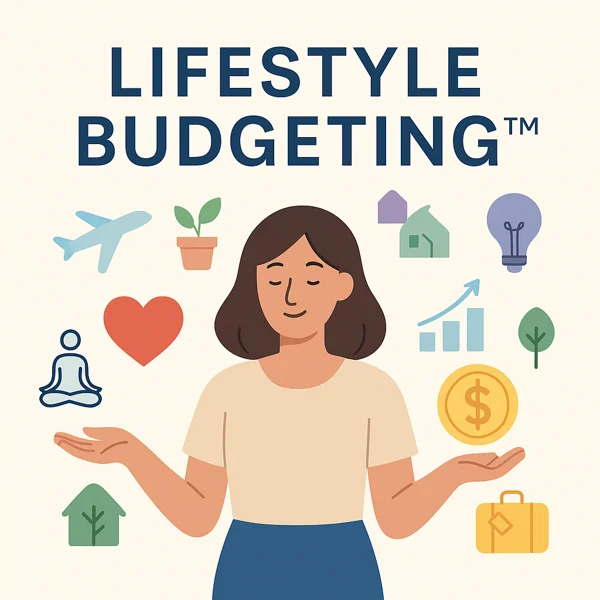
💡 Introduction — A New Era of Budgeting
Gone are the days when budgeting meant a rigid regime of cost-cutting, endless spreadsheets, and the painstaking task of accounting for every single expense. Today, a transformative approach is reshaping personal finance, making it more vibrant, personal, and aligned with your deepest values and aspirations. Welcome to the era of Lifestyle Budgeting™.
Lifestyle Budgeting™ goes beyond the conventional boundaries of saving and spending. It champions a holistic approach to financial planning, molding your finances to enhance the lifestyle you cherish. Whether your passions lie in exploring distant lands, indulging in culinary delights, or prioritizing health and wellness, this approach ensures your financial blueprint mirrors your personal dreams.
This guide will walk you through everything you need to know about Lifestyle Budgeting™, from its principles to actionable steps for implementation. Let’s explore how to turn budgeting into a tool for empowerment and freedom.
🧭 Key Takeaways — The Principles of Lifestyle Budgeting™
Align Your Budget with Personal Values
Your budget should reflect what truly matters to you — not societal expectations. Lifestyle Budgeting™ empowers you to direct money toward experiences and goals that bring meaning, fulfillment, and long-term satisfaction.
Balance Is Essential
True financial health comes from harmony — meeting essential needs, enjoying your lifestyle, and investing in your future. A balanced budget sustains both security and happiness without unnecessary sacrifice.
Stay Flexible and Adaptive
Life changes — and your budget should, too. Lifestyle Budgeting™ embraces fluidity, allowing you to adjust allocations as income, priorities, or goals evolve. Flexibility keeps your financial plan relevant and resilient.
Prioritize Savings and Investments
Enjoy today, but prepare for tomorrow. Consistently funding savings and investments builds a foundation for financial independence, peace of mind, and future opportunities.
Practice Mindful Spending
Every purchase is a statement of your values. Make intentional financial decisions that add genuine value to your life — not just short-term gratification. Mindfulness turns spending into an act of purpose, not impulse.
🔍 W🔍 Why Traditional Budgeting Fails
Most traditional budgets are built around restriction, not intention. They focus on cutting expenses, tracking every dollar, and eliminating “non-essentials.” While this method can help you regain short-term control, it rarely creates lasting financial success — because it ignores one critical element: human motivation.
When your budget feels like punishment, discipline fades. You may follow the plan for a few months, but eventually, fatigue and frustration set in. The focus on sacrifice over purpose makes it hard to stay engaged and nearly impossible to feel fulfilled.
Lifestyle Budgeting™ changes that narrative. Instead of guilt-based financial control, it introduces value-based intention — a mindset where money serves your goals rather than restricts them. It encourages balance between living well today and building for tomorrow. Financial control becomes empowering, not exhausting; intentional, not restrictive.
💬 What Is Lifestyle Budgeting™?
At its heart, Lifestyle Budgeting™ is about alignment — ensuring your money supports your life, not the other way around. It’s a holistic framework that connects your spending, saving, and investing decisions directly to your personal values, goals, and dreams.
This approach treats money as a tool for purposeful living. Instead of asking, “Can I afford this?” you start asking, “Does this align with what I value most?” Every financial decision becomes an expression of your priorities.
Think of Lifestyle Budgeting™ as financial mindfulness in motion. Each dollar has a defined role — funding experiences, passions, and opportunities that make your life richer. Whether that means travel, wellness, creative pursuits, or giving back, every spending choice contributes to the life you want to design — not just the life you have to maintain.
🚀 How to Build Your Lifestyle Budget™
Creating a Lifestyle Budget™ isn’t about starting from scratch — it’s about reimagining how you use money to support the life you actually want. Instead of treating your budget as a set of limits, think of it as a personalized roadmap that connects every dollar to your values, purpose, and goals.
Below are the five steps to design a Lifestyle Budget™ that feels freeing, flexible, and fully aligned with who you are.
Step 1: Define Your Values and Aspirations
Begin with self-reflection, not numbers. Ask yourself:
- What brings me the most joy and meaning in life?
- Which experiences or goals would I regret not pursuing?
- What areas of my life deserve more financial attention?
List five values or aspirations that truly define what “living well” means to you — perhaps travel, family time, wellness, creativity, or giving. These become the foundation of your budget, guiding every decision that follows.
When your spending reflects your values, motivation becomes natural — not forced.
Step 2: Map Your Income and Core Expenses
Before you can shape your ideal lifestyle, you need to understand your financial foundation.
List all income sources, including your primary job, side hustles, and passive income. Then identify your core obligations — housing, utilities, transportation, insurance, debt payments, and groceries.
This clarity helps you see where your money is already committed and how much flexibility you have for lifestyle-driven spending.
Once you know your baseline, you can confidently plan for the life you want without fear of overspending or guilt.
Step 3: Allocate for Lifestyle Goals
Now comes the fun part — shaping your spending around what matters most.
Designate funds for experiences and priorities that elevate your quality of life:
- Gym memberships, sports, or wellness services
- Weekend trips or family adventures
- Creative hobbies and personal growth
- Dining experiences, events, or cultural activities
These aren’t indulgences — they’re intentional investments in happiness and balance. The key is proportion, not perfection: spend consciously, not compulsively.
Step 4: Automate Savings and Investments
A Lifestyle Budget™ balances freedom today with financial security tomorrow.
Before discretionary spending, pay your future self first:
- Set up automatic transfers to your emergency fund, retirement plan, and brokerage account.
- Schedule recurring contributions to long-term savings goals.
- Use automation tools from your bank or budgeting app to simplify consistency.
Automation ensures your financial growth continues — even when life gets busy. It also removes the emotional friction that can derail manual budgeting efforts.
Step 5: Review, Reflect, and Adjust Regularly
Your lifestyle — and your values — will evolve over time. Your budget should evolve with them.
Schedule a quarterly or biannual check-in to ask:
- Does my spending still reflect my priorities?
- Have my goals shifted?
- Am I balancing enjoyment with progress toward financial independence?
A reflective budgeting process keeps your plan dynamic and relevant. Treat these reviews as celebrations of growth, not audits of failure. The more intentional your reflection, the stronger your financial alignment becomes.
💡 Key Insight
Lifestyle Budgeting™ isn’t a static framework — it’s a living system.
When your budget mirrors your evolving life, financial control transforms into confidence, and money becomes a tool for empowerment, not restriction.
⚠️ Common Mistakes and How to Avoid Them
Even the most well-intentioned budget can lose effectiveness without proper structure and reflection. Lifestyle Budgeting™ thrives on balance and adaptability — but a few common missteps can undermine its impact. Here’s how to spot and fix them early.
| Mistake | Why It Happens | Quick Fix |
|---|---|---|
| Treating the budget as static | People often view their budget as a one-time plan instead of a living system. Life events, income changes, and evolving goals can make even a great plan outdated. | Revisit your plan every quarter. Adjust your categories and allocations as your priorities shift. Flexibility is what keeps your budget realistic and sustainable. |
| Ignoring irregular or annual expenses | Unexpected costs — insurance renewals, holidays, travel — can derail an otherwise stable plan. | Build a “Flex Fund” or “Annual Expense Account” to cover non-monthly costs. Contribute to it monthly so large expenses never catch you off guard. |
| Over-categorizing spending | Too many categories can lead to burnout, confusion, and decision fatigue. | Keep it simple: essentials, lifestyle, savings, and growth. Clarity encourages consistency. |
| Forgetting emotional motivation | Numbers alone don’t sustain habits — emotion does. Without meaning, saving and spending can feel empty. | Tie each goal to personal meaning or reward. Visualize outcomes that excite you — money follows motivation. |
| Neglecting review cycles | Without checkpoints, small spending drifts become long-term habits. | Schedule quarterly or monthly “money dates” in your calendar. Treat these sessions as moments of reflection and realignment, not self-criticism. |
🧰 Tools and Resources for Lifestyle Budgeting™
The right tools make Lifestyle Budgeting™ simpler, more automated, and more inspiring. Choose systems that encourage reflection, not restriction.
1. Budgeting & Tracking Apps
- YNAB (You Need A Budget): Ideal for proactive budgeting and real-time category adjustments.
- Monarch Money: Great for couples and families managing shared goals.
- Rocket Money: Automates tracking and identifies recurring expenses you can trim.
2. Savings Automation Tools
Set up recurring transfers from checking to savings, investments, and sinking funds. Automation ensures progress even when life gets busy — and keeps emotion out of routine decisions.
3. Reflection Prompts & Journaling
Write down what worked, what didn’t, and what inspired you financially each month. Pair it with a vision board to visualize goals — a powerful motivator for mindful spending.
4. Progress Tracking Systems
Use spreadsheets, dashboards, or digital trackers to measure progress toward savings, debt payoff, and lifestyle goals. Visual progress builds momentum — small wins compound motivation.
5. Community & Accountability
Join online finance communities or follow trusted educators (like Jason’s Fin Tips) to stay engaged and inspired. Sharing wins and lessons creates long-term accountability and encouragement.
🌟 Real-Life Examples — Living the Lifestyle Budget™
Lifestyle Budgeting™ looks different for everyone — and that’s the beauty of it. There’s no single formula, only alignment between your money and your values. These real-world examples show how small intentional shifts can lead to lasting fulfillment, freedom, and financial confidence.
Example 1: Taylor the Designer — Funding Creativity and Growth
Taylor, a 32-year-old graphic designer, built a Lifestyle Budget™ around her passion for creativity and learning.
She allocates 10% of her income to “creative exploration,” setting aside money each month for design workshops, online courses, and occasional travel to art conferences.
At first glance, this might seem like discretionary spending — but for Taylor, it’s an investment in both personal and professional growth. Her creative projects inspire her client work, expand her portfolio, and ultimately help increase her income.
Lesson: A Lifestyle Budget™ turns personal passion into professional advantage — spending with purpose, not guilt.
Example 2: Jordan and Alex — Choosing Experiences Over Excess
Jordan and Alex, a young couple in their early thirties, love exploring new destinations together. Instead of cutting travel out to “save more,” they restructured their budget to prioritize experiences over unused extras.
They dedicate 15% of their monthly income to travel and shared adventures, balancing this by reducing non-essential expenses — unused subscriptions, impulse shopping, and dining out.
Each trip becomes a milestone in their shared journey. The result? A life rich with memories, not just possessions.
Lesson: Lifestyle Budgeting™ empowers couples to fund what connects them — replacing consumer habits with intentional experiences.
Example 3: Maya the Educator — Building Balance and Security
Maya, a 40-year-old teacher, once felt trapped between saving for retirement and enjoying her present life. Through Lifestyle Budgeting™, she built a structure that honors both.
She divides her income into four categories — essentials, lifestyle, savings, and growth — ensuring that each dollar supports something meaningful.
Now, her weekends include cooking classes and community volunteering, while her retirement accounts grow automatically. She’s no longer choosing between joy and discipline — she’s practicing both.
Lesson: When your money reflects your values, peace of mind replaces pressure — and balance becomes sustainable.
💡 Key Takeaway
Lifestyle Budgeting™ isn’t about how much you earn — it’s about how intentionally you use what you have. Whether it’s creativity, travel, family, or freedom, aligning your finances with your values transforms budgeting from a chore into a choice — and your life into something you design deliberately.
📊 Lifestyle Budgeting™ Template
💡 Purpose:
Use this template to design a financial plan that aligns your money with your values, goals, and lifestyle priorities.
It follows the same framework outlined in the Lifestyle Budgeting™ guide — turning budgeting into a tool for balance, freedom, and intentional living.
Step 1: Identify Your Values and Priorities
| What Matters Most to You? | Why It Matters | How You’ll Reflect This in Your Spending |
|---|---|---|
| Example: Health & Wellness | Improves physical and mental health | Allocate funds for gym membership and meal prep ingredients |
| Example: Creativity | Keeps me inspired and motivated | Set aside money for art supplies or creative workshops |
| Example: Family Time | Builds stronger relationships | Budget for weekend trips or family dinners |
Step 2: Calculate Your Monthly Income
| Source | Amount ($) |
|---|---|
| Primary Job | |
| Side Income / Freelance | |
| Passive Income (Investments, Royalties, etc.) | |
| Total Monthly Income | $ |
Step 3: List Your Core (Essential) Expenses
| Category | Monthly Cost ($) | Notes |
|---|---|---|
| Housing (Rent/Mortgage) | ||
| Utilities (Electric, Internet, etc.) | ||
| Insurance (Health, Auto, Life) | ||
| Groceries | ||
| Transportation | ||
| Debt Payments | ||
| Other Essentials | ||
| Total Core Expenses | $ |
Step 4: Lifestyle Spending Categories
| Lifestyle Category | Monthly Allocation ($) | % of Income | Connection to Values |
|---|---|---|---|
| Travel & Experiences | |||
| Wellness & Fitness | |||
| Hobbies & Creativity | |||
| Dining & Entertainment | |||
| Education & Self-Improvement | |||
| Giving / Donations | |||
| Total Lifestyle Spending | $ | % |
Step 5: Savings and Investments
| Category | Monthly Amount ($) | Goal / Target |
|---|---|---|
| Emergency Fund | 3–6 months of expenses | |
| Retirement Contributions | 15–20% of income (recommended) | |
| Brokerage / Investments | Long-term growth | |
| Education Fund / Other Savings | Specific goals | |
| Total Savings & Investments | $ |
Step 6: Lifestyle Budget Summary
| Category | % of Income | Target Allocation |
|---|---|---|
| Essentials (Needs) | ~50% | |
| Lifestyle (Wants / Values) | ~25–30% | |
| Savings & Investments | ~15–20% | |
| Growth & Learning | ~5–10% | |
| Total | 100% |
Step 7: Reflection & Review
| Question | Your Response |
|---|---|
| What spending this month brought you the most joy or meaning? | |
| Which expenses didn’t align with your values? | |
| What’s one adjustment you’ll make next month? | |
| How does your financial plan feel — restrictive or freeing? |
🧭 Pro Tip:
Revisit your Lifestyle Budget™ every three months. Track progress, review emotional satisfaction, and reallocate funds as your goals evolve. The most successful budgets aren’t perfect — they’re personal.
🏁 Final Thoughts — Turning Money into Meaning
Lifestyle Budgeting™ is more than a financial framework — it’s a mindset. It allows you to live intentionally, align your financial decisions with your values, and build a life that feels both secure and fulfilling.
When money serves your purpose, you don’t just manage wealth — you create freedom.
🔗 Related Reading
Related Budgeting Strategies
- Awareness Budgeting™
- Scaling Budget™
- Goals-Oriented Budget™
- Dynamic Threshold Budgeting™
- Freedom Budget™
- Hybrid Budgeting™
- Values-First Budgeting™
- Conscious Money Budget™
Back to Jason’s Fin Tips Budgeting Frameworks
Back to Creating A Budget
