
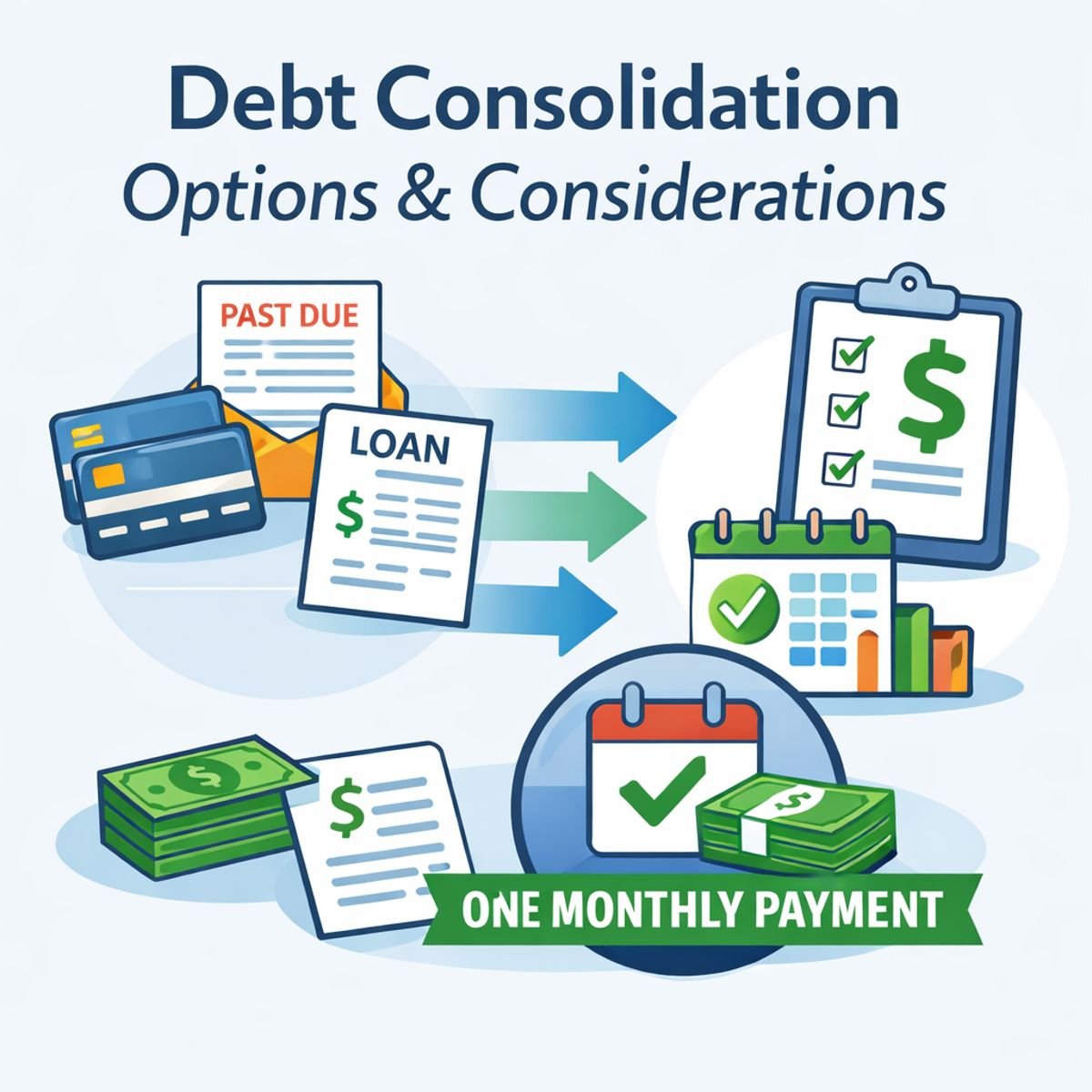
🧾 Debt Consolidation Options & Considerations
Simplify Your Debt. Reduce Interest. Take Back Control.
Debt consolidation can be a powerful strategy—but only when used correctly.
If you’re juggling multiple debts, high interest rates, or overwhelming monthly payments, consolidating your debt may help simplify your financial life and reduce costs. However, not every consolidation option is right for every situation.
This page serves as your central guide to understanding, comparing, and choosing the right debt consolidation strategy. You’ll learn how consolidation works, when it makes sense, and how it compares to other debt repayment methods.
🧭 Start Here: Debt Consolidation Decision Roadmap
If you’re unsure where to begin, follow this structured approach:
| Phase | Focus | Key Outcome |
|---|---|---|
| 1. Assess | List all debts, balances, APRs, and minimum payments | Clarity |
| 2. Diagnose | Identify high-interest and problem debt | Insight |
| 3. Explore Options | Compare consolidation tools and strategies | Direction |
| 4. Run the Numbers | Evaluate total cost, APR, and payoff timeline | Confidence |
| 5. Decide | Choose the best-fit approach | Action |
| 6. Execute | Consolidate and begin structured repayment | Progress |
| 7. Optimize | Prevent new debt and improve habits | Stability |
👉 This roadmap transforms debt consolidation from a guess into a clear, repeatable process.
👥 Who This Page Is For
This section is designed for:
- Individuals managing multiple high-interest debts
- People overwhelmed by multiple payments and due dates
- Those considering personal loans, balance transfers, or debt management plans
- Anyone deciding between debt consolidation vs. other payoff strategies
- Individuals seeking a simpler, more structured repayment system
👉 If you’re trying to simplify your finances and reduce interest costs, this guide will help you make informed decisions.
💡 What Debt Consolidation Actually Solves
Debt consolidation is not just about combining payments—it’s about improving your financial structure.
✔️ What It Helps With:
- Reducing high interest rates
- Simplifying multiple payments into one
- Improving cash flow predictability
- Reducing financial stress and mental overload
⚠️ What It Does NOT Fix:
- Overspending habits
- Lack of budgeting or planning
- Income limitations
👉 Consolidation is most effective when paired with strong financial habits.
⚡ Quick Summary: Debt Consolidation Options
- Best for simplicity: Personal loans
- Best for short-term savings: Balance transfer credit cards
- Best for structured support: Debt management plans
- Best for large balances (with risk): Home equity loans or HELOCs
📊 Debt Consolidation Options Compared
| Option | Best For | Pros | Cons |
|---|---|---|---|
| Personal Loan | Fixed repayment plan | Predictable payments | Requires credit approval |
| Balance Transfer Card | Short-term payoff | 0% intro APR | High post-promo rates |
| HELOC/Home Equity | Large balances | Lower interest rates | Risk to your home |
| Debt Management Plan | Structured support | Negotiated rates | Less flexibility |
👉 Choosing the right option depends on your credit profile, debt level, and financial discipline.
🧠 Which Debt Consolidation Option Is Right for You?
Your ideal strategy depends on both your numbers and your behavior.
- Good credit (680+)
→ Consider personal loans or balance transfer cards - Fair credit (580–680)
→ Explore debt management plans or alternative lenders - Large balances + home equity
→ A HELOC may reduce interest—but adds risk - Struggling with spending discipline
→ Structured repayment plans may be safer
👉 The best solution is one you can realistically stick with.
⚖️ When Debt Consolidation Makes Sense (and When It Doesn’t)
✅ When It Makes Sense:
- You qualify for a lower interest rate
- You have stable income
- You’re committed to not taking on new debt
- Your debt is primarily unsecured (credit cards, personal loans)
❌ When It May Not:
- You can’t improve your interest rate
- Fees outweigh potential savings
- You continue accumulating new debt
- A structured payoff method may be more effective
📌 Example Debt Consolidation Scenarios
Scenario 1: High Credit Card Interest
A borrower carries $15,000 in credit card debt at 22% APR.
They transfer balances to a 0% introductory APR card.
👉 Outcome: Faster payoff and reduced interest costs.
Scenario 2: Multiple Accounts and Missed Payments
A borrower manages 5 accounts with different due dates and struggles to keep up.
👉 Solution: Debt management plan
👉 Outcome: Simplified payments and improved consistency
Scenario 3: Large Debt with Home Equity
A homeowner consolidates $40,000 of debt using a HELOC.
👉 Outcome: Lower interest—but increased financial risk tied to their home
👉 These examples illustrate how different strategies apply to different situations.
🔍 Benefits & Risks of Debt Consolidation
✅ Benefits:
- Simplifies repayment
- May reduce total interest costs
- Improves financial organization
- Can reduce stress and improve consistency
❌ Risks:
- Fees and hidden costs
- Temporary credit score impact
- Risk of accumulating new debt
- Secured options may put assets at risk
📈 How Debt Consolidation Impacts Your Credit
Debt consolidation can affect your credit in both the short and long term:
Short-Term:
- Hard inquiries may cause a small dip
- New accounts may temporarily lower average age
Long-Term:
- Lower credit utilization can improve your score
- Consistent payments strengthen your credit profile
👉 The key is consistent, on-time repayment after consolidation.
🧠 How to Choose the Right Consolidation Plan
Before choosing a strategy, evaluate:
- Interest rate (APR)
- Loan terms and repayment timeline
- Fees and hidden costs
- Lender credibility and reputation
⚠️ Avoid:
- Predatory lenders
- Unrealistic guarantees
- High upfront fees
📚 Explore Debt Consolidation Strategies
This section includes in-depth guides covering specific tools, strategies, and comparisons to help you take action:
-
The Pros and Cons of Debt Consolidation – An In-Depth Analysis
🔑 Key Takeaways ✅ Debt Consolidation Simplifies FinancesCombining multiple debts into one structured payment streamlines your budget, reduces mental clutter, and helps prevent missed payments or late fees. ✅ Lower Interest Rates Can Save ThousandsConsolidation can significantly reduce the cost of high-interest credit card debt. In 2025, average credit card APRs exceed 21%, while qualified […]
-
What is Debt Consolidation? A Beginner’s Guide to Simplifying Debt
✅ Key Takeaways: What You Need to Know About Debt Consolidation 🧭 Introduction – Regain Control of Your Finances with Debt Consolidation Juggling multiple payments, rising interest rates, and financial stress? You’re not alone. Debt consolidation can streamline your finances and reduce long-term costs—if used strategically. In this guide, you’ll discover what debt consolidation is, […]
-
How Debt Consolidation Works – Benefits and Considerations
5 Key Takeaways Taking Control of Debt Starts Here Managing multiple debts can feel like climbing a mountain with no summit in sight. Between high-interest credit cards, variable loan payments, and scattered due dates, many individuals feel stuck in a financial fog. According to Experian’s most recent Consumer Debt Study, the average American household carries […]
-
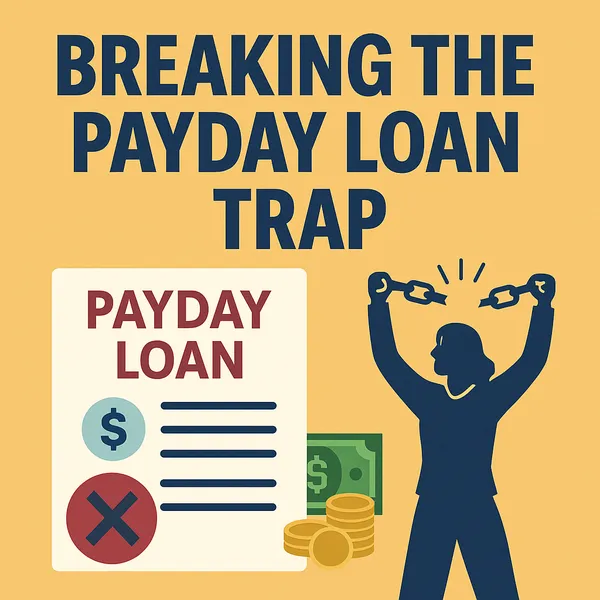
Breaking the Payday Loan Trap – Practical Strategies to Escape the Debt Cycle for Good
🗾️ The High-Stakes Payday Loan Cycle Payday loans often promise fast relief but deliver long-term pain. With average APRs soaring above 300%, many borrowers find themselves trapped—repeating a cycle of borrowing, repaying, and re-borrowing just to cover essentials. The result? A financial spiral that can devastate credit scores, drain paychecks, and cause severe stress. In […]
-
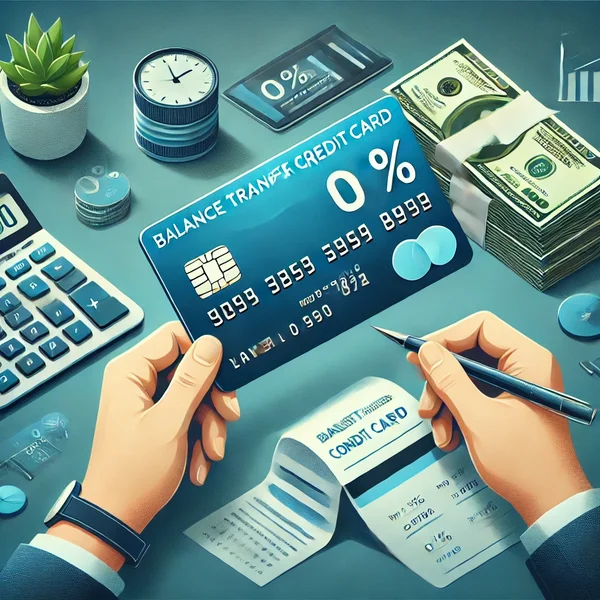
Smart Debt Consolidation – How to Use Balance Transfer Credit Cards Wisely
5 Key Takeaways Introduction Debt consolidation is a powerful strategy for managing and eliminating high-interest debt. One of the most popular tools for debt consolidation is a balance transfer credit card, which offers a low or 0% introductory APR for a specified period. While this can be an effective way to reduce interest payments and […]
-
How to Use Balance Transfer Credit Cards for Debt Consolidation: A Strategic Guide to Paying Off Debt Faster
Introduction: Are Balance Transfer Credit Cards the Right Debt Solution for You? Debt can feel like a never-ending cycle, especially when high-interest rates make it difficult to make progress on balances. According to the Federal Reserve, the average American household carries over $6,000 in credit card debt, with interest rates often exceeding 20%. These high […]

❓ Frequently Asked Questions
Does debt consolidation hurt your credit?
It may cause a temporary dip, but can improve your score over time if it reduces utilization and improves payment history.
Is debt consolidation better than paying debts individually?
It depends. Consolidation simplifies payments and may reduce interest, but structured payoff strategies can also be effective.
What credit score is needed for debt consolidation?
Generally 600–700+, though options vary depending on the method and lender.
Can debt consolidation reduce how much I owe?
No—it reorganizes your debt. Only settlement or negotiation reduces total balances.
🔗 Continue Your Financial Journey
- Back to Credit & Debt Management Hub
- Managing Credit Card Debt Effectively
- Credit Repair Techniques and Rebuilding Credit
- Responsible Borrowing and Avoiding Excessive Debt
🧭 Take the Next Step: Build Your Full Financial Plan
If you’re working to get out of debt, the next step is creating a complete financial system that supports long-term success.
👉 Start with the Financial Planning Roadmap in the Finance Hub
This step-by-step framework will help you:
- Plan for long-term financial goals
- Organize your financial priorities
- Build a sustainable budget
- Strengthen savings and emergency funds
🚀 Take Control of Your Debt Strategy
Debt consolidation is not a one-size-fits-all solution—it’s a tool.
The key is understanding:
- Your financial situation
- Your repayment habits
- Your long-term goals