

🏡 Long-Term Financial Impacts of Mortgages
How interest, equity, and long-term costs shape your financial future
🧭 Introduction – The Long-Term Reality of a Mortgage
A mortgage is one of the most significant financial commitments you will make. While the monthly payment may seem manageable, the long-term impact extends far beyond what you see each month.
Over time, your mortgage influences:
- Your total interest paid over decades
- Your ability to build equity and wealth
- Your monthly cash flow and financial flexibility
Many homeowners focus only on getting approved—but the real financial story unfolds over years.
👉 This section brings together key concepts and strategies to help you understand and manage the long-term financial impact of your mortgage.
📊 What You’ll Learn
- How mortgage amortization affects your total cost
- How to reduce interest and shorten your loan term
- The true cost of homeownership beyond the mortgage
- How home equity builds—and how to use it wisely
- How mortgages fit into a long-term financial plan
👥 Who This Section Is For
This section is designed for:
- Homeowners who want to understand the true long-term cost of their mortgage
- Homebuyers preparing to make one of the largest financial decisions of their lives
- Individuals focused on building wealth through homeownership
- Anyone evaluating strategies like extra payments, refinancing, or equity use
👉 If your goal is to move beyond simply “affording a home” and start using your mortgage as a strategic financial tool, this section will guide you.
📚 Understanding the Long-Term Impact of Mortgages
📉 Mortgage Amortization & Interest
Mortgage payments are structured so that interest makes up a larger portion of your payment in the early years. This slows equity growth and increases the total cost of borrowing.
Understanding amortization helps you:
- See where your money is actually going
- Evaluate the true cost of your loan
- Make informed repayment decisions
⚡ Reducing Mortgage Costs Over Time
Small adjustments to how you manage your mortgage can lead to significant savings.
Strategies such as:
- Making extra payments
- Switching to biweekly payments
- Paying down principal early
can reduce both your interest costs and loan duration.
💰 The True Cost of Homeownership
Your mortgage payment is only part of the total cost.
You also need to plan for:
- Property taxes
- Insurance
- Maintenance and repairs
- Unexpected expenses
Understanding the full cost helps you avoid financial strain over time.
📈 Home Equity & Wealth Building
Home equity builds gradually as you pay down your loan and as property values change.
While equity can contribute to long-term wealth, it should be approached carefully and as part of a broader financial strategy.
🔁 Refinancing & Long-Term Optimization
Refinancing can change the trajectory of your mortgage—but it must be evaluated carefully.
Key considerations include:
- Interest rate changes
- Loan term adjustments
- Total cost over time
Strategic refinancing can reduce costs, but poor timing can increase them.
🛠️ Start Here: Long-Term Mortgage Planning Framework
Managing a mortgage effectively requires a structured, long-term approach. Use this framework to guide your decisions:
| Phase | Focus | What to Do | Why It Matters | Outcome |
|---|---|---|---|---|
| 1. Awareness | Understand your loan structure | Review your amortization schedule and loan terms | Most borrowers don’t realize how interest is distributed over time | Clarity |
| 2. Cost Control | Reduce total interest | Make extra payments or adjust payment frequency | Even small changes can save thousands in interest | Savings |
| 3. Optimization | Improve loan terms | Evaluate refinancing opportunities and rate changes | The right refinance can significantly reduce long-term costs | Efficiency |
| 4. Equity Strategy | Build and protect equity | Avoid overleveraging and monitor home value trends | Equity is powerful—but not guaranteed | Stability |
| 5. Integration | Align with financial goals | Connect mortgage decisions to retirement, investing, and cash flow planning | Your mortgage should support—not limit—your financial future | Long-term success |
👉 This framework transforms your mortgage from a passive obligation into an active financial strategy.
💡 Key Financial Insight
Over the life of a 30-year mortgage, homeowners can pay tens or even hundreds of thousands of dollars in interest—sometimes equal to or greater than the original loan amount.
👉 This means that small decisions—like making extra payments or refinancing at the right time—can have a significant long-term financial impact.
Understanding this is the difference between:
- Simply owning a home
- And using your mortgage to support long-term financial success
🆕 Latest Articles on Long-Term Mortgage Strategy
👉 Stay up to date with the most recent insights, strategies, and guides:
🔽 Recent Posts
-
Manage Your Mortgage After Purchase: Smart Strategies to Save Money, Build Equity, and Grow Wealth
Introduction: Manage Your Mortgage Like a Long-Term Wealth Strategy Buying a home is just the beginning—managing your mortgage is where long-term wealth is built or lost. Too often, homeowners treat their mortgage as a fixed monthly obligation—something to pay and forget. In reality, your mortgage is one of the most significant financial tools you will […]
-
15-Year vs. 30-Year Loan for Investment Property: What You Should Know
1. Introduction — Choosing the Right Loan Term Can Make or Break Your Investment When you’re financing an investment property, the loan term you choose—15 years or 30 years—has a profound impact on your monthly cash flow, long-term wealth building, and overall risk profile. New and experienced investors alike often assume that a shorter loan […]
-
Determining Your Affordable Mortgage Payment
Key Takeaways Introduction – The Importance of a Realistic Mortgage Payment Buying a home is a meaningful financial milestone. It represents stability, independence, and the chance to build long-term wealth. But before choosing a home, it’s crucial to determine how much you can comfortably afford to spend on your mortgage — not just today, but […]
-
15-Year Mortgage – Is It Worth It? The Pros, Cons, and Smart Strategies for Homeowners
💡 5 Key Takeaways: 15-Year Mortgage Pros, Cons & Smart Strategies 🏠Introduction – The Mortgage Dilemma Should you pay off your home twice as fast—or keep extra cash in your pocket each month? With interest rates fluctuating and home prices at historic highs, many buyers and refinancers are rethinking their mortgage terms. The 15-year fixed […]
-
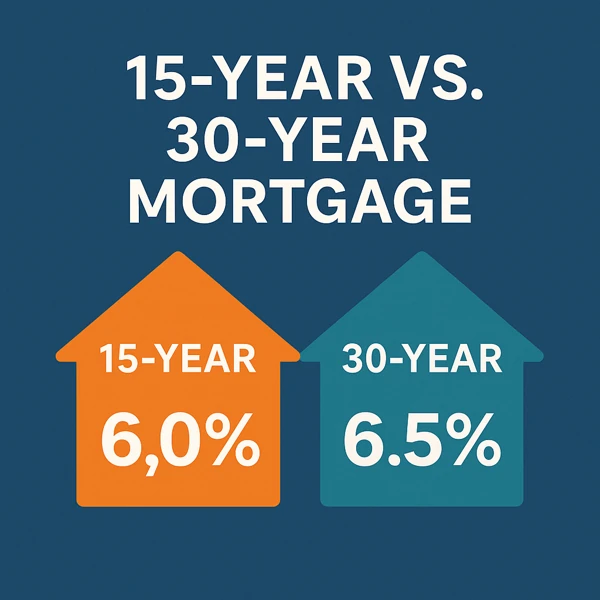
15-Year vs 30-Year Mortgage – Which Is Right for You?
🏠 Introduction – The Mortgage Term Dilemma Choosing between a 15-year and 30-year mortgage is one of the most important financial decisions you’ll make as a homeowner. It affects not just your monthly payment, but also your total interest paid, equity growth, and financial flexibility for years to come. At first glance, the decision seems […]
-
Renting vs. Buying with a 15- or 30-Year Mortgage – Which Builds More Wealth in the Long Run?
Introduction When deciding between renting and buying a home, most people focus on monthly payments. But the real question is much bigger: which option helps you build more long-term wealth? Should you rent and invest the difference, or buy with a 15-year mortgage to be debt-free faster? Does a 30-year mortgage free up enough cash […]


🔗 Continue Exploring Mortgages & Homeownership
Expand your knowledge with these related sections:
- Preparing for a Mortgage Application
- Saving for a Down Payment
- Refinancing and Home Equity Loans
- First-Time Homebuyer Tips
👉 Each section builds toward a complete homeownership strategy.
❌ Common Mortgage Mistakes to Avoid
Even financially prepared homeowners can make costly long-term mistakes:
- Focusing only on the monthly payment instead of total loan cost
- Ignoring how interest dominates payments in the early years
- Underestimating maintenance and ongoing homeownership costs
- Refinancing without evaluating total long-term impact
- Treating home equity as guaranteed or easily accessible wealth
👉 Avoiding these mistakes can improve your financial outcome by thousands—or even tens of thousands—of dollars over time.
❓ Frequently Asked Questions
What are the long-term financial impacts of a mortgage?
A mortgage affects your interest costs, equity growth, cash flow, and long-term wealth over the life of the loan.
How can I reduce mortgage interest over time?
You can reduce interest by making extra payments, refinancing strategically, and choosing the right loan structure.
Is home equity guaranteed to grow?
No. Equity depends on loan repayment and market conditions, and it should not be relied on as the sole source of wealth.
🏁 Final Thoughts – Think Beyond the Monthly Payment
A mortgage is not just a monthly obligation—it is a long-term financial strategy that requires ongoing attention.
By understanding how your mortgage works over time, you can:
- Reduce unnecessary interest costs
- Build equity more effectively
- Align your home with your broader financial goals
👉 Start by exploring the latest articles above and take control of your long-term mortgage strategy.
🔗 Explore Related Mortgage & Homeownership Topics
Homeownership involves more than just choosing a loan—it’s a step-by-step financial journey. Explore these related topics to better understand each stage of the mortgage process and build a stronger foundation for long-term financial success.
🏦 Preparing for a Mortgage Application
Learn how lenders evaluate your financial profile, what documents you need, and how to position yourself for stronger loan terms.
👉 Understand how to prepare before applying for a mortgage
🏡 First-Time Homebuyer Tips
Navigate the homebuying process with confidence, from budgeting and house hunting to closing and beyond.
👉 Explore essential tips for first-time buyers
💰 Saving for a Down Payment
Build a clear savings plan, understand how much you need, and explore programs that may reduce upfront costs.
👉 Create a strategy to save for your future home
🔁 Refinancing and Home Equity Loans
Learn how to use refinancing and home equity responsibly to manage your mortgage and access funds when needed.
👉 Explore ways to leverage your home’s value
Key Insight: The most effective mortgage decisions are made by understanding how each step—from preparation to long-term management—fits into your overall financial plan.