
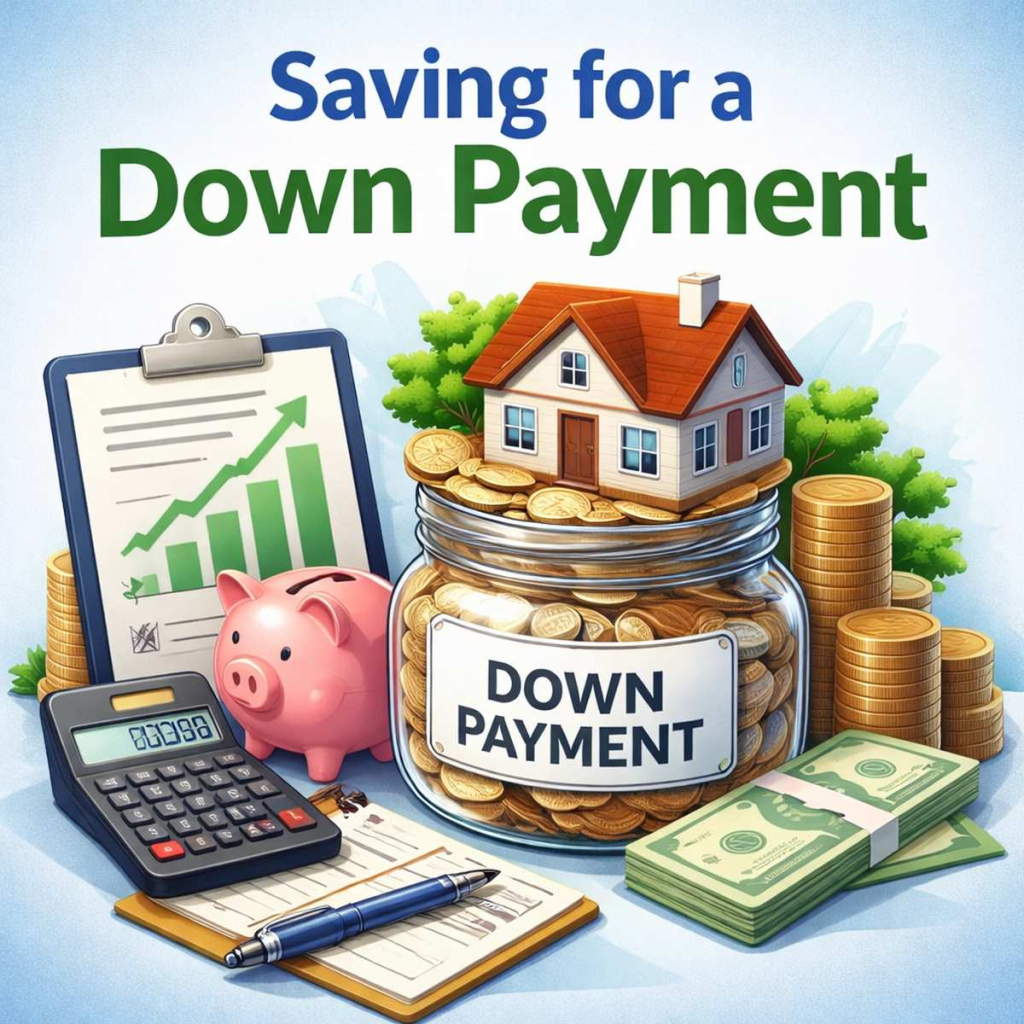
Saving for a Down Payment
Building the Financial Foundation for Homeownership
Saving for a down payment is one of the biggest financial hurdles many homebuyers face. While mortgage approval depends on several factors—such as income, credit score, and debt levels—the size of your down payment plays a critical role in determining loan options, interest rates, and long-term borrowing costs.
For many households, the process of saving for a home requires careful financial planning, disciplined budgeting, and a clear understanding of how mortgage requirements work. Down payments can range widely depending on the type of loan and lender requirements. Some borrowers may qualify for programs requiring only a small percentage down, while others choose to save a larger amount to reduce their monthly mortgage payments and avoid additional costs like private mortgage insurance (PMI).
This section of Jason’s Fin Tips explores strategies and financial planning techniques that can help future homeowners accumulate the savings needed to purchase a home.
Whether you are planning to buy your first home in a few years or preparing to enter the housing market soon, understanding how down payments work—and how to save effectively—can make the path to homeownership more achievable.
Why the Down Payment Matters
The down payment represents the portion of the home’s purchase price that the buyer pays upfront rather than financing through a mortgage loan.
A larger down payment can provide several advantages:
- reducing the amount borrowed through the mortgage
- lowering monthly mortgage payments
- improving loan approval chances
- potentially avoiding private mortgage insurance (PMI)
- strengthening financial stability after purchase.
However, saving a large down payment can take time, especially in areas where housing prices are high. Many homebuyers balance the goal of saving enough to secure favorable loan terms while still maintaining emergency savings and other financial priorities.
Understanding the trade-offs between different down payment levels can help buyers make more informed decisions when planning for homeownership.
Key Topics Covered in This Section
The guides in this category explore practical strategies and financial planning concepts designed to help future homeowners build their down payment fund.
Creating a Down Payment Savings Plan
Saving for a home often requires a structured financial plan. Without a clear savings strategy, it can be difficult to make consistent progress toward a large financial goal.
Topics in this area include:
- setting realistic down payment targets
- calculating how much home you can afford
- estimating closing costs and upfront expenses
- creating a savings timeline for purchasing a home.
A well-designed savings plan helps transform a large financial goal into manageable monthly steps.
Budgeting Strategies to Accelerate Savings
Effective budgeting is one of the most powerful tools for reaching a down payment goal faster.
This section explores strategies such as:
- identifying expenses that can be temporarily reduced
- increasing savings rates through automated transfers
- allocating tax refunds or bonuses toward housing savings
- adjusting spending habits to prioritize homeownership goals.
These budgeting techniques can help many households significantly accelerate their savings progress.
High-Yield Savings Options for Down Payment Funds
Choosing the right place to store your down payment savings is also important. Because down payment funds are typically needed within a defined time frame, many buyers prioritize safety and liquidity over high investment risk.
Common options for storing down payment savings include:
- high-yield savings accounts
- certificates of deposit (CDs)
- money market accounts
- short-term treasury securities.
These options can help future homeowners earn modest returns while protecting the funds needed for their home purchase.
Down Payment Assistance Programs
Many prospective homebuyers are unaware that government and nonprofit programs exist to help reduce the upfront cost of purchasing a home.
These programs may include:
- first-time homebuyer grants
- forgivable down payment loans
- state and local housing assistance programs
- employer-sponsored homebuyer benefits.
Eligibility requirements vary depending on income, location, and program guidelines. Understanding these programs can help buyers access financial support that may significantly reduce the upfront cost of homeownership.
Planning for More Than Just the Down Payment
While the down payment is a major expense, it is not the only upfront cost associated with buying a home. Buyers should also plan for:
- closing costs
- moving expenses
- initial home repairs or improvements
- emergency savings after the purchase.
Maintaining a financial cushion after buying a home is important for managing unexpected expenses such as repairs, job changes, or economic uncertainty.
A balanced financial plan helps ensure that purchasing a home strengthens your long-term financial position rather than creating unnecessary financial stress.
Building Toward Homeownership
Saving for a down payment takes time and discipline, but it is one of the most important steps toward becoming a homeowner. With the right planning strategies, budgeting techniques, and savings tools, many households can gradually build the funds needed to purchase a home.
The articles in this section explore practical ways to build your down payment fund and prepare financially for homeownership.
Explore the guides below to learn how to create a savings plan, evaluate assistance programs, and develop a strategy that supports your long-term homebuying goals.
Suggested Blog Posts for This Subcategory
These are excellent article topics to build topical authority under this subcategory:
- How Much Down Payment Do You Really Need to Buy a House?
- 20 Ways to Save for a Down Payment Faster
- Best Savings Accounts for Down Payment Funds
- First-Time Homebuyer Down Payment Assistance Programs Explained
- Should You Put 20% Down on a House? Pros and Cons
- How Long It Takes to Save for a Down Payment (Realistic Timelines)
- Down Payment vs Closing Costs: What Homebuyers Need to Know
- Can You Use Retirement Savings for a Down Payment?
- Gift Funds for Down Payments: Rules Homebuyers Should Know
- Down Payment Strategies for High-Cost Housing Markets
Fresh From the Blog
-
How Much Do You Need to Buy a House? Down Payment, Closing Costs, and Savings Guide
Introduction: The True Cost of Buying a Home For many first-time buyers, the biggest surprise isn’t qualifying for a mortgage—it’s realizing how much cash is needed before you ever get the keys. The common assumption is simple: save a down payment, get approved, and move in. But in reality, the upfront cost of buying a […]
-
Saving for a Down Payment – How Much Do You Really Need?
Key Takeaways ✅ Know how much you need based on loan type and home price.✅ Set up automated savings and explore assistance programs.✅ Use budgeting, cutting expenses, and increasing income to save faster.✅ Plan ahead for closing costs and emergency funds to avoid financial stress. Introduction Buying a home is a major financial milestone, and […]

🔗 Explore Related Mortgage & Homeownership Topics
Homeownership involves more than just choosing a loan—it’s a step-by-step financial journey. Explore these related topics to better understand each stage of the mortgage process and build a stronger foundation for long-term financial success.
🏦 Preparing for a Mortgage Application
Learn how lenders evaluate your financial profile, what documents you need, and how to position yourself for stronger loan terms.
👉 Understand how to prepare before applying for a mortgage
🏡 First-Time Homebuyer Tips
Navigate the homebuying process with confidence, from budgeting and house hunting to closing and beyond.
👉 Explore essential tips for first-time buyers
🔁 Refinancing and Home Equity Loans
Learn how to use refinancing and home equity responsibly to manage your mortgage and access funds when needed.
👉 Explore ways to leverage your home’s value
📊 Long-Term Financial Impacts of Mortgages
Understand how your mortgage affects wealth building, interest costs, and long-term financial planning.
👉 See how your mortgage fits into your financial future
Key Insight: The most effective mortgage decisions are made by understanding how each step—from preparation to long-term management—fits into your overall financial plan.
Back to Mortgages & Homeownership Hub