
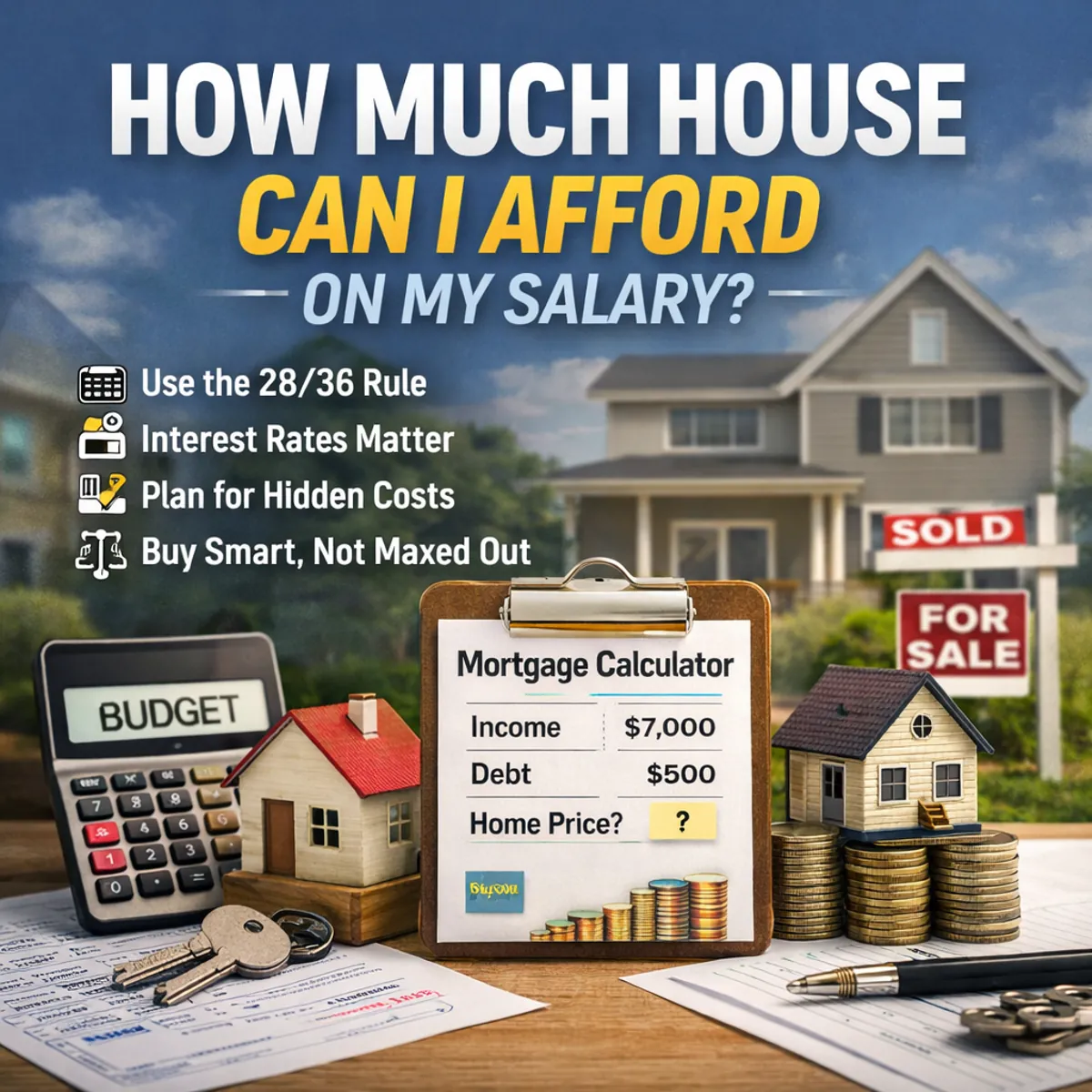
I. Introduction – The Most Important Question Before Buying a Home
Buying a home is one of the largest financial commitments most people will ever make. For many households, housing becomes their single largest monthly expense, often shaping their budget, lifestyle, and long-term financial flexibility for decades. Because of this, the question “How much house can I afford on my salary?” is one of the most important financial planning decisions a household can face.
One of the biggest misunderstandings among first-time buyers is assuming that mortgage approval equals affordability. Lenders evaluate risk using formulas designed to determine whether you can technically repay the loan. However, those calculations do not necessarily reflect your broader financial priorities, such as saving for retirement, building an emergency fund, paying for childcare, or maintaining flexibility during economic downturns.
In other words, what a bank will lend you and what you can comfortably afford are often two very different numbers.
Another common mistake is focusing solely on the purchase price of the home. The purchase price is only one piece of the affordability puzzle. True housing costs include mortgage interest, property taxes, homeowners insurance, maintenance expenses, utilities, and sometimes homeowners association (HOA) fees. Ignoring these additional costs can lead buyers to overestimate how much home they can safely afford.
This guide breaks down the key factors that determine home affordability. We will examine common affordability rules used by lenders, explore how salary translates into a realistic home price range, and explain the hidden costs that many buyers overlook. The goal is to help you understand not only what lenders may approve—but what makes sense for your long-term financial stability.
II. Key Takeaways
Before diving deeper, here are the most important ideas to understand when estimating how much house you can afford:
- Housing costs ideally remain below 28% of your gross monthly income.
- Total debt payments—including housing—generally should stay under 36% of gross income.
- Mortgage approval does not guarantee financial comfort.
- Interest rates, property taxes, insurance costs, and existing debt all influence affordability.
- Buying slightly below your maximum loan approval often creates greater financial flexibility and reduces financial stress.
Understanding these guidelines can help buyers approach the homebuying process with a clearer perspective and avoid stretching their finances too thin.
III. The Simple Rule of Thumb for Housing Affordability
One of the most widely used guidelines in mortgage lending is the 28/36 rule. Mortgage lenders commonly rely on this rule when evaluating whether a borrower can reasonably manage a home loan.
Table: The 28/36 Rule Explained
| Rule | Meaning |
|---|---|
| 28% rule | Housing costs should not exceed 28% of gross monthly income |
| 36% rule | Total debt payments should not exceed 36% of gross monthly income |
These percentages provide a rough framework for determining how much housing expense a borrower can manage while still leaving room for other financial obligations.
How Lenders Evaluate Housing Costs
When lenders assess your housing affordability, they typically include several components in the monthly housing payment:
- Mortgage principal – the portion of the payment that reduces the loan balance
- Mortgage interest – the cost of borrowing money from the lender
- Property taxes – local taxes assessed on the value of the property
- Homeowners insurance – insurance coverage protecting the property
- HOA fees – required payments in some condominium or community developments
Together, these costs make up what lenders call PITI, which stands for:
- Principal
- Interest
- Taxes
- Insurance
PITI represents the total monthly housing obligation that lenders use when calculating debt-to-income ratios.
Understanding this concept is important because a home that appears affordable based solely on the mortgage payment may become significantly more expensive once taxes, insurance, and other expenses are included.
IV. How Salary Translates Into a Home Price Range
While every borrower’s situation is different, a simple way to estimate affordability is to examine how home prices typically relate to income levels.
A common rule of thumb suggests that buyers can afford a home priced roughly 2.5 to 4 times their annual income. The exact number depends on several factors, including interest rates, debt levels, credit score, and down payment size.
Table: Estimated Home Price Based on Salary
| Salary | Conservative Price | Moderate Price | Aggressive Price |
|---|---|---|---|
| $60,000 | $150,000 | $200,000 | $240,000 |
| $80,000 | $200,000 | $270,000 | $320,000 |
| $100,000 | $250,000 | $340,000 | $400,000 |
| $150,000 | $375,000 | $500,000 | $600,000 |
These ranges illustrate how purchasing power can expand as income increases, but they also highlight how aggressive borrowing can quickly push buyers toward higher levels of financial risk.
Understanding the 2.5x–4x Income Rule
The 2.5x–4x income rule is only a general estimate. In practice, affordability depends on several variables:
- Mortgage interest rates
- Existing debt obligations
- Down payment size
- Property taxes in your area
- Insurance costs
- Loan program requirements
For example, higher interest rates reduce how much house a borrower can afford because more of the monthly payment goes toward interest rather than principal.
Similarly, buyers with significant student loans or credit card balances may qualify for a smaller mortgage because their debt-to-income ratio is already elevated.
Because of these factors, two buyers with the same salary may end up qualifying for very different loan amounts.
V. Step-by-Step: How to Calculate What You Can Afford
Understanding housing affordability becomes much easier when you break the process into a few simple steps. While mortgage lenders use sophisticated underwriting models, individuals can estimate a realistic housing budget using a straightforward framework based on income, debt levels, and expected mortgage costs.
The following method provides a practical way to estimate how much housing expense your income can support.
Step 1: Calculate Your Monthly Gross Income
Start by determining your gross monthly income, which is your income before taxes and deductions.
Formula:
Annual Salary ÷ 12 = Monthly Gross Income
Example:
| Annual Salary | Monthly Gross Income |
|---|---|
| $70,000 | $5,833 |
| $100,000 | $8,333 |
| $150,000 | $12,500 |
Lenders typically evaluate affordability based on gross income rather than take-home pay, which is why understanding this number is important.
Step 2: Apply the 28% Housing Rule
Next, apply the 28% affordability guideline, which suggests housing costs should ideally remain below 28% of gross monthly income.
Formula:
Monthly Income × 0.28 = Maximum Housing Budget
Example:
| Monthly Income | Max Housing Budget |
|---|---|
| $5,833 | ~$1,633 |
| $8,333 | ~$2,333 |
| $12,500 | ~$3,500 |
This amount represents the estimated monthly budget for PITI (Principal, Interest, Taxes, and Insurance).
Step 3: Subtract Existing Debt Payments
Housing affordability also depends on your existing debt obligations. Mortgage lenders evaluate total debt payments using the 36% debt-to-income rule, meaning all monthly debt payments combined should generally stay below 36% of gross income.
Common debts include:
- Student loans
- Credit card minimum payments
- Car loans
- Personal loans
- Other installment loans
Example:
Monthly income: $8,333
Maximum total debt (36% rule):
$8,333 × 0.36 = $3,000
If the borrower already pays:
- $400 student loan
- $300 car loan
- $150 credit cards
Total existing debt = $850
Maximum remaining housing budget:
$3,000 − $850 = $2,150
This step shows how existing debt can significantly reduce how much house you can afford.
Step 4: Estimate Mortgage Rate and Payment
The final step is estimating what monthly mortgage payment corresponds to a particular home price. This requires estimating a mortgage interest rate, which directly affects monthly payments.
Mortgage payments depend on several factors:
- Interest rate
- Loan term (often 30 years)
- Down payment
- Property taxes
- Insurance
Even small changes in interest rates can significantly alter affordability.
Example: Monthly payment on a $400,000 mortgage (30-year loan)
| Interest Rate | Estimated Monthly Payment |
|---|---|
| 5% | ~$2,147 |
| 6% | ~$2,398 |
| 7% | ~$2,661 |
A 2% increase in mortgage rates raises the payment by over $500 per month, which can reduce buying power by tens of thousands of dollars.
This is why affordability calculations always need to account for current interest rate conditions.
Table: Estimated Monthly Mortgage Payments (Example)
| Home Price | 10% Down Payment | Loan Amount | Estimated Monthly Payment (6.5%) |
|---|---|---|---|
| $250,000 | $25,000 | $225,000 | ~$1,420 |
| $300,000 | $30,000 | $270,000 | ~$1,705 |
| $350,000 | $35,000 | $315,000 | ~$1,990 |
| $400,000 | $40,000 | $360,000 | ~$2,275 |
| $500,000 | $50,000 | $450,000 | ~$2,845 |
VI. Example Affordability Scenarios
To better understand how these calculations work in practice, consider the following hypothetical income examples. These scenarios assume moderate debt levels and typical mortgage terms.
Scenario 1 – $70,000 Salary
Annual income: $70,000
Monthly income:
$70,000 ÷ 12 = $5,833
28% housing budget:
$5,833 × 0.28 ≈ $1,633
This budget may support a home price in the approximate range of $250,000–$300,000, depending on interest rates, down payment, and taxes.
Scenario 2 – $100,000 Salary
Annual income: $100,000
Monthly income:
$100,000 ÷ 12 = $8,333
28% housing budget:
$8,333 × 0.28 ≈ $2,333
This monthly housing budget might support a home purchase in the range of $350,000–$450,000, depending on loan terms and local tax rates.
Scenario 3 – $150,000 Household Income
Annual income: $150,000
Monthly income:
$150,000 ÷ 12 = $12,500
28% housing budget:
$12,500 × 0.28 ≈ $3,500
At this income level, households may reasonably afford homes in the $500,000–$650,000 range, though regional housing costs can significantly influence affordability.
Table: Monthly Housing Budget by Income
| Salary | Monthly Income | Max Housing Budget |
|---|---|---|
| $70,000 | $5,833 | ~$1,633 |
| $100,000 | $8,333 | ~$2,333 |
| $150,000 | $12,500 | ~$3,500 |
These examples illustrate how income translates into a housing budget, though individual circumstances—such as debt levels and mortgage rates—can significantly change these estimates.
Table: Estimated Income Needed for Different Home Prices
| Home Price | Estimated Monthly Payment | Approx. Income Needed |
|---|---|---|
| $250,000 | ~$1,420 | ~$60,000 |
| $300,000 | ~$1,705 | ~$73,000 |
| $400,000 | ~$2,275 | ~$97,000 |
| $500,000 | ~$2,845 | ~$122,000 |
| $600,000 | ~$3,410 | ~$146,000 |
(Assumes ~28% affordability guideline)
VII. The Hidden Costs of Owning a Home
Many first-time buyers focus primarily on the mortgage payment, but homeownership includes several additional costs that can significantly affect affordability.
Understanding these expenses helps prevent financial surprises after purchasing a home.
Table: Typical Homeownership Costs
| Expense | Typical Cost |
|---|---|
| Maintenance | 1–2% of home value annually |
| Property taxes | 0.5–2.5% annually |
| Insurance | $1,000–$3,000 per year |
| Utilities | Often higher than renting |
| HOA fees | $100–$500+ monthly |
Why These Costs Often Surprise First-Time Buyers
Many new homeowners underestimate the ongoing financial responsibilities that come with owning property.
For example:
Maintenance expenses can add up quickly. Even routine upkeep—such as replacing appliances, repairing roofs, or servicing HVAC systems—can cost thousands of dollars over time.
Property taxes vary significantly depending on location. Some states have relatively low property taxes, while others impose much higher rates that substantially increase monthly housing costs.
Utilities also tend to rise when moving from an apartment to a larger home, especially when homeowners are responsible for heating, cooling, landscaping, and water usage.
Finally, HOA fees in certain communities may add several hundred dollars per month to housing expenses.
Because of these additional costs, financial planners often recommend budgeting an extra 1–2% of the home’s value annually for maintenance and repairs.
Table: Typical First-Year Home Buying Costs
| Expense | Typical Range |
|---|---|
| Down payment | 3% – 20% of home price |
| Closing costs | 2% – 5% of home price |
| Inspection | $300 – $600 |
| Appraisal | $400 – $700 |
| Moving expenses | $500 – $3,000+ |
| Initial repairs/furnishing | Highly variable |
VIII. Factors That Can Change What You Can Afford
Several variables can significantly alter housing affordability even for borrowers with the same income.
Understanding these factors can help buyers evaluate their financial position more realistically.
Interest Rates
Interest rates have one of the largest impacts on home affordability.
Example: Payment on a $400,000 loan
| Rate | Monthly Payment |
|---|---|
| 5% | ~$2,147 |
| 6% | ~$2,398 |
| 7% | ~$2,661 |
As rates rise, borrowers qualify for smaller loans because monthly payments increase.
This means that rising interest rates reduce buying power, even if income remains unchanged.
Down Payment Size
The size of your down payment directly affects both the loan amount and monthly mortgage payment.
Common down payment ranges include:
3–5% down
- Common for first-time buyer loan programs
- Lower upfront cost
- Higher monthly payments
10–15% down
- Reduces the loan size
- Lower monthly payments compared with minimal down payment
20% down
- Eliminates Private Mortgage Insurance (PMI)
- Reduces interest costs over time
- Improves loan approval odds
What Is PMI?
Private Mortgage Insurance (PMI) is typically required when borrowers put down less than 20%. PMI protects the lender and may add $100–$300 or more per month to a mortgage payment depending on loan size.
Credit Score
Credit scores influence mortgage interest rates and loan eligibility.
Borrowers with higher credit scores typically receive:
- Lower mortgage interest rates
- Lower borrowing costs
- Better loan program options
Even a small difference in interest rates can significantly affect total borrowing costs over the life of the loan.
Local Property Taxes
Property tax rates vary widely across states and counties.
For example:
- Some regions may have property tax rates below 1% of home value
- Others may exceed 2% annually
On a $400,000 home, that difference can mean several thousand dollars per year in additional housing expenses.
Because of this variation, buyers should always research local tax rates and insurance costs when estimating housing affordability.
These factors demonstrate why affordability is not determined by income alone. Mortgage rates, down payments, credit profiles, and regional housing costs all influence what buyers can realistically afford when purchasing a home.
Table: Impact of Down Payment on Monthly Mortgage Payment
| Home Price | Down Payment | Loan Amount | Estimated Monthly Payment |
|---|---|---|---|
| $400,000 | 5% ($20k) | $380,000 | ~$2,400 |
| $400,000 | 10% ($40k) | $360,000 | ~$2,275 |
| $400,000 | 20% ($80k) | $320,000 | ~$2,020 |
IX. Conservative vs Aggressive Home Buying Strategies
When determining how much house you can afford, buyers typically fall into one of two approaches: a conservative strategy or an aggressive strategy. Both approaches involve trade-offs between lifestyle, financial flexibility, and long-term financial security.
Understanding the differences between these strategies can help buyers make decisions that align with their broader financial goals.
Conservative Home Buying Strategy
A conservative strategy focuses on financial stability and long-term flexibility rather than maximizing purchasing power.
Characteristics of this approach include:
- Purchasing a home below the maximum mortgage approval
- Keeping housing costs closer to 20–25% of gross income
- Maintaining a larger emergency fund
- Leaving room in the budget for savings and investing
Benefits of a Conservative Strategy
Lower Mortgage Payment
A smaller mortgage payment reduces financial stress and leaves more room in the monthly budget.
Greater Financial Flexibility
Lower housing costs make it easier to manage unexpected expenses, job changes, or economic downturns.
Faster Wealth Building
When housing costs are lower, households often have more money available for:
- Retirement savings
- Investment accounts
- Education funds
- Debt repayment
Over time, these investments may significantly improve overall financial security.
When a Conservative Strategy May Make Sense
This approach may be especially appropriate for households that:
- Have variable income
- Work in industries with income volatility
- Are early in their careers
- Want to prioritize retirement savings
- Prefer financial flexibility over housing size
Aggressive Home Buying Strategy
An aggressive strategy focuses on maximizing purchasing power in order to buy a larger or more expensive home.
Characteristics of this approach include:
- Purchasing near the maximum loan approval
- Housing costs approaching 30–35% of income
- Less room in the monthly budget for additional expenses
Potential Advantages
Larger or Better-Located Home
Buyers may gain access to larger homes, newer properties, or more desirable neighborhoods.
Lifestyle Preferences
Some households prioritize housing as their primary financial goal and are comfortable allocating a larger portion of their income toward it.
Risks of an Aggressive Strategy
Higher Monthly Obligations
A large mortgage payment can reduce financial flexibility if income changes or unexpected expenses occur.
Greater Financial Risk
Households that stretch their budgets may have less room to manage:
- Job loss
- Medical expenses
- Economic downturns
- Major home repairs
For this reason, many financial planners recommend avoiding the maximum loan amount a lender will approve.
Choosing the Right Approach
The right strategy depends on personal circumstances, financial priorities, and risk tolerance.
A conservative approach often works well for individuals who value long-term financial flexibility, while an aggressive strategy may appeal to buyers who prioritize housing location, space, or lifestyle.
In many cases, the most balanced approach lies somewhere in between—purchasing a home that fits comfortably within the budget while still meeting lifestyle needs.
X. Common Mistakes First-Time Homebuyers Make
Buying a home involves many financial decisions, and first-time buyers often underestimate the full cost of ownership. Avoiding common mistakes can help buyers make more sustainable housing choices.
Buying the Maximum Loan Approval
Mortgage lenders determine the maximum loan amount a borrower can qualify for based on underwriting guidelines. However, qualifying for a loan does not necessarily mean the payment fits comfortably within your budget.
Buying at the maximum approval level may leave little room for other financial priorities such as savings, investing, or lifestyle spending.
Ignoring Maintenance Costs
Homes require ongoing maintenance and repairs. Even well-maintained properties eventually need updates such as:
- Roof replacement
- Appliance repairs
- HVAC servicing
- Plumbing repairs
- Exterior maintenance
A common rule of thumb suggests budgeting 1–2% of the home’s value annually for maintenance.
Underestimating Property Taxes
Property taxes vary widely by location and can increase over time as home values rise. Buyers who focus only on the mortgage payment may be surprised by the full monthly housing cost once taxes are included.
Understanding the local tax structure before purchasing is essential for accurate affordability planning.
Not Budgeting for Repairs
Unexpected repairs can occur at any time. Examples include:
- Water heater replacement
- Electrical repairs
- Structural issues
- Storm damage
Without adequate savings, these costs can place significant financial strain on new homeowners.
Draining Emergency Savings for a Down Payment
Many buyers focus on saving enough for the down payment and closing costs but overlook the importance of maintaining an emergency fund after purchasing the home.
Financial planners typically recommend keeping three to six months of living expenses in savings to cover unexpected situations.
Entering homeownership without an emergency cushion can increase financial risk.
XI. How to Increase Your Home Buying Power
If a desired home price is currently out of reach, several strategies can improve affordability and increase purchasing power over time.
Increase Your Down Payment
A larger down payment reduces the size of the mortgage loan and lowers monthly payments.
Benefits of a larger down payment include:
- Lower loan balance
- Lower monthly mortgage payments
- Reduced interest costs
- Potential elimination of PMI if the down payment reaches 20%
Even increasing a down payment from 5% to 10% can noticeably improve affordability.
Pay Down High-Interest Debt
Reducing existing debt can significantly improve your debt-to-income ratio, which lenders use to evaluate loan eligibility.
Paying off debts such as:
- Credit cards
- Personal loans
- Auto loans
can free up monthly cash flow and increase the mortgage amount you qualify for.
Improve Your Credit Score
Credit scores directly influence mortgage interest rates. Borrowers with higher credit scores often qualify for lower rates, which reduces monthly payments and increases affordability.
Strategies for improving credit scores include:
- Paying bills on time
- Reducing credit card balances
- Avoiding new debt before applying for a mortgage
- Correcting errors on credit reports
Even a small improvement in interest rates can reduce total borrowing costs over the life of a loan.
Shop Multiple Mortgage Lenders
Mortgage rates and loan terms can vary between lenders. Comparing offers from multiple lenders may result in:
- Lower interest rates
- Reduced closing costs
- Better loan terms
Even a fraction of a percentage point difference in interest rates can translate into thousands of dollars saved over time.
Consider Different Loan Programs
Several mortgage programs are designed to help buyers with different financial situations.
Examples include:
- Conventional loans
- FHA loans
- VA loans for eligible service members
- USDA rural housing loans
Each program has different requirements for down payments, credit scores, and mortgage insurance. Exploring these options may expand affordability for certain buyers.
Increasing purchasing power often involves a combination of these strategies. By improving credit, reducing debt, and saving for a larger down payment, many buyers can strengthen their financial position and qualify for better mortgage terms.
XII. Rent vs Buy Considerations
While homeownership is often seen as a major financial milestone, buying a home is not always the best financial decision for every situation. In some cases, renting may provide greater flexibility and financial advantages depending on personal circumstances and market conditions.
Understanding when renting may be the smarter financial choice can help individuals avoid rushing into a home purchase that may not align with their long-term goals.
Short-Term vs Long-Term Plans
One of the most important factors in deciding whether to rent or buy is how long you expect to stay in the home.
Buying a home typically involves significant upfront costs, including:
- Down payment
- Closing costs
- Inspection fees
- Moving expenses
Because of these costs, homeowners generally need several years to build enough equity for purchasing a home to make financial sense.
In many markets, buyers often need to stay in a home five to seven years or longer before the financial benefits of homeownership outweigh the upfront costs.
If you anticipate moving for career opportunities, family reasons, or lifestyle changes within a few years, renting may offer greater financial flexibility.
Housing Market Conditions
Housing market conditions can also influence whether renting or buying is the better financial decision.
For example:
In high-interest-rate environments, mortgage payments may become significantly more expensive, reducing affordability for many buyers.
In highly competitive housing markets, home prices may rise quickly, potentially increasing the financial risk of purchasing at peak prices.
Renting can provide a temporary alternative that allows buyers to wait for more favorable conditions, such as lower interest rates or increased housing supply.
Opportunity Cost of Down Payments
One of the largest financial commitments involved in purchasing a home is the down payment, which often represents tens of thousands of dollars.
For example:
| Home Price | 20% Down Payment |
|---|---|
| $300,000 | $60,000 |
| $400,000 | $80,000 |
| $600,000 | $120,000 |
Money used for a down payment could potentially be invested elsewhere, such as in retirement accounts, investment portfolios, or business opportunities.
This concept is known as opportunity cost—the potential return that could have been earned if those funds were invested instead of used for a home purchase.
In some situations, especially when investment returns are strong, renting and investing the difference may provide comparable or even greater long-term financial benefits.
Table: Example Rent vs Buy Comparison
| Cost Category | Renting | Buying |
|---|---|---|
| Monthly payment | Fixed rent | Mortgage payment |
| Maintenance | Landlord responsibility | Owner responsibility |
| Property taxes | Included in rent | Paid by homeowner |
| Equity building | None | Builds home equity |
| Flexibility | High | Lower |
XIII. Tools That Help Estimate Affordability
Because home affordability depends on several variables—income, interest rates, taxes, and debt—many buyers use online tools to estimate what they can realistically afford.
These tools help translate income and expenses into estimated home price ranges and monthly mortgage payments.
Mortgage Affordability Calculators
Mortgage affordability calculators estimate the maximum home price a buyer may qualify for based on key financial information.
These calculators typically consider:
- Income
- Existing debts
- Interest rates
- Down payment size
- Loan term
The result is an estimated home price range and monthly payment.
While these tools are helpful for early planning, actual loan approval will depend on lender underwriting requirements.
Mortgage Payment Calculators
Mortgage payment calculators estimate the monthly payment for a specific home price.
These tools allow buyers to adjust variables such as:
- Interest rate
- Loan term
- Down payment
- Property taxes
- Insurance
By experimenting with different inputs, buyers can see how changing loan terms or home prices affects the monthly payment.
This type of calculator is particularly helpful for comparing different housing scenarios before committing to a purchase.
Debt-to-Income (DTI) Calculators
Debt-to-income calculators help borrowers estimate their DTI ratio, which is one of the primary metrics lenders use to determine loan eligibility.
The DTI ratio compares total monthly debt payments to gross monthly income.
Example calculation:
| Monthly Income | Total Debt Payments | DTI |
|---|---|---|
| $8,000 | $2,400 | 30% |
Because most lenders prefer a DTI ratio below 36–43%, these calculators help buyers understand whether their current debt levels may affect mortgage eligibility.
Why These Tools Are Useful
Affordability calculators can help potential buyers:
- Estimate realistic home price ranges
- Understand the impact of interest rates
- Evaluate how debt affects borrowing power
- Compare different down payment scenarios
While these tools provide estimates rather than guarantees, they are valuable starting points for financial planning before beginning the homebuying process.
XIV. Frequently Asked Questions
How much house can I afford with a $70k salary?
A household earning $70,000 annually has a gross monthly income of about $5,833. Using the 28% housing rule, the estimated housing budget would be approximately $1,633 per month.
Depending on interest rates, debt levels, and down payment size, this budget may support a home purchase in the approximate range of $250,000 to $300,000.
How much income do I need to buy a $400k house?
The income required to purchase a $400,000 home depends on interest rates, down payment size, property taxes, and other debts.
As a rough estimate, buyers often need household incomes in the range of $90,000 to $120,000 to comfortably afford a $400,000 home under common lending guidelines.
Higher down payments or lower interest rates may reduce the income required.
Do lenders use gross or net income?
Most lenders use gross income, which is income before taxes and deductions.
Gross income provides a consistent standard for evaluating affordability across borrowers with different tax situations.
However, borrowers should personally evaluate housing affordability using their take-home pay and overall budget, not just lender calculations.
Is it okay to spend 40% of income on housing?
Spending 40% of gross income on housing is generally considered higher risk, particularly for households with other financial obligations such as student loans, childcare costs, or credit card debt.
While some buyers may choose this approach in high-cost housing markets, doing so can reduce financial flexibility and increase financial stress if income changes.
Many financial planners recommend staying closer to 25–30% of income when possible.
Does a larger down payment increase affordability?
Yes. A larger down payment can improve affordability in several ways:
- Reduces the total loan amount
- Lowers the monthly mortgage payment
- May eliminate PMI if the down payment reaches 20%
- Can improve loan approval odds
Because of these factors, saving for a larger down payment may significantly improve both affordability and long-term borrowing costs.
If you’d like, I can also create the final two sections that often help this topic rank better in search results:
- XV. Key Takeaways
- XVI. Final Thoughts – Buying a Home Without Becoming House Poor
These sections typically improve reader retention, SEO structure, and ad engagement for long-form personal finance guides.
XV. Takeaways
Understanding how much house you can afford requires looking beyond income alone. Several financial factors influence housing affordability, and approaching the decision thoughtfully can help buyers avoid unnecessary financial stress.
Here are the most important insights to remember:
- Housing affordability depends on more than income. Debt levels, interest rates, property taxes, insurance, and down payments all play a role in determining what a household can realistically afford.
- The 28/36 rule provides a helpful starting point for estimating affordability. Keeping housing costs near 28% of gross income and total debt below 36% can help maintain a balanced budget.
- Interest rates and debt levels significantly affect buying power. Even small changes in mortgage rates or existing monthly debt payments can noticeably change the size of the loan a borrower can qualify for.
- Planning for hidden costs helps prevent financial stress. Expenses such as maintenance, repairs, utilities, insurance, and property taxes can add thousands of dollars per year to the cost of homeownership.
- Buying slightly below your maximum loan approval often leads to better long-term financial outcomes. A lower housing payment provides greater flexibility for saving, investing, and managing unexpected expenses.
Taking the time to evaluate these factors carefully can help buyers make housing decisions that support long-term financial stability rather than creating unnecessary financial pressure.
XVI. Final Thoughts – Buying a Home Without Becoming House Poor
Buying a home is both a financial decision and a lifestyle decision. While owning property can provide stability and long-term wealth-building opportunities, it is also a long-term financial commitment that affects your budget for years or even decades.
The most successful homebuyers approach the process with a clear understanding of their overall financial situation. Rather than focusing solely on the largest home they can qualify for, they consider how a mortgage payment fits into their broader financial goals.
The right home purchase should strike a balance between lifestyle preferences and financial sustainability. A home that fits comfortably within your budget allows you to continue saving for retirement, building an emergency fund, and pursuing other financial priorities.
Table: Housing Budget Stress Test
| Scenario | Monthly Payment | Financial Impact |
|---|---|---|
| Current income | $2,300 | Comfortable |
| Income drop 10% | $2,300 | Budget tightens |
| Major repair | $2,300 + $500 | Savings required |
| Rate increase | $2,600 | Reduced flexibility |
Smart homebuyers focus on sustainable affordability rather than maximum borrowing power. This approach reduces financial stress and creates greater flexibility if life circumstances change.
Before making a final decision, consider taking a few important steps:
- Run affordability calculations using realistic estimates for taxes, insurance, and maintenance.
- Review your full financial plan, including savings goals, debt repayment, and long-term financial objectives.
- Compare mortgage options from multiple lenders to find competitive rates and loan terms.
A thoughtful approach to affordability can help ensure that purchasing a home strengthens your financial future rather than limiting it. When housing costs align with your overall financial plan, homeownership can become a stable foundation for long-term financial security.
Back to
