
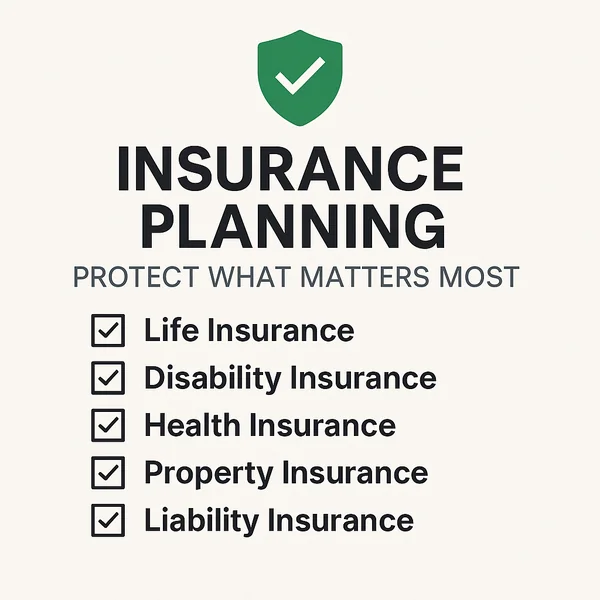
📉 Protect What Matters Most
Insurance isn’t just about worst-case scenaInsurance isn’t just about worst-case scenarios—it’s about building a resilient financial plan that protects you, your loved ones, and your goals from unexpected setbacks. From life and disability to property and liability protection, this guide will help you assess your risk exposure and put the right guardrails in place.
Insurance isn’t the plan—it’s the guardrail that keeps your financial journey from derailing.
🛡️ Understanding Risk Exposure
Before you can protect what matters, you need to identify where you’re vulnerable.
What Is Risk Exposure?
Risk exposure is the potential for financial loss due to unexpected events such as illness, accidents, lawsuits, or property damage.
Common Risk Categories:
- Income loss (disability, death, job loss)
- Property loss (fire, theft, flood, earthquake)
- Liability risk (lawsuits, injuries, cyber liability)
“Risk planning isn’t pessimism—it’s proactive financial protection.”
Action Tip: Conduct a personal risk audit. Make a list of your income sources, property, dependents, and potential liabilities.
🧰 Behavioral Biases That Affect Insurance Decisions
Even smart individuals can overlook key coverage due to psychological blind spots.
| Bias | Description | Insurance Impact |
| Optimism Bias | Belief that bad things won’t happen to us | Underinsuring or skipping coverage entirely |
| Present Bias | Preference for short-term savings | Avoiding premiums even when risk is high |
| Overconfidence | Thinking we’ll spot and stop problems early | Ignoring low-frequency but high-impact risks |
Tip: Insurance is about protecting against unknowns—not betting on outcomes.
👨👧 Life Insurance: Protecting Your Loved Ones
Life insurance ensures that your loved ones won’t be financially devastated if you pass away unexpectedly.
Types of Life Insurance:
- Term Life: Fixed coverage for a set number of years
- Whole Life: Lifetime coverage with a cash value component
- Universal Life: Flexible premium and death benefit, includes investment growth
How Much Coverage Do You Need?
- 10–12x your income is a common starting rule
- Consider debts, childcare, education costs, and final expenses
Life Insurance Checklist:
- ☑ Choose a beneficiary (not your estate)
- ☑ Review coverage at major life milestones
- ☑ Consider policy riders (waiver of premium, child term, etc.)
🧮 Life Insurance Needs Estimation Table
| Expense Category | Estimated Cost | Notes |
|---|---|---|
| Funeral & Final Expenses | $10,000 | Average U.S. funeral costs |
| Outstanding Debt | $50,000 | Credit cards, loans, mortgage, etc. |
| Income Replacement | $600,000 | E.g., $60k × 10 years |
| Education Fund (Kids) | $100,000 | Approximate cost per child (in-state 4yr) |
| Childcare/Dependents | $75,000 | Until youngest child is 18 |
| Total Coverage Needed | $835,000 | Sum total (adjust as needed) |
A great financial plan expects the best but prepares for the worst—insurance makes that possible.
🧟 Disability Insurance: Protect Your Income
You’re more likely to become disabled before 65 than to die prematurely—and yet many people skip this crucial coverage.
Key Terms:
- Short-term: Covers temporary issues (maternity leave, injuries)
- Long-term: Replaces income for serious or chronic conditions
What to Look For:
- Own-occupation vs. any-occupation definitions
- Elimination period (waiting time before benefits begin)
- Benefit period (how long payments last)
📈 Disability Insurance Policy Comparison Table
| Feature | Short-Term Policy | Long-Term Policy |
| Elimination Period | 0–14 days | 30–180 days |
| Benefit Duration | Up to 1 year | 2 years to retirement age |
| Monthly Benefit Cap | $5,000–$10,000/month | $15,000–$20,000/month |
| Common Use Cases | Maternity leave, surgery | Chronic illness, major injury |
Best For: All income earners, especially self-employed professionals
🏥 Health Insurance & Supplemental Coverage
Medical debt is the #1 cause of bankruptcy in the U.S. Don’t leave your health to chance.
Options:
- Marketplace (ACA) plans
- Employer-provided coverage
- Medicaid/Medicare for qualifying individuals
Cost Management Tools:
- HSA (Health Savings Account) — tax-advantaged savings
- FSA (Flexible Spending Account) — employer-tied pre-tax savings
Pro Tip: Look at the total cost of care, not just premiums.
🏡 Property & Casualty Insurance
Homeowners / Renters Insurance:
- Covers your home and belongings
- May not include flood, earthquake, or wildfire damage
Auto Insurance:
- Liability: Required by law
- Collision: Your car in an accident
- Comprehensive: Theft, fire, natural events
Umbrella Policies:
- Extra liability coverage beyond standard limits
- Great for homeowners, landlords, or high-income earners
🔍 Property Insurance Coverage Snapshot
| Coverage Area | Is It Typically Included? | Notes |
| Fire & Theft | ✅ Yes | Base coverage |
| Flood Damage | ❌ No | Requires separate policy (FEMA or private) |
| Earthquake Damage | ❌ No | Add-on or separate plan |
| Personal Liability | ✅ Yes | Up to a capped amount |
| Replacement Cost Coverage | ⚫ Sometimes | Check for ACV vs. Replacement policy terms |
Review Tip: Confirm your policy reflects actual replacement cost, not market value.
⚖️ Liability Coverage and Legal Protection
A single lawsuit could derail your financial future. That’s where liability insurance steps in.
Key Risk Areas:
- Auto accidents
- Injuries on your property
- Libel, slander, or online defamation
Umbrella Policy Example:
If your auto insurance only covers up to $250,000 and a lawsuit costs $1 million, umbrella insurance covers the difference.
Best For: Anyone with significant assets, rental properties, or public exposure
Paying a premium may feel like a burden—until you realize it’s buying you peace of mind.
🔎 Insurance Policy Comparison Table
| Insurance Type | Primary Purpose | Best For | Key Considerations |
| Life | Income replacement | Parents, couples, business owners | Term vs. permanent, coverage amount |
| Disability | Income protection | All income earners | Definition of disability, benefit term |
| Health | Medical cost coverage | Everyone | Deductibles, network, OOP max |
| Property & Casualty | Asset protection | Homeowners, renters, drivers | Replacement vs. cash value |
| Umbrella | Legal liability coverage | Asset holders, high earners | Extends existing policy limits |
🔄 Insurance Coverage Audit Template
| Insurance Type | Current Provider | Coverage Amount | Last Reviewed | Notes / Gaps |
| Life | ||||
| Disability | ||||
| Health | ||||
| Home/Renter’s | Check for exclusions | |||
| Auto | Review collision vs. liability limits | |||
| Umbrella | Important if assets > $500K |
Being underinsured is like walking a tightrope without a net—you won’t know the risk until you fall
🔄 What to Do If You’re Underinsured (or Uninsured)
If you discover you have coverage gaps:
- 📌 Prioritize must-have policies: Start with health, liability, and term life if dependents are involved.
- 💡 Increase deductibles to reduce premiums (but only if emergency funds are in place).
- 📞 Speak to a fee-only insurance consultant before buying bundled policies.
- 💳 Look for employer-provided or group discounts through alumni associations or professional groups.
- 🧲 Use an insurance calculator or needs analysis tool to determine actual protection needs.
♻️ Review Your Coverage Annually
Things change. Your insurance should, too.
Annual Insurance Quic Review Checklist:
- ☑ Have your income, assets, or dependents changed?
- ☑ Have you moved, changed jobs, or added property?
- ☑ Are your deductibles and coverage still appropriate?
- ☑ Have you shopped for better rates?
🧾 Comprehensive Insurance Planning Checklist
Use this checklist to ensure you’re covering all your key risks:
✅ Life Insurance
- ☐ Do I have term or permanent life insurance?
- ☐ Is the coverage amount 10–12x my income or tailored to my needs?
- ☐ Have I designated a primary and contingent beneficiary?
- ☐ Do I review my coverage after major life events?
✅ Disability Insurance
- ☐ Do I have short-term and/or long-term disability insurance?
- ☐ Is the definition of disability “own occupation” or “any occupation”?
- ☐ Have I calculated how long I could go without income?
- ☐ Is the benefit enough to cover essential living costs?
✅ Health Insurance
- ☐ Am I covered through employer, ACA, Medicaid, or Medicare?
- ☐ Do I understand my deductible, copay, and OOP max?
- ☐ Have I set up an HSA or FSA to reduce taxable healthcare costs?
✅ Property & Casualty
- ☐ Is my home or rental property adequately insured?
- ☐ Does my auto insurance cover both liability and collision?
- ☐ Have I checked for exclusions like flood or earthquake?
- ☐ Do I have replacement cost coverage vs. actual cash value?
✅ Umbrella Insurance
- ☐ Do I have assets over $500,000?
- ☐ Have I considered an umbrella policy to extend liability protection?
- ☐ Does it coordinate with my home and auto coverage?
✅ Liability & Legal Risks
- ☐ Do I understand my personal liability exposure?
- ☐ Am I covered against lawsuits, online slander, or tenant issues?
- ☐ Have I reviewed coverage for rental properties or side businesses?
✅ Annual Review
- ☐ Did I review all policies this year?
- ☐ Have I compared rates or negotiated premiums?
- ☐ Have I updated my policies for life changes (new home, marriage, child)?
✅ Conclusion: Insurance is Financial Self-Defense
Without insurance, your entire financial plan is vulnerable to collapse from a single event. But with the right coverage, you gain peace of mind and protection to stay on track.
Action Steps:
- Conduct a risk audit
- Prioritize income and liability protection
- Use the annual review checklist to stay current
“Insurance doesn’t eliminate risk—it gives you the power to recover.”
Coming up next:
📍 Up Next: Investment Planning: Grow with Purpose and Confidence →
⬅️ Go Back: Managing Debt Effectively – Understand the Psychology of Debt and Prioritize Your Payoff Plan
Back to How to Create a Comprehensive Financial Plan
- Philanthropic Planning
- Business and Healthcare Planning
- Lifestyle and Digital Assets Planning
- Regular Review and Adjustment
