
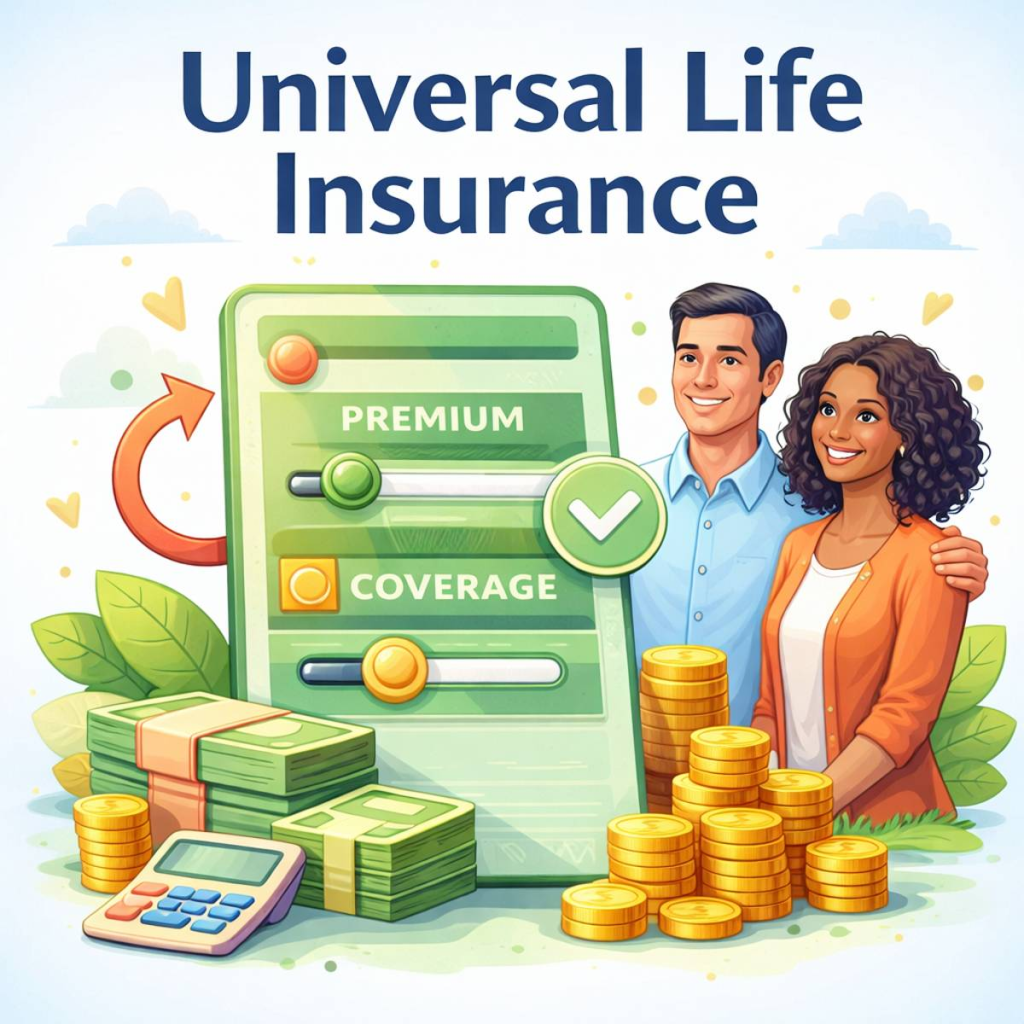
📗 Universal Life Insurance: How It Works, Costs, and When It Makes Sense
Universal life insurance is a type of permanent life insurance that offers flexibility in premiums and coverage, making it a more adaptable option for long-term financial planning.
Unlike whole life insurance, which follows a fixed structure, universal life insurance allows you to adjust certain elements of your policy over time. This flexibility can be valuable—but it also introduces additional complexity that requires ongoing attention.
⚡ What Is Universal Life Insurance? (Quick Answer)
Universal life insurance is a permanent life insurance policy that provides lifetime coverage with flexible premiums and adjustable policy features, allowing it to adapt to changing financial needs.
🔑 Key Takeaways
- Provides lifetime coverage with flexibility
- Premiums and coverage may be adjusted within limits
- More complex than term or whole life insurance
- Requires ongoing monitoring and management
- Best suited for individuals who want adaptability in long-term planning
🧠 How Universal Life Insurance Works
Universal life insurance is designed to offer flexibility and control, but it requires a clear understanding of how the policy operates.
📊 Flexible Policy Structure
Unlike fixed policies, universal life insurance allows you to:
- Adjust premium payments within certain limits
- Modify coverage levels over time
- Adapt the policy as your financial situation changes
This makes it more dynamic than traditional permanent life insurance.
💰 Premium Flexibility
One of the defining features of universal life insurance is the ability to vary premium payments.
- You may pay more or less depending on your situation
- Payment flexibility can affect long-term policy performance
- Consistency is still important to maintain coverage
🔄 Ongoing Policy Management
Universal life insurance is not a “set it and forget it” policy.
To maintain coverage effectively, you should:
- Review your policy regularly
- Monitor performance over time
- Adjust payments if needed
This added responsibility is one of the key trade-offs for flexibility.
📊 Universal Life vs. Whole Life Insurance
Understanding the difference between universal and whole life insurance is essential when choosing a permanent policy.
| Feature | Universal Life Insurance | Whole Life Insurance |
|---|---|---|
| Flexibility | High | Low |
| Premiums | Adjustable | Fixed |
| Structure | Variable | Predictable |
| Complexity | Higher | Lower |
👉 Learn more: Term vs. Whole Life Insurance
👉 Compare stability vs flexibility: Whole Life Insurance
💰 What Does Universal Life Insurance Cost?
Universal life insurance costs vary based on multiple factors and how the policy is managed over time.
📊 Factors That Affect Cost
- Age at purchase
- Health and medical history
- Coverage amount
- Premium payment structure
💡 Cost Considerations
- Flexibility can impact long-term cost
- Initial costs may vary depending on structure
- Poor management can increase long-term expenses
👉 Learn more: Life Insurance Cost Guide
⚖️ Pros and Cons of Universal Life Insurance
✅ Pros
- Flexible premiums
- Adjustable coverage levels
- Ability to adapt to changing financial needs
- Long-term coverage
⚠️ Cons
- More complex than other life insurance types
- Requires ongoing monitoring
- Risk of policy issues if not properly managed
👨👩👧 Who Universal Life Insurance Is Best For
Universal life insurance is most appropriate for individuals who value flexibility and are comfortable managing a policy over time.
💡 Good Fit For
- Individuals with changing income or financial needs
- Long-term planners seeking flexibility
- Those comfortable reviewing and adjusting policies
⚠️ Not Ideal For
- Individuals who prefer simplicity
- Those who want fixed, predictable premiums
- Beginners to financial planning
👉 Consider: Term Life Insurance
🧠 When Universal Life Insurance Makes Sense
Universal life insurance may be a good fit when:
- Your financial situation is expected to change over time
- You want flexibility in premium payments
- You are comfortable actively managing your policy
However, for many individuals, simpler policy types may be more practical.
🧾 How to Decide If Universal Life Insurance Is Right for You
Before choosing universal life insurance, consider:
- Do I need flexibility in premiums and coverage?
- Am I willing to monitor and adjust my policy regularly?
- Does this fit into my broader financial plan?
🧭 General Guidance
- Simplicity needed → Term or Whole Life Insurance
- Flexibility needed → Universal Life Insurance
👉 Start here: How Much Life Insurance Do You Need?
⚠️ Common Mistakes to Avoid
- Not reviewing the policy regularly
- Underfunding premiums over time
- Choosing complexity without a clear need
- Assuming flexibility always reduces cost
👉 Learn more: Common Life Insurance Mistakes
❓ Frequently Asked Questions
What is the difference between universal and whole life insurance?
Universal life offers flexibility in premiums and structure, while whole life provides fixed premiums and a predictable structure.
Is universal life insurance risky?
It can be more complex and requires monitoring, but risk depends on how the policy is managed.
Can premiums change over time?
Yes, universal life insurance allows for adjustable premiums within certain limits.
📚 Related Universal Life Insurance Articles
Explore additional insights and strategies:
📰 Featured Articles
- Universal vs Whole Life Insurance
- Life Insurance Cost Breakdown
- When Should You Review Your Policy?
🔗 Continue Exploring
- Whole Life Insurance
- Term vs. Whole Life Insurance
- How to Buy Life Insurance
- Life Insurance Hub
🏁 Final Thought
Universal life insurance offers flexibility and adaptability, making it a unique option within permanent life insurance. However, that flexibility comes with added complexity and responsibility.
By understanding how it works and aligning it with your financial goals, you can determine whether it fits into your long-term financial strategy.