
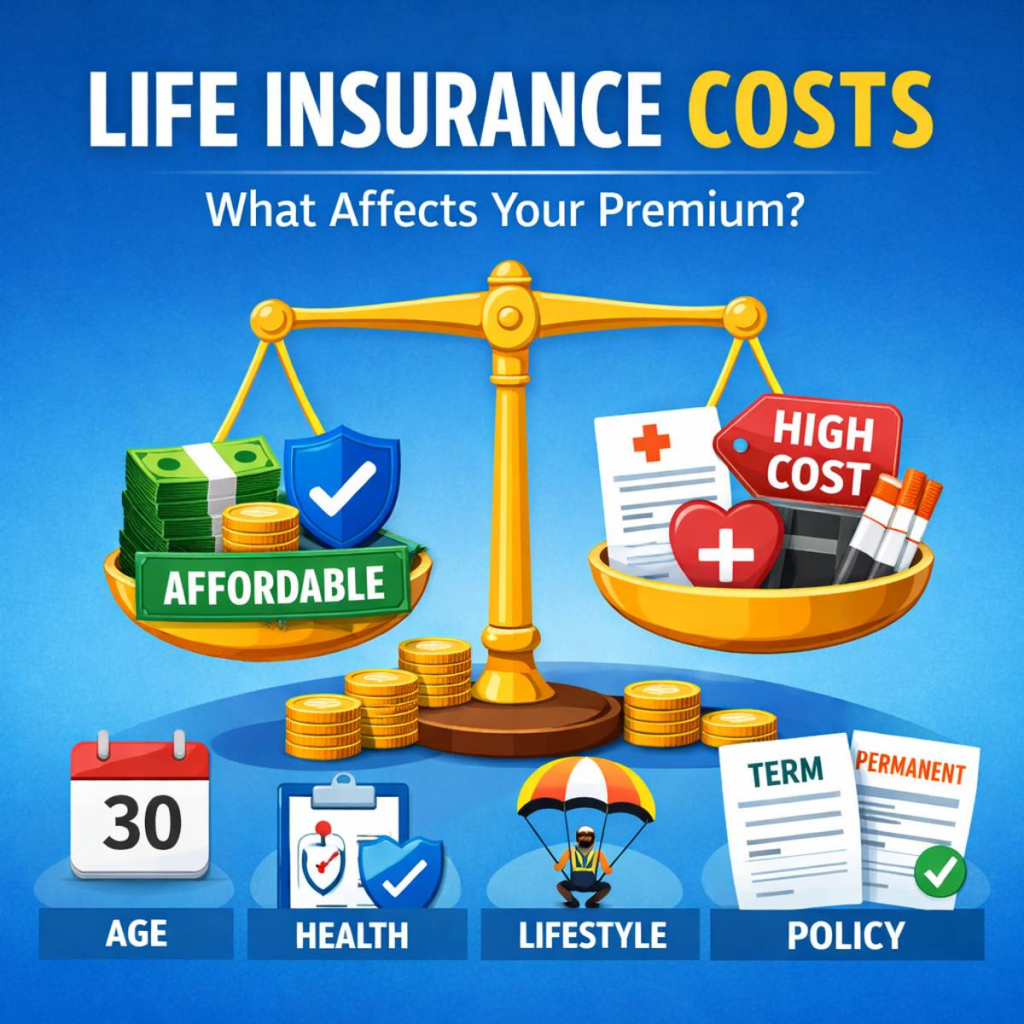
💵 Life Insurance Cost: What Affects Your Premium (Complete Guide)
Understanding how life insurance is priced is essential to making a confident and informed decision. Costs can vary significantly from person to person, even for similar coverage amounts.
This guide breaks down what drives life insurance premiums, how to evaluate affordability, and how to choose coverage that balances cost with meaningful financial protection.
⚡ Quick Answer: How Much Does Life Insurance Cost?
Life insurance costs vary based on factors like age, health, lifestyle, coverage amount, and policy type. Term life insurance is generally more affordable, while permanent policies have higher premiums due to lifetime coverage.
🔑 Key Takeaways
- Life insurance premiums depend on personal and policy-specific factors
- Age and health are the most significant cost drivers
- Term life insurance is typically more affordable than permanent coverage
- Higher coverage amounts result in higher premiums
- The goal is to balance affordability with adequate protection
🧠 Why Life Insurance Costs Vary
Life insurance pricing is based on a risk assessment process. Insurers evaluate how likely they are to pay a claim and price policies accordingly.
📊 Risk-Based Pricing Explained
Insurance companies use risk-based pricing to determine premiums. This means your cost is based on how your individual risk profile compares to others.
🔍 What Insurers Evaluate
When determining your premium, insurers typically assess:
- Life expectancy
Based on age, health, and medical history - Financial risk
The likelihood and potential size of a future claim
🧠 Why Two People Pay Different Premiums
Even with the same coverage amount, premiums can vary because:
- Individuals have different health profiles
- Lifestyle choices affect risk levels
- Age significantly impacts expected longevity
💡 Key Insight
Life insurance is not priced as a one-size-fits-all product—it is customized based on your personal risk profile, which is why comparing policies and understanding cost drivers is so important.
📊 Key Pricing Factors
Life insurance premiums are influenced by a combination of personal characteristics and policy choices. Understanding these factors helps you evaluate quotes, compare options, and choose coverage that fits your financial plan.
📅 Age
Age is one of the most important factors in determining life insurance cost.
- Younger individuals typically pay lower premiums
- Costs increase as you age due to higher risk
👉 Why it matters:
Buying earlier can significantly reduce long-term costs and provide more coverage options.
🏥 Health
Your health profile plays a major role in how insurers assess risk.
- Medical history
- Current health conditions
- Overall physical health
👉 Why it matters:
Better health generally leads to lower premiums, while certain conditions may increase costs or limit eligibility.
🚬 Lifestyle
Lifestyle choices and daily habits can affect your risk profile.
- Smoking or tobacco use
- High-risk hobbies (e.g., extreme sports)
- Occupation-related risks
👉 Why it matters:
Higher-risk lifestyles typically result in higher premiums due to increased likelihood of claims.
📄 Policy Type
The type of policy you choose directly impacts cost.
- Term life insurance → lower cost (temporary coverage)
- Permanent life insurance → higher cost (lifetime coverage)
👉 Learn more:
- Term Life Insurance
- Whole Life Insurance
- Universal Life Insurance
👉 Why it matters:
Selecting the right policy type is one of the most effective ways to align cost with your financial goals.
💰 Coverage Amount
The amount of coverage you choose directly affects your premium.
- Higher coverage = higher premiums
- Lower coverage = lower premiums
👉 Why it matters:
You need enough coverage to protect your financial responsibilities, but not so much that it becomes difficult to afford.
🧠 Key Takeaway
Your premium is not determined by a single factor—it’s the result of how all these elements come together. The goal is to find a balance between coverage, cost, and long-term sustainability.
📊 Cost Factors at a Glance
For a quick overview, here’s how the most important factors influence life insurance pricing:
| Factor | Impact on Cost |
|---|---|
| Age | Younger = lower premiums |
| Health | Better health = lower cost |
| Policy Type | Term < Permanent |
| Coverage Amount | Higher = more expensive |
💡 Practical Insight
While these factors determine cost, your focus should be on value—not just price. The right policy provides adequate protection at a cost you can maintain over time.
💰 Term vs Permanent Life Insurance Cost
One of the most important decisions when choosing life insurance is understanding how policy type impacts cost. Term and permanent life insurance are structured differently, and those differences directly affect premiums.
🟦 Term Life Cost Overview
Term life insurance is generally the most affordable option for most individuals.
- Lower premiums compared to permanent policies
- Designed for temporary coverage (e.g., 10, 20, or 30 years)
- Focused on income protection and financial obligations
👉 Why it costs less:
Because coverage is limited to a specific time period, the insurer takes on less long-term risk.
🟩 Permanent Life Cost Overview
Permanent life insurance provides lifetime coverage, which results in higher premiums.
- Higher premiums due to extended coverage
- Designed for long-term or lifetime protection
- More complex policy structure
👉 Why it costs more:
Lifetime coverage increases the likelihood of a payout, which is reflected in the cost.
📊 Cost Comparison Table
| Policy Type | Cost | Coverage Length |
|---|---|---|
| Term | Lower | Temporary |
| Permanent | Higher | Lifetime |
👉 Learn more: Term vs Permanent Life Insurance
🧠 Key Takeaway
For most households, term life insurance provides the most cost-efficient protection, while permanent life insurance is typically used for long-term planning needs.
📊 Average Life Insurance Costs (Example Ranges)
Life insurance premiums vary by age, but the general pattern remains consistent: costs increase over time, and permanent policies are significantly more expensive than term coverage.
📋 Example Cost Ranges
| Age | Term Life (Example) | Permanent Life (Example) |
|---|---|---|
| 30 | Low | Higher |
| 40 | Moderate | Higher |
| 50 | Higher | Much higher |
⚠️ Important Note
These examples are illustrative only and intended to show general trends. Actual premiums vary based on:
- Health and medical history
- Lifestyle factors
- Coverage amount
- Policy structure
💡 Practical Insight
The earlier you purchase life insurance, the more likely you are to secure lower premiums and greater flexibility, especially for term policies.
🧠 How to Lower Your Life Insurance Cost
Life insurance doesn’t have to be expensive. By understanding how premiums are calculated, you can take practical steps to reduce your costs while still maintaining meaningful financial protection.
💡 Tips to Reduce Premiums
- Buy earlier
Premiums are typically lower when you’re younger and healthier - Choose term life when appropriate
Term life insurance often provides the most affordable coverage for temporary financial needs - Maintain good health
A healthier profile can lead to better pricing and more options - Compare multiple options
Reviewing different policies and providers helps you find the best value - Avoid unnecessary coverage
Choose a coverage amount that reflects your actual financial needs—not an arbitrary number
🧠 Key Insight
Lowering your cost isn’t about cutting corners—it’s about making intentional decisions that align coverage with your financial situation.
⚠️ Common Cost Mistakes to Avoid
Even with the best intentions, it’s easy to make mistakes that increase costs or reduce the effectiveness of your coverage.
🚫 Mistakes to Watch For
- Choosing the cheapest policy without enough coverage
Lower premiums may come at the cost of inadequate protection - Overbuying coverage
Paying for more insurance than you need can reduce financial efficiency - Ignoring long-term affordability
A policy must remain sustainable—not just affordable today
🧠 Key Takeaway
The goal is not to find the lowest cost—it’s to find the right balance between affordability and adequate protection.
👉 Learn more: Common Life Insurance Mistakes
🧾 How to Choose Affordable Coverage
Affordable life insurance isn’t just about price—it’s about choosing a policy that fits your financial plan and long-term needs.
⚖️ Finding the Right Balance
When evaluating coverage, focus on balancing three key elements:
- Cost
Monthly premiums should fit comfortably within your budget - Coverage
The policy should fully protect your financial responsibilities - Duration
Coverage should last as long as your dependents or obligations require
🧠 Practical Approach
Start by calculating how much coverage you need, then choose a policy type that delivers that protection at a sustainable cost.
👉 Continue here:
- How Much Life Insurance Do You Need
- How to Buy Life Insurance
💡 Final Insight
Affordable coverage is not about choosing the cheapest option—it’s about selecting a policy that protects what matters most while remaining financially sustainable over time.
❓ Frequently Asked Questions
How much does life insurance cost per month?
Life insurance costs vary widely, but many healthy individuals can expect term life insurance to be relatively affordable, especially when purchased at a younger age. Monthly premiums depend on factors such as age, health, coverage amount, and policy type.
Permanent life insurance typically costs more due to lifetime coverage and a more complex structure.
Why does cost increase with age?
Life insurance premiums increase with age because insurers assess higher risk over time.
- Older individuals have a shorter life expectancy
- The likelihood of a claim increases
- Health conditions become more common
👉 Key takeaway: Buying life insurance earlier can help secure lower premiums and more options.
Is term life always cheaper?
In most cases, yes—term life insurance is cheaper than permanent life insurance.
- Term life provides temporary coverage, reducing long-term risk for insurers
- Permanent life offers lifetime protection, which increases cost
However, the best choice depends on your financial goals, timeline, and coverage needs, not just price.
📚 Related Life Insurance Topics
Continue building your understanding with these key resources designed to guide your next steps.
🧭 Start Here
- How Much Life Insurance Do You Need
Calculate the right coverage amount based on your income, debts, and financial goals - Term vs Permanent Life Insurance
Compare policy types to determine which option best fits your needs
🚀 Continue Learning
- How to Buy Life Insurance
Follow a step-by-step process to evaluate and select the right policy - Policy Types
Explore term, whole, and universal life insurance options in more detail
🏁 Final Thought
Cost matters—but coverage matters more.
Focusing only on price can lead to decisions that leave you underprotected or misaligned with your financial goals. Instead, aim to find a policy that balances:
- Affordability
- Adequate protection
- Long-term sustainability
🧠 Key Takeaway
The best life insurance decision is not the cheapest—it’s the one that delivers real financial protection while fitting comfortably within your overall financial plan.
📊 Build Your Financial Foundation
Life insurance is one part of a broader financial strategy. Strengthen your overall plan with these key frameworks:
- The Financial Planning Roadmap
A step-by-step framework to help you build financial stability and long-term wealth.
→ View the Roadmap - Budgeting Frameworks That Work
Learn how to choose and implement a budgeting system that fits your lifestyle and income patterns.
→ Explore Budgeting Strategies
🔄 Continue Your Insurance Planning Journey
Ready to go deeper? Explore the full insurance framework and expand your protection strategy: