
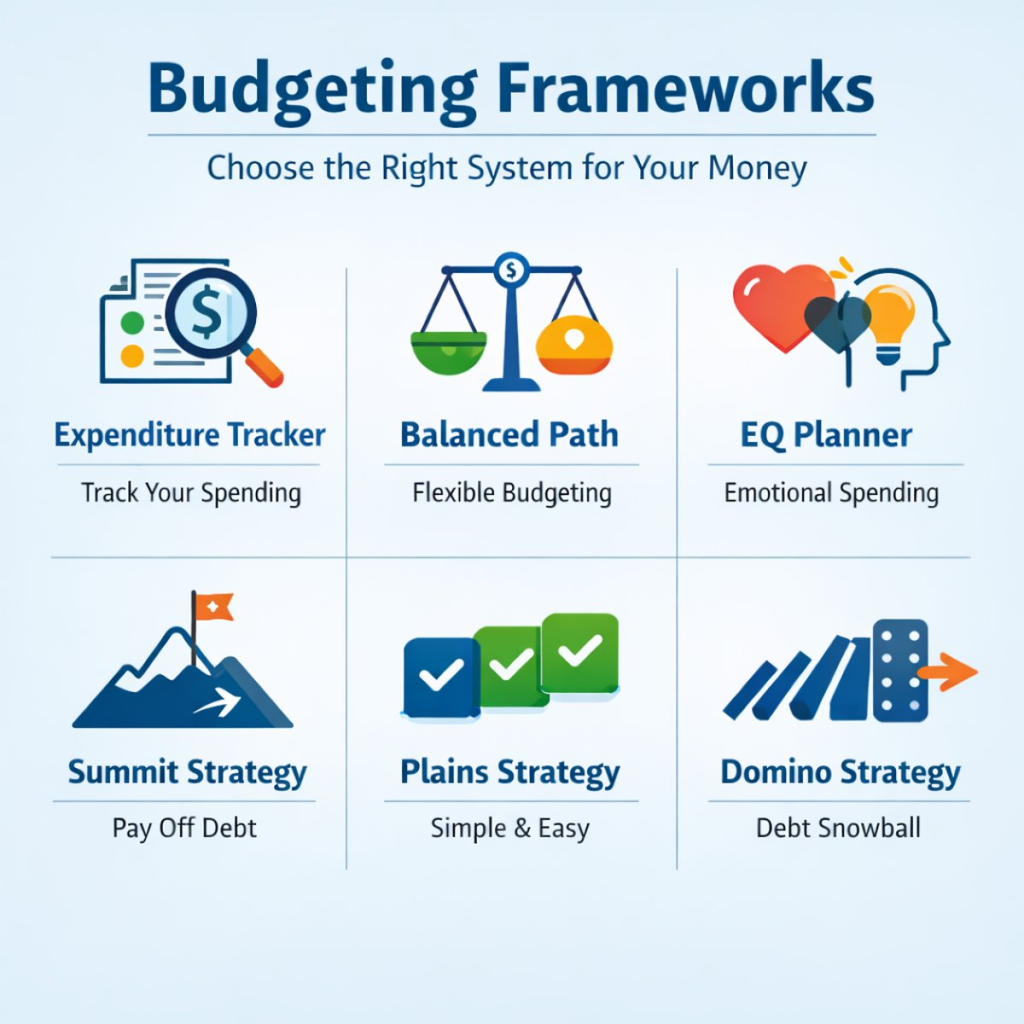
Debt Budgeting Frameworks: Choose the Right System to Manage Your Money
Budgeting isn’t one-size-fits-all. What works for one person may feel restrictive or unsustainable for another. The key isn’t finding the “perfect” budget—it’s finding a system that aligns with how you think, spend, and make financial decisions.
Different budgeting frameworks are designed for different goals, habits, and personalities. Some prioritize structure, others flexibility, and some focus on behavior or debt reduction.
This page helps you quickly identify the right approach so you can build a system that works in real life—not just on paper.
🧭 2. Start Here: Choose Your Budgeting System
Find Your Best Fit
Not sure where to begin? Use this quick guide to match your needs with the right budgeting framework:
- Need clarity on spending → Expenditure Tracker™
- Want balance and flexibility → Balanced Path™
- Struggle with emotional spending → EQ Planner™
- Focused on paying off debt → Summit Strategy™ (Attack High-Interest Debt First)
- Prefer a simple system → Plains Strategy™
- Need motivation and quick wins → Domino Strategy™ (Create Debt Freedom Through Momentum)
👉 Explore each system below to find the best fit for your financial goals and build a strategy you can stick with.
📊 3. Quick Comparison Table
Use this table to quickly compare the core strengths of each budgeting framework and identify which approach aligns with your goals and financial habits:
| Framework | Best For | Core Benefit | Focus |
|---|---|---|---|
| Expenditure Tracker™ | Beginners | Awareness | Tracking spending |
| Balanced Path™ | Multi-goal users | Flexibility | Balance & allocation |
| EQ Planner™ | Emotional spenders | Control | Behavior & decision-making |
| Summit Strategy™ | Debt payoff | Efficiency | Interest reduction |
| Plains Strategy™ | Simplicity seekers | Consistency | Stability & ease |
| Domino Strategy™ | Motivation-driven | Momentum | Quick wins & progress |
💼 4. Budgeting Frameworks
Explore the six core budgeting systems below. Each framework is designed to solve a specific financial challenge—from gaining control over spending to eliminating debt or simplifying your money management system.
🔹 Expenditure Tracker™
A simple, awareness-first system focused on tracking every dollar you earn and spend. This framework helps you understand where your money is going before making changes.
- Best for: Beginners or anyone unsure where their money goes
- Key benefit: Builds clarity and control through visibility
👉 Explore the Expenditure Tracker™
🔹 Balanced Path™
A flexible budgeting system that balances structure with real-life adaptability. It allows you to manage multiple goals—like saving, spending, and debt—without feeling restricted.
- Best for: Individuals or families managing multiple financial priorities
- Key benefit: Creates sustainable progress without burnout
🔹 EQ Planner™
A behavior-focused system that connects your emotions to your financial decisions. It helps identify spending triggers and encourages more intentional, values-based choices.
- Best for: Emotional spenders or those struggling with impulse spending
- Key benefit: Improves financial decision-making through self-awareness
🔹 Summit Strategy™ (Attack High-Interest Debt First)
A debt-focused approach that prioritizes paying off high-interest balances first. By reducing interest costs, this method accelerates long-term financial progress.
- Best for: Individuals focused on eliminating high-interest debt
- Key benefit: Minimizes total interest and speeds up debt payoff
👉 Explore the Summit Strategy™
🔹 Plains Strategy™
A simplified budgeting system that emphasizes consistency and ease of use. It reduces complexity by focusing on broad categories and steady financial habits.
- Best for: Those who prefer a straightforward, low-maintenance approach
- Key benefit: Makes budgeting easier to maintain over time
👉 Explore the Plains Strategy™
🔹 Domino Strategy™ (Create Debt Freedom Through Momentum)
A motivation-driven system that focuses on quick wins by paying off smaller debts first. Each success builds momentum and reinforces positive financial habits.
- Best for: Individuals who need motivation and visible progress
- Key benefit: Builds confidence and consistency through momentum
👉 Explore the Domino Strategy™
🧭 How to Use These Frameworks
Each system is designed to stand on its own—but they can also work together. Many people start with awareness (Expenditure Tracker™), build structure (Balanced Path™), and then apply a debt strategy (Summit or Domino) based on their goals.
👉 Choose one system to start, then explore the full guide for step-by-step implementation.
🧠 5. Why Budgeting Frameworks Work
Most budgeting failures aren’t caused by bad math—they’re caused by mismatched behavior. A system that doesn’t align with how you think, spend, or make decisions is difficult to maintain, no matter how well it looks on paper.
Budgeting frameworks work because they reduce decision fatigue and create structure. Instead of constantly asking, “Can I afford this?”, your system provides clear boundaries and direction. Over time, this consistency turns financial habits into automatic behaviors.
The goal isn’t perfection—it’s alignment. When your budgeting system fits your lifestyle and mindset, managing money becomes simpler, more predictable, and far more sustainable.
🧩 6. How to Use This Page
A Simple Path to Getting Started
- Start with the quick guide above
- Compare your options using the framework summaries
- Choose one system to begin
- Explore the full guide for step-by-step implementation
👉 You don’t need the perfect system—just the right starting point.
🔗 7. Continue Your Financial Journey
Budgeting frameworks are most effective when they connect to your broader financial plan. Use the resources below to continue building a complete and sustainable strategy:
- Budgeting & Money Management Hub → Explore foundational budgeting concepts and systems
- How to Create a Budget → Build your first budget step by step
- Expense Tracking Guide → Learn how to track and analyze your spending
- Credit & Debt Management Hub → Apply budgeting strategies to reduce and eliminate debt
- Financial Planning Roadmap → Create a long-term plan for financial stability and growth
📚 8. Related Resources
Expand your financial knowledge with these supporting topics:
- Budgeting basics and core principles
- Financial goal setting and prioritization
- Saving strategies and building financial security
🏁 9. Conclusion
Budgeting is personal. The most effective system isn’t the most complex—it’s the one you’ll consistently use.
Start simple, focus on progress, and adjust your approach as your goals and circumstances evolve. Over time, small, consistent actions build the foundation for long-term financial stability and confidence.
🔗 Guided Learning Paths
Prefer a structured approach? These guides help you go deeper and build a complete financial system:
How to Create a Financial Plan
→ Organize your goals, priorities, and financial strategy
Explore Additional Budgeting Frameworks (10 Systems)
→ Discover a broader range of budgeting strategies designed for different goals, income styles, and financial situations
The Financial Planning Roadmap
→ Follow a step-by-step path to build long-term financial stability